
Saturday, November 21, 2009, Zilhaj 03, 1430 A.H   ISSN 1563-9479
 Group Chairman: Mir Javed Rahman Founded by: Mir Khalil-ur-Rahman Editor-in-Chief: Mir Shakil-ur-Rahman 
HOME | TOP STORIES | WORLD | NATIONAL | BUSINESS |  SPORTS |  KARACHI | LAHORE | ISLAMABADPESHAWAREDITORIAL | OPINION | STOCK INSTEP TODAY  NEWSPOST
  WEEKLY SECTIONS
   News on Sunday
   You
   Health Body & Mind
   Technobytes
   Iqra
   Galaxy
   Tapestry
   Education-Zine
   Us
   Cyber@print
   Investor's J.
   Viewers' Forum
   Today's Cartoon
   Style
   Business & Finance   Review
   Instep
   MAG Fashion
   Blog
  FEATURES
   Opinion Archive
   Fashion Archive
   Magazine Archive
   Style Archive

  FINANCE
   Currency Rates
   KSE Index
   Bullion Rates
   Prize Bonds

Share this story!   
 ‘Despite defeat Hizbullah remains a potent political force’
Lebanon’s future unsure after US allies win poll

Tuesday, June 09, 2009
BEIRUT: A pro-Western bloc inflicted a surprise defeat on Hizbullah and its allies at the ballot box in Lebanon but the winner now faces a battle to keep the nation together and prevent a descent into violence.

The anti-Syrian coalition headed by Saad Hariri, son of slain ex-premier Rafiq, said Monday it expects to widen its majority in the 128-seat parliament to 71 seats, against 57 for Hizbullah and its Shiite and Christian allies.

“This is a big day in the history of democratic Lebanon,” a triumphant Hariri, now being tipped by some as a possible premier, told his supporters.

But analysts and newspapers are questioning whether the rival factions will be able to form a unity government and ensure Lebanon is not plunged into a renewed cycle of political instability and sectarian violence.

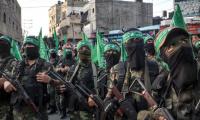
Despite its defeat, the Iranian-backed Hizbullah—the “Party of God” blacklisted by the United States as a terrorist organisation—remains a potent political force and the nation’s strongest military group.

And it delivered a blunt warning that its mighty arsenal, which it says is vital for “resistance” to Israel, was not up for discussion.

“Lebanon has entered a new phase today,” said Paul Salem, head of the Beirut-based Middle East Carnegie Centre. “The question is, once the government is formed what kind of challenge will it face?”

Police and soldiers had moved out in force in sensitive areas after Sunday’s election for fear of fighting between rivals, but no major incidents were reported after political leaders appealed for calm.

The outcome is being closely watched by Lebanon’s neighbours and the international community, with the country already scarred by years of war, sectarian strife and damaging political crises.

Israel, which fought a devastating war with Hizbullah guerrillas in 2006, said the new government must act to prevent attacks from its soil. “It is incumbent upon any government that is formed in Beirut to ensure that Lebanon will not be used as a base for violence against the state of Israel and against Israelis,” the foreign ministry said.

In Lebanon, the press was united in giving victory to Hariri’s Sunni-led coalition which has the backing of the West and regional powerhouse Saudi Arabia.

“They were broken... Lebanon wins,” thundered a headline in the Saudi-funded Asharq Al-Awsat newspaper, referring to Hizbullah—whose emergence as a possible victor had caused jitters in the West. One member of the Hizbullah alliance said it appeared voters had been spooked by fears that the Shiite Muslim group could impose an Islamist state in Lebanon.

Parliament speaker Nabih Berri, whose Amal party is allied with Hizbullah, said he “fully accepted” the result of the vote, while Christian ally, the Free Patriotic Movement of wartime general Michel Aoun, also acknowledged defeat.

“Lebanon won over those who were betting on chaos and dissention,” Berri said in a statement. “Lebanon’s strength now lies in its democracy as well as its resistance.

Newspapers in former powerbroker Syria accused Hariri’s coalition of fraud and vote-buying but did not comment directly on the outcome. Final results are expected to be known later on Monday.

Voters had turned out in force for one of Lebanon’s most crucial elections, a key test of whether it would continue on a pro-Western path or tilt towards Shiite Iran.

Preliminary estimates put turnout at more than 54 percent of the 3.2 million electorate, the highest since at least the end of the 1975-91 civil war.

Under Lebanon’s complex power-sharing system, seats are divided equally between majority Muslims and minority Christians, who make up about a third of the four-million population.

Former US president Jimmy Carter, heading a team of international observers, said he hoped Lebanon’s political parties and their foreign backers would accept the results.

The current majority swept to power in 2005 on a wave of popular anger following the assassination of Rafiq Hariri in a Beirut car bombing which propelled businessman Saad Hariri into the rough and tumble of politics.

The murder was widely blamed on former powerbroker Syria, which denied any involvement, and the ensuing public outcry led to Damascus withdrawing its troops from Lebanon after a 29-year presence.

Share this story!   
Back     |    Send this story to Friend    |     Print Version
 
Google
 
The News Home  |  Jang Group Online  |  Jang Multimedia  |  Jang Searchable  |  Ad Tariff / Enquiry |  Editor Internet  |  Webmaster