
![]() |
| Religious institutions not paying their bills: KESC |
| Thursday, October 01, 2009 By By our correspondent |
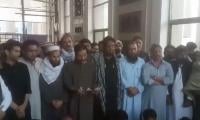
| Karachi Karachi Electric Supply Company (KESC) Chief Operating Officer-Distribution, Jan Abbas Zaidi said that over 1,600 mosques and religious institutions in the metropolis had not paid there bills amounting over Rs124 million. Speaking at a media briefing on Wednesday, he said, “The disconnection of electricity at religious institutions is a sensitive subject and we want to resolve the issue before resorting to disconnecting supply. Most of these religious institutions have their own revenue generating sources like shops and markets and should easily be able to pay their bills.” Zaidi further said that the KESC had sent many notices to the non-paying mosques and Madressahs, but received no response. “The utility wrote a letter to the Ministry of Religious Affairs earlier this month to settle the issue but the ministry responded by saying that mosques and Madressahs are not functional under government control. Prominent among these mosques are Masjid Ghani Al Tayab Hub Chawk, Jamia Masjid Jacob Lines, Madina Taj Masjid Ibrahim Hyderi, Hanifa Masjid Haryana Colony, Masjid Noman North Nazimabad, Masjid Darsu Salah Jacob Lines and Jamia Masjid Sulemani New Karachi,” he said. Zaidi said that the KESC would soon be issuing final notices to all non-paying consumers of the utility from private and public sectors under its recovery drive to collect Rs36 billion. “A week-long notice would soon be sent to the non-paying institutions after which the KESC would have to resort to disconnecting. Over Rs13 billion of the outstanding bills are due to the public sector organizations, including 18 towns of the city which have to pay Rs222 million alone,” he said. Important among the non-paying public sector organisations included the Utility Stores Corporation, National Shipping Corporation, Pakistan Steel, Post Offices, Lyari Expressway, Coast Guards, PWD, KWSB, Forest Department, Excise and Taxation, Director of Agriculture, Directorate of Colleges, Central Prison, Pakistan Rangers, Manpower Training, Civil Hospital, City Court, District & Sessions Judge, Anti-Corruption Establishment, Labour Court, Social Welfare Department, EDOs of Health, Education, Law, Revenue, Transport and Works; Sindh Workers Welfare Board, Auqaf and SITE. Zaidi said that some public sector institutions had proved to be “good consumers”, and included the Board of Revenue, Pakistan Machine Tools Factory, Pakistan Railways, PTCL, SUPARCO, Port Qasim, Police, PTV, PBC, AGPR, Atomic Energy Commission, Army Welfare Trust, and Jinnah Hospital among others. He added that the Karachi Water and Sewerage Board (KWSB) had been promising to pay only Rs50 million out of its dues of Rs8.2 billion. He said that the board must submit a plan of payment and pay its current bill on time every month, he said. Giving out operational update, Zaidi said that at 2 pm Wednesday, the total power demand of the city’s consumers stood at 2127 (Megawatts) while the utility supplied 1918MW. The total amount of power the KESC shed was over 200MW during the day. |