
Disaster on repeat
More than 300 people were killed in Afghanistan this past Saturday (May 11) after flash floods in several Afghan provinces
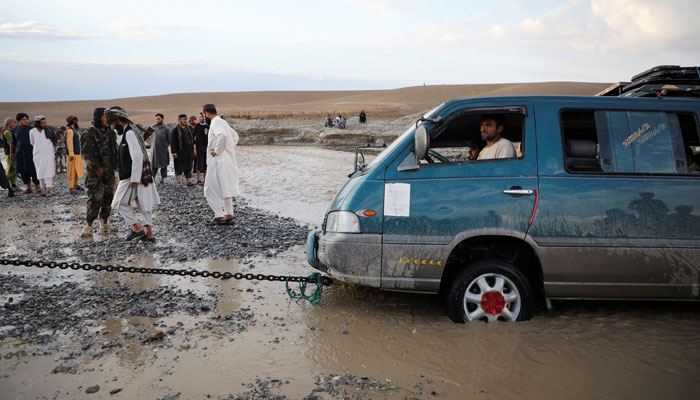
More than 300 people were killed in Afghanistan this past Saturday (May 11) after flash floods in several Afghan provinces including Baghlan, Takhar and Badakhshan and western Ghor and Herat provinces. The floods followed heavy rains the day before, flooding entire villages and agricultural lands. Beyond the immediate death and destruction there is also the long-term strain on the resources of a country that has little enough to spare as it is that must be considered. These latest floods resulted in the deaths of over 70 people in the country following heavy rains last month. Both crises serve as an example of the increasing vulnerability of all countries in the region to accelerating climate change and the urgent need to upgrade disaster response and management systems and implement other measures to adapt to increasingly unpredictable weather patterns. Pakistan, of course, is no stranger to devastating floods or unseasonal heavy rains. The wounds of the 2022 floods, which killed over 1700 people and inundated around a third of the country, are still yet to fully heal and at least 50 people were killed by flooding due to heavy rains in April of this year. Experts claimed that such heavy rains in April were unexpected and with the traditional rainy season on its way, one can only hope that the damage will be as limited as possible.
Natural disasters in developing countries are always exacerbated by the fact that those most impacted are often the ones struggling to survive anyways. It is the poor and underprivileged, the ones with no savings and/or valuable assets or alternate means of livelihood that tend to lose the little livestock, agricultural land and shelter that they already have. This is part of the reason why the UN World Food Programme reported in February that many Pakistanis were still struggling to cope with the losses inflicted by the 2022 floods over 18 months after the disaster. A year after the floods an estimated 1.5 million people were still displaced. Aside from investing in the immediate rescue and rehabilitation systems after a disaster strikes, this calls for also investing in systems capable of offering long-term support that can actually help people rebuild their lives. This includes making health, education and housing facilities more resilient. The National Disaster Management Authority should be equipped with the wherewithal to ensure that people affected by natural disasters are not deprived of these crucial services for long.
There is also a need to address the increasing unpredictability of weather patterns, which poses a challenge for early warning systems. While we cannot control the weather and it is up to the rich countries, for the most part, to slow global warming by cutting emissions, we can ensure early warning systems are as up-to-date as possible. This also calls for a more robust telecommunications infrastructure that can warn people in the most remote areas about impending floods or rains as quickly as possible.


