Apple launches iOS 17.5 with 'update now' warning
Tim Cook's American tech giant issues warning against hackers to iPhone users

Apple has released iOS 17.5 and advised users to update their iPhone as soon as they can.
This is because 15 security flaws, some of which are critical, have been fixed in iOS 17.5, according to Forbes.
Apple is keeping quiet about the specific fixes included in iOS 17.5, wanting to give as many users time to update their iPhones before hackers obtain the information.
One of the significant vulnerabilities fixed in iOS 17.5 is a problem with the iPhone's kernel, known as CVE-2024-27818, which may let an attacker run code.
According to Apple on their support page, there was another bug that was resolved in iOS 17.5, called AppleAVD, that may allow an adversary to execute arbitrary code with Kernel privileges when a user downloaded an app.
Apple iOS 17.5 weakness
A serious flaw that was fixed in iOS 17.5 was a Voice Control vulnerability that might have given an attacker elevated rights. Meanwhile, an attacker may be able to get around Pointer Authentication thanks to a vulnerability in WebKit, the engine that powers the Safari browser, identified as CVE-2024-27834.


-
 SpaceX ‘Space Junk’ is on a collision course with the Moon, scientists say
 -
 Do you know what happened on May 10, 1967? NASA's M2-F2 disaster explained
 -
 Why the Southern Ocean is melting: Antarctica’s sea ice resilience reaches a breaking point
 -
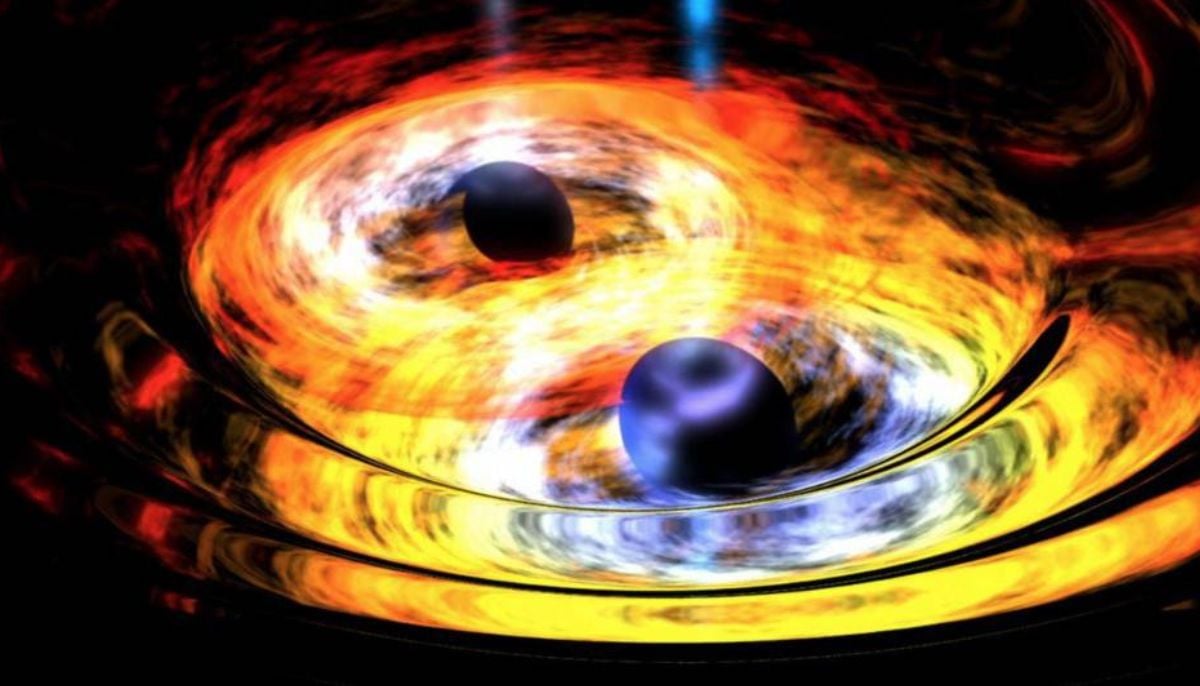 Giant black holes are cosmic ‘Frankensteins’ built by mergers, new study reveals
 -
 NASA’s Artemis 2 moon launch becomes the largest event in Space Coast history
 -
 Is success written in your DNA? New study reignites nature vs nurture debate
 -
 Researchers found 240-million-year-old giant mysterious 'sand creeper'
 -
 New solar-powered process turns plastic waste into clean hydrogen
-
 Giant squid detected off Western Australia coast as deep-sea study reveals hidden species
 -
Astronomers discover unexpected atmosphere beyond Pluto on tiny solar system object
-
‘Evolution is not always random’: Study finds same gene reused for 120 million years
-
Real-life Tatooine moment: Astronomers discover 27 ‘Star Wars’ like planets orbiting two suns