SpaceX ‘Space Junk’ is on a collision course with the Moon, scientists say
The rocket part-a 45-foot upper stage of a SpaceX Falcon 9 rocket-was launched into space on January 15, 2025, from Launch Complex 39A at Florida’s Kennedy Space Center
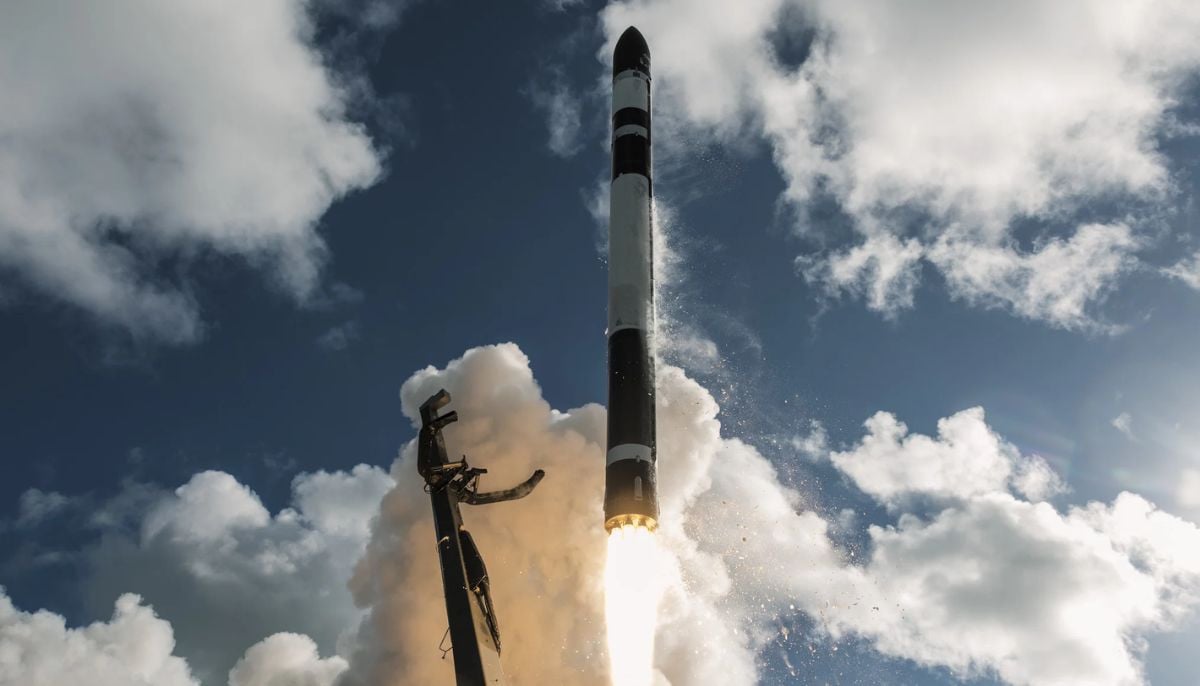
A discarded Falcon 9 rocket stage is projected to slam into the lunar surface this August, creating a fresh crater and highlighting the issue of deep-space junk, according to a new report.
The report is authored by Bill Gray of Project Pluto, a software program that tracks near-Earth objects. He predicts that the impact will occur on August 5, 2026, at approximately 2:44 a.m. EDT.
The debris is expected to strike the western limb of the Moon, specifically near the Einstein crater. The object designated 2025-010D, is a 45-foot-tall upper stage of a SpaceX Falcon 9 rocket traveling at roughly 5,400 mph.
Going back in history, the rocket stage was launched on January 15, 2025, carrying two private lunar missions. Firefly Aerospace’s Blue Ghost Mission 1 and ispace’s RESILIENCE.
The blue ghost successfully soft-landed on March 2, 2025, becoming the first commercial mission to succeed on its first attempt. Conversely, RESILIENCE failed its landing attempt and crashed on June 4, 2025.
The discarded upper stage has been in a chaotic, 26-day elliptical orbit around Earth for over a year, eventually drifting into the Moon’s gravitational pull.
The European Space Agency currently tracks about 35,000 objects in orbit, emphasizing the increasing density of human-made clutter in the Earth-Moon system. While this impact poses no threat to Earth, the accumulation of debris could become a risk as NASA’s Artemis program establishes a permanent presence on the Moon.
NASA recently celebrated the successful Artemis II crewed flyby in April 2026. Future missions, including the Artemis IV lunar landing will rely heavily on hardware developed by private partners like SpaceX and Blue Origin.
Since the impact will occur on the lunar limb during a waning phase, astronomers believe the crash will likely be too faint to observe directly with Earth-based telescopes.


-
 Brent Crude oil hovers near $95 as Rubio vows U.S. will ‘continue to protect shipping’ in Hormuz
 -
 US announces $5 billion AI push to transform health, construction research
 -
 Could Guardiola be Italy’s next head coach? Financial ‘exception’ on the table
 -
 Why UK’s Bloomsbury stands to gain from Anthropic’s $1.5 billion copyright settlement
-
 Astronomers just solved a 10-billion-year-old Milky Way mystery
 -
 Why China is crashing a spacecraft into asteroid 2015 XF261
 -
 Australia's Great Barrier Reef at extreme risk of ‘ecosystem collapse’, scientists warn
 -
 James Webb Space Telescope reveals how black holes feed themselves
 -
 Japan’s upper-close asteroid flyby: Why scientists said it was too dangerous
 -
 Scientists find hidden structure inside Orion Nebula
 -
 China launches first of 1,000 space-computing satellites
 -
 Perseid meteor shower 2026: Here is everything to know about peak dates and best viewing times