Musk and Huang join Trump’s China mission: Inside the high-stakes tech delegation explained
Trump will meet with President Xi Jinping at a time of increasing economic and technological tension between the two countries

US President Donald Trump is heading for an official visit with President Xi Jinping-his first in nearly a decade. Joining him on this high-profile trip is a delegation of elite executives, including Nvidia’s Jensen Huang, Tim Cook of Apple, Elon Musk of Tesla and SpaceX, Larry Fink of BlackRock, as well as other executives from Meta, Visa, JP Morgan, Boeing, and Cargill.
This trip appears significant for the US, as Trump will meet with President Xi Jinping at a time of increasing economic and technological tension between the two countries.
While aiming to solidify a fragile trade truce and secure major deals on American exports, Trump made a strategic stop in Alaska to pick up Nvidia CEO Jensen Huang.
A diverse group of US executives from sectors including social media hardware, semiconductors, and biotechnology are traveling to China to strengthen business ties. Micron’s involvement is notable given that Beijing restricted its chip in 2023 over security concerns- a move that harmed the firm’s Chinese revenue.
Nvidia CEO Jensen Huang is missing from the list despite his company’s central role in the AI rivalry, while Cisco CEO Chuck Robbins reportedly declined the invitation due to earning commitments.
In a notable move, Trump picked up Nvidia CEO Jensen Huang in Alaska to join the delegation. Meanwhile, Treasury Secretary Bessent initiated preparatory talks with Chinese Vice Premier He Lifeng in South Korea to lay the groundwork for the summit.
The CEOs accompanying Trump are drawn mainly from companies seeking to resolve business issues with China, such as Nvidia which US officials say has struggled to get regulatory permission to sell its powerful H200 artificial intelligence chips there.
The Iran war has triggered high inflation in the U.S., threatening the Republican Party’s control of Congress in the upcoming November midterm elections and weakening Trump’s leverage at the negotiating table.
Trump is expected to push China- which relies on Iran for cheap oil- to help facilitate an agreement between Tehran and Washington to end the war.
Similarly, China seeks an end to the war, as it has limited the country’s oil supply and eroded the global buying power of nations that import Chinese goods.
In this regard, China’s vast oil reserves and diverse energy supplies have helped in withstanding the crisis more effectively than other nations.




-
 AI stocks crash as top lab CEOs demand emergency technology slowdown amid extinction fears
 -
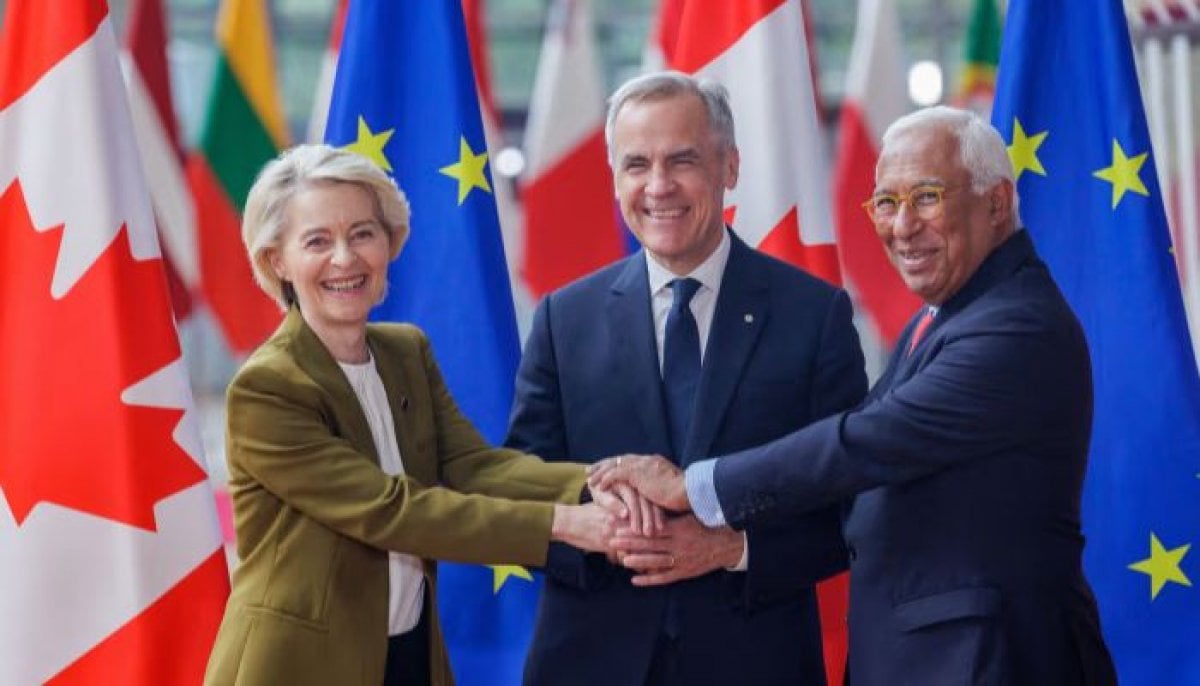 Carney proposes new EU role for Canada: Key details to know
 -
 Micron gives Taiwan workers up to 68 months pay after strike threat
 -
 SpaceX landed its fourth billion-dollar AI customer
 -
 EU approves major investment in Ukraine’s air defense: How patriot missiles work
 -
 EU watchdog sounds alarm over risk of abrupt market correction
 -
 Channel 4 to cut hundreds of jobs in major restructuring: What to know
 -
 Google commits $15B to Finnish AI infrastructure, marking its largest-ever European investment
-
 No ticket? New TSA program lets non-travelers past airport security
 -
Singapore raises ministers’ salaries for the first time in 15 years: Here’s why
-
French AI pioneer Mistral secures €3 billion in record-breaking financing round, hitting a $24 billion valuation
-
China injects major capital into state banks and insurers