Researchers found 240-million-year-old giant mysterious 'sand creeper'
A forgotten fossil of a sand creeper, 'Arenaerpeton Supinatus,' hidden inside a garden wall has turned out to be one of Australia’s most remarkable prehistoric discoveries
Shockingly, a fossil dating back 240 million years has finally been formally identified after spending decades hidden inside a retaining wall.
Researchers from UNSW Sydney and the Australian Museum have now named and described the ancient amphibian, bringing new attention to an unusual discovery that began in the 1990s.
A forgotten fossil hidden inside a garden wall has turned out to be one of Australia’s most remarkable prehistoric discoveries.
Researchers from UNSW Sydney and the Australian Museum have now named and described the ancient amphibian, bringing new attention to an unusual discovery that began in the 1990s.
About sand creeper 'Arenaerpeton Supinatus'
The ancient river predator known as Arenaerpeton Supinatus was about 1.2 meters long, looked somewhat like a giant salamander, but was bulkier and armed with fearsome fang-like teeth.
Arenaerpeton lived in freshwater environments within what is now the Sydney Basin during the Triassic period, around 240 million years ago.
One of the most notable aspects of Arenaerpeton is its size.
Researchers estimate it measured about 1.2 m from head to tail, which is unusually large compared to many of its close relatives from the same period.
The research has been published in the Journal of Vertebrate Paleontology.
Additionally, paleontologist Lachlan Hart, affiliated with both UNSW Science and the Australian Museum, explains that the fossil, named Arenaerpeton supinatus, means 'supine sand creeper,' and it is exceptionally well preserved, as it includes almost the entire skeleton and even faint outlines of the animal's skin.


-
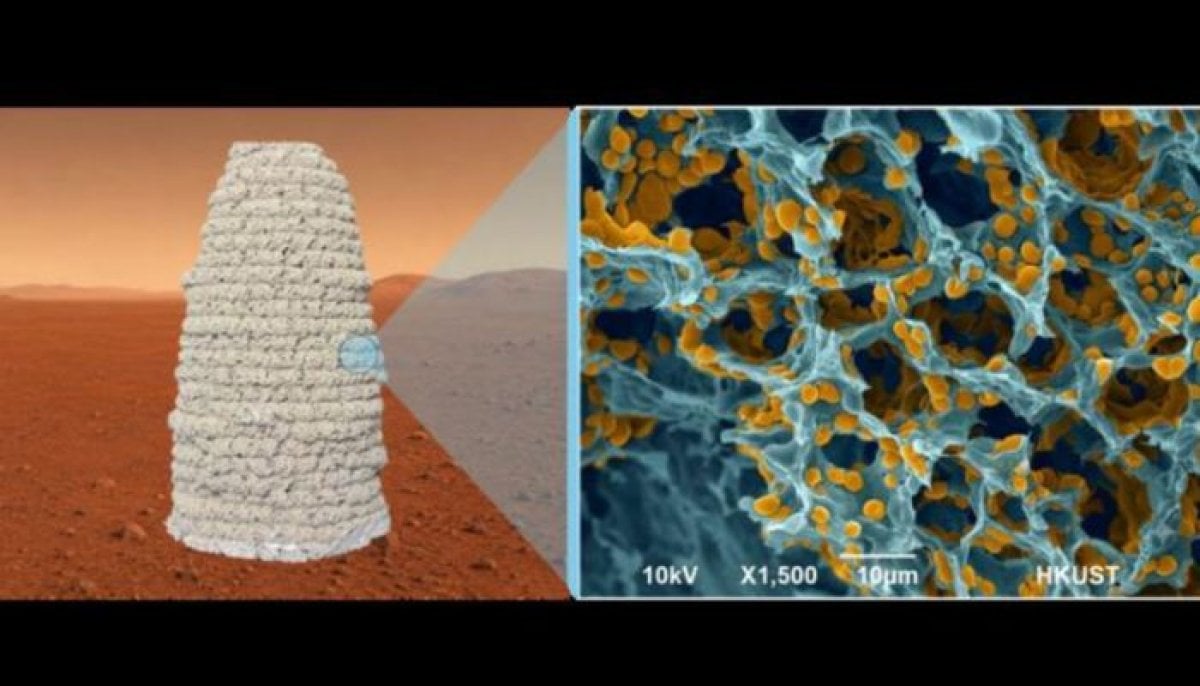 Could a newly engineered microbe help humanity survive on Mars?
 -
 Astronomers find most distant fast radio burst ever recorded
 -
 Draconid meteor shower tonight: Best time and places to see it
 -
 ‘A dream for 50 years’: Why world’s first nuclear clock could change timekeeping
 -
 NASA Curiosity captures strange ‘wind-carved’ Mars landscape in dawn image
 -
 NASA's Crew-12 Dragon begins return trip from space station
 -
 Mysterious ‘phoenix planet’ found around the remains of a dying star
 -
 First possible evidence of Planet Nine found in infrared data