Real-life Tatooine moment: Astronomers discover 27 ‘Star Wars’ like planets orbiting two suns
The team discovered 27 planets out of 1590 binary star systems, accounting for 2 percent of binary systems
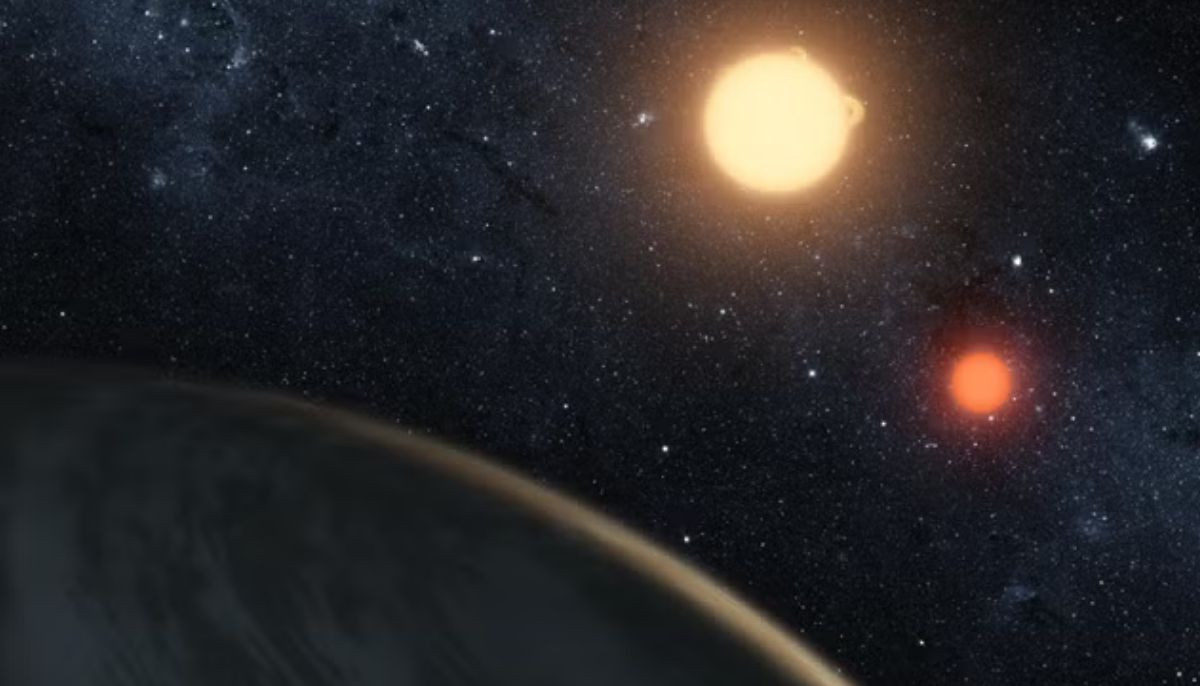
Astronomers have discovered 27 new potential planets, orbiting two stars instead of one mirroring a fictional desert planet Tatooine from the Star Wars universe.
Till now, only 18 circumbinary planets, orbiting around two stars, have been known to exist compared to more than 6,000 planets which orbit a single star.
A new survey conducted by the researchers of the University of New South Wales (UNSW) found potential 30 circumbinary candidates by using new methodology.
As per findings, coinciding with Star Wars Day, these planets have been found at a distance range from 650 to 18,000 light years away from Earth.
According to Associate Prof Ben Montet of the University of New South Wales (UNSW), the study’s senior author, “There are many things in astronomy that aren’t very tangible, but thanks to the famous Tatooine sunset scene in the first Star Wars film, everyone has a picture of what a circumbinary planet looks like and what would it mean to stand on a planet with two suns.”
The methodology used in the latest study published in Monthly Notices of the Royal Astronomical Society, is known as “apsidal precession” based on looking for a “wobble” between stars that around and eclipse each other.
The study involves monitoring “the exact timing of these eclipses” and variations occurring in eclipse schedules. This is how we can understand “there is something else going on in the system,” said Thornton.
To track the orbits, researchers used data from Nasa’s Tessspace telescope, launched in 2018.
Previously, these circumbinary planets were only identified by their transits when they pass in front of a star, casting shadow on the star. But it also depends on the perfect alignment between the planet and its star. That’s why scientists struggle to identify potential planets.
“This new method could help us uncover a large population of hidden planets, especially those that don’t line up perfectly from our line of sight. It could help reveal what the true population of planets in our universe is,” said Thornton.
By using this method, the team discovered 27 planets out of 1590 binary star systems, accounting for 2 percent of binary systems that could harbour these planets potentially.
These planets yet to be named in future surveys could be as small as the mass of Neptune to 10x as large as the mass of Jupiter.
Dr Sara Webb, an astrophysicist at the Swinburne University of Technology hoped that with this technique the researchers could find more planets in future.
Compared to other planets, circumbinary ones have very extreme environments. But a planet like Tatooine could exist in an environment neither too hot nor too cold.


-
 UAE builds asteroid lander designed to crash into its target
 -
 SpaceX Falcon 9 launches 21 military satellites into orbit
 -
 Could a newly engineered microbe help humanity survive on Mars?
 -
 Astronomers find most distant fast radio burst ever recorded
 -
 Draconid meteor shower tonight: Best time and places to see it
 -
 ‘A dream for 50 years’: Why world’s first nuclear clock could change timekeeping
 -
 NASA Curiosity captures strange ‘wind-carved’ Mars landscape in dawn image
 -
 NASA's Crew-12 Dragon begins return trip from space station