
Pakistan stops official contact with Afghan NSA
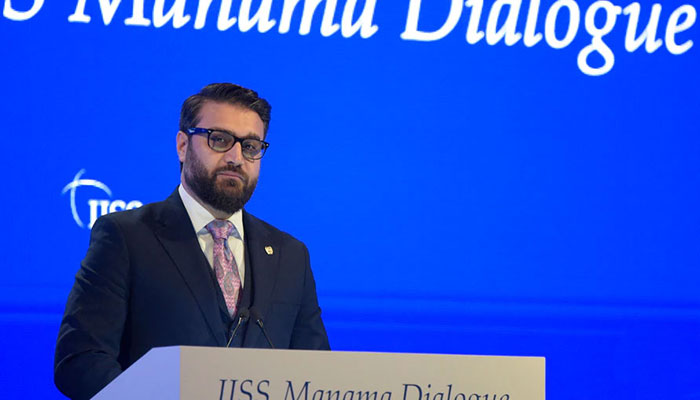
ISLAMABAD: Pakistan has conveyed to the leadership in Afghanistan it will no longer conduct official business with Kabul’s top national security chief because of his recent “abusive outburst” against Islamabad, highly placed officials and diplomatic sources confirmed to a foreign media outlet. The controversy has again highlighted political tensions and historic mistrust plaguing relations between the South Asian neighbors, which share a nearly 2,600-kilometer border.
The latest trigger came from Afghan President Ashraf Ghani’s national security adviser, Hamdullah Mohib, who routinely accuses Pakistan of supporting and directing the Taliban’s insurgency in Afghanistan, charges Islamabad rejects.
In a public speech earlier this month in eastern Nangarhar province, next to the Pakistani border, Mohib not only repeated his allegations but called Pakistan a “brothel house.”
His remarks outraged leaders in Islamabad, who denounced them, saying they “debased all norms of interstate communication.”
A senior Pakistani official privy to the matter told the media outlet on condition of anonymity his government lodged a strong protest with the Afghan side and conveyed “deep resentment” in Pakistan over Mohib’s “undignified” remarks.
The official said Kabul has been told Islamabad, henceforth, would not hold bilateral engagements with the Afghan national security adviser. It has also been conveyed “by our side that Afghan side is not serious in engaging with Pakistan, but only in the blame game and degrading Pakistan’s sincere efforts,” the official added.
Afghan Vice President Amrullah Saleh while addressing a public gathering in the southeastern border province of Khost earlier this week indirectly confirmed Pakistan’s assertions.
In a video clip from the speech posted on social media, Saleh asserted that “a Western leader” recently telephoned Ghani and told him that Pakistan does not want to work with a “Pashtun leader in Afghanistan.” The vice president did not identify the foreign leader, nor did he name Mohib but the Afghan national security adviser is an ethnic Pashtun.
Diplomatic sources confirmed to the outlet that Pakistan’s military chief General Qamar Javed Bajwa, during his visit to Kabul this month, had raised the issue in his meeting with Ghani in the presence of Nick Carter, Britain’s chief of the defense staff.
Mohib addressed a news conferences in Kabul Saturday where he was asked to respond to reports that Islamabad has ended official dealings with him.
“My team has seen media reports attributed to anonymous individuals. As of now, the government of Afghanistan has not been officially intimated about the issue,” the adviser said.
“The Afghan government will respond to it through relevant diplomatic channels whenever the information is formally conveyed to it,” Mohib added.
An official Pakistani military statement following the May 10 meeting in Kabul confirmed it was held in the presence of Carter.
“Matters of mutual interest, current developments in the Afghan peace process, enhanced bilateral security and defense cooperation and need for effective border management between the two brotherly countries were discussed,” the statement said, but it did not say anything about the controversy stemming from Mohib’s remarks.
Analyst Said Azam, a former Afghan government official, described Mohib’s outburst as detrimental to the interests of Afghanistan and its people.
“It was insulting, first and foremost for himself, the government of Afghanistan, and also the people of Afghanistan. A common man in Afghanistan see their Pakistani neighbours as brothers and sisters. He went too rude and dirty to be honest,” Azam said.
Torek Farhadi, a political commentator and former Afghan government advisor, said Mohib’s insulting remarks exhibited his “immaturity” for his rank.
“These words do not reflect the language any dignified Afghan uses towards any nation, let alone a neighbor. They are regrettable,” Farhadi observed.
Washington had also stopped meetings with the Afghan national security adviser over controversial remarks he made on a visit to the US two years ago, though contact has since been resumed.
Mohib had accused Zalmay Khalilzad, US special representative for Afghanistan reconciliation, of undercutting the Kabul government in bilateral US-Taliban peace negotiations.
“Pakistan has played an important role in Afghanistan,” David Helvey, assistant secretary of defense for Indo-Pacific affairs, told the US Senate Armed Services Committee last week. “They supported the Afghan peace process. Pakistan also has allowed us to have overflight and access to be able to support our military presence in Afghanistan.”


