
Bias as analysis
In a complex sector like energy, the space for thoughtful debate must always remain open, especially in the context of a developing economy like Pakistan’s. But such debate must rest on facts,...
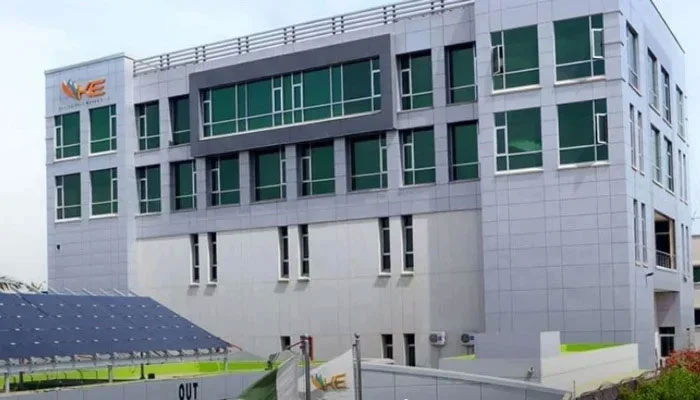
In a complex sector like energy, the space for thoughtful debate must always remain open, especially in the context of a developing economy like Pakistan’s. But such debate must rest on facts, context and a genuine grasp of how infrastructure, regulation and investment intersect to serve any population.
K-Electric (KE) caters to Karachi and its adjoining areas, which are home to over 20 million people. Our service powers the economy, influences everyday decisions and regulates routine life. As such, it is natural that discussions will arise regarding KE’s performance. And we have demonstrated our appetite to improve wherever it's constructive.
However, when such analysis is selective or misinterprets regulatory structures, oversimplifies corporate governance and underestimates the resilience and responsibility with which KE continues to serve Pakistan's largest city and, more importantly, the economic hub of a nation of over 240 million people and comes from well-versed quarters, we find it difficult to stomach.
As someone who has been associated with the company for nearly two decades, including serving as CEO for the last seven years, I would like to present a factual response to unfounded remarks regarding our operational and service delivery.
When it comes to investments, ownership and performance, one has to take into account how capital is mobilised, and how policy shapes outcomes. The premise must rest on a framework that takes into account regulatory context, global practice and data.
To start off, the ownership structure is not unusual. Around the world, consortia and joint ventures are standard mechanisms to mobilise capital for large-scale investments – a fully vertically integrated utility just happens to be one of them. KE is no exception. Laws, frameworks and mechanisms are in place to govern these structures. As an essential service and with assets valued at over Rs1.02 trillion as of June 2023, we are hardly the size of an operation that can be bankrolled by a single investor or operate on the whim and fancy of one.
The claim that KE has not invested in generation is also far from the truth when one takes even a cursory look at the numbers. Since privatisation, KE has invested over $4.3 billion across the power value chain, of which nearly $2 billion has been invested in generation alone, including the recent commissioning of BQPS-III, a 900MW, state-of-the-art power plant and one of Pakistan’s five most efficient power plants. That’s in addition to earlier-generation assets at SITE, Korangi and BQPS-II – all added post-privatisation.
I ask: If these aren’t investments, what are?
The claim that Karachi’s grid “paid the price” while T&D losses flatlined is also false. In 2019, KE’s T&D losses stood at 19.1 per cent. By 2022, they had dropped to 15.4 per cent – below Nepra’s benchmark of 15.95 per cent. That’s not stagnation, that’s progress. Dismissing an almost 400bps improvement is reflective of a lack of understanding of the power sector, especially since the last few percentage points of loss are the hardest to eliminate. The correct perspective is that KE has brought these losses significantly down from around 34.2 per cent at the time of privatisation and is now investing as much in the next seven years as it did over the past seventeen. That’s a structured approach to long-haul reform in one of the most complex power markets in the country, a city that has already been declared among the most unlivable in the world.
To argue that EBITDA, seen as a benchmark of profitability, has fallen is misleading. Since privatisation, not a single rupee in dividend has been paid to shareholders; the board, backed by the shareholders, has consistently chosen to reinvest profits into the business. If reinvested earnings now qualify as “consumer-funded", then we have lost the plot.
Similarly, when comparing with the West, we should also compare the return on equity – which has been under 2.0 per cent for KE over the past 17 years versus those offered in the UK at 6.0 per cent, China at 6.75 per cent and 15 per cent in India, while the US offers an average of 12.1 per cent return for power utilities. Unlike Pakistan, entities in these markets are not vilified for making a return. Compare the less-than-2 per cent return with the yields the sovereign has to offer on Eurobonds to foreign investors, and you will get a fair idea of the risk appetite for Pakistan.
Another misunderstood argument is related to subsidies; tariff differential subsidies to customers from the Government of Pakistan are a direct consequence of the fuel mix determined by government policy. When cheaper indigenous gas is diverted away from efficient, on-grid plants and replaced with imported RLNG, costs soar.
Allow me to explain: subsidies rose between 2021 and 2023, when the Pakistani rupee depreciated against the US dollar, driving RLNG prices to record highs in PKR terms. Since RLNG is dollar-indexed, its cost surged even when global prices softened, compounding the subsidy burden under Nepra’s uniform tariff policy. If local gas had been prioritised for the most efficient generation assets on the grid instead of captive plants, the utility tariff in the south of the country could have been easily slashed by around 40 per cent.
Much of this subsidy would’ve been avoidable. Some estimates suggest that if KE had access to natural gas, the subsidy would in fact have been zero. A more useful exercise would have been to explain why consumers in Karachi are paying the PHL surcharge of Rs3.23 per unit of electricity, a burden created by circular debt they have no contribution towards.
Finally, conflating the structural issues of the power sector with foreign diplomacy isn’t a parallel: the escalation occurred after much delay in the utility’s tariff petition – the claim that foreign diplomatic engagement somehow distorts regulatory outcomes also misses the point. Investors around the world, especially those in sectors with sovereign risk, often engage through diplomatic channels when faced with regulatory delays. That’s not exceptional. It’s standard.
KE, like any utility operating in a developing economy, has room to improve. But the progress made post-privatisation – in generation capacity, T&D loss reduction and service improvements – cannot be ignored. If the goal is to improve the energy sector, then the debate must begin with complete facts, not framing. We must ask tough questions, yes – but also acknowledge complexity, policy linkages and operating realities. Otherwise, we’re not shaping opinion. We’re just playing to the gallery.
The writer is the CEO of K-Electric.


