
Shielding genocide
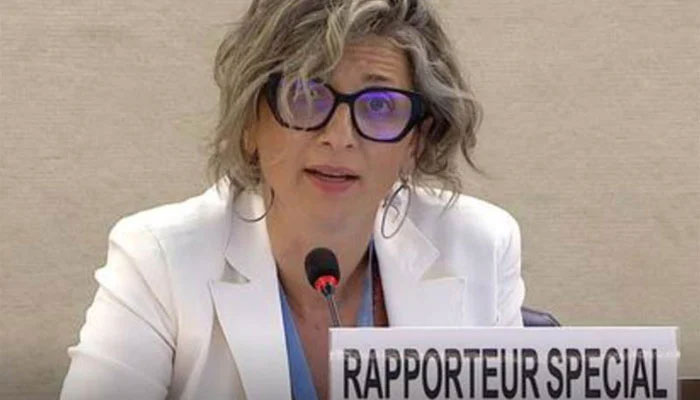
Last Wednesday, the US government announced that it was issuing sanctions against United Nations Special Rapporteur on the Occupied Palestinian Territories Francesca Albanese. The move comes after US pressure to force the UN to remove Albanese from her post failed. The US secretary of state claimed that Albanese was engaged in a campaign of political and economic warfare against the US and Israel while the US mission to the UN has accused her of ‘anti-Semitism’ and ‘unrelenting anti-Israel bias’. What her accusers really mean is that Albanese has been an unrelenting critic of Israel’s genocide in Gaza and the West Bank. The courageous rapporteur remains undeterred by the US-Israel smear campaign against her, and has issued letters in recent weeks urging the countries to pressure Israel via sanctions. She has also been a strong supporter of the International Criminal Court (ICC)’s indictments of Israeli PM Benjamin Netanyahu and other Israeli officials and has issued a report naming companies aiding Israel’s assault and occupation of Gaza. In other words, Albanese has been acting in a manner consistent with an official seeking to uphold international law and encouraging states that recognise these laws to hold those who break them accountable. This is basically her job.
Officials like Albanese ought to be praised and not smeared and sanctioned, particularly considering the fact that the UN has often failed to fulfil its duties of maintaining peace and punishing war criminals for almost as long as it has been around. But Albanese is not the only international official to have been punished by the long arm of the US for trying to hold Israel accountable for its crimes. Last month, the US also sanctioned four ICC judges, at least two of whom were targeted for their actions against Israeli leaders. The US has also sanctioned the ICC prosecutor who petitioned for the warrants. Sadly, the US is not alone in punishing critics of Israel. Earlier this month, the UK banned the group Palestine Action for holding protests against the UK’s support for Israel’s genocide and has proscribed the group under ‘anti-terrorism’ legislation. Protests have been held against this move, but the UK government has treated them in the same authoritarian manner as it dealt with Palestine action, arresting almost a hundred protesters across the country.
The trans-Atlantic campaign to punish anyone with the temerity to speak for Palestinians and ask that international law be enforced against their oppressors appears to have only emboldened Israeli PM Netanyahu. Despite growing calls in his own country for him to end the war, Netanyahu remains determined to inflict as much pain and suffering on Gaza as he can. Ceasefire talks between Israel and Hamas have reportedly stalled as the former seeks to retain control over 40 per cent of Gaza. This is an outrageous demand. In fact, and according to law, Israel has no right to occupy even an inch of Gaza or any of the other Palestinian territories under its control. But what incentive is there for the Israelis to make a serious push for peace when the most powerful countries in the world remain committed to supporting him and will even punish those who even speak against him? As ceasefire negotiations were stalling, Israel was killing, claiming the lives of at least 40 Palestinians. While the Israelis might have pulled the trigger, the US and the UK act as the shield that allows them to keep doing so.







-
 Kylie Kelce Explains Why She Avoids Raising Kids With 'silver Spoon'
 -
 Meghan Markle Is Above Royal Family ‘empty Threats,’ Says Insider
 -
 Anne Hathaway Opens Up About 'defeated' Feeling As Working Mom
 -
 Shamed Andrew Should Testify In Epstein Case As ‘act Of Service’
 -
 What Really Happened Before Nicholas Brendon Was Found Dead At Home?
 -
 Sarah Ferguson Branded ‘most Famous Missing Person’ In UK Right Now
 -
 Why King Charles Does Not Need A Driving License? Expert Reveals
 -
 Did Graham Norton Really Sign NDAs For Taylor Swift’s Wedding?
 -
 ‘Polite’ King Charles Treats Staff Better Than ‘boorish’ Andrew
 -
 Princess Beatrice's Husband Raises Eyebrows With Deleted Instagram Post
 -
 Dua Lipa 'snubs' Priyanka Chopra
 -
 Will Taylor Frankie Paul Still Get Her 'Bachelorette' Salary?
 -
 'Harry Potter' Returns: First Glimpse Of HBO's New Series
 -
 Ryan Gosling Credits His Kids For Key Detail In New Role
 -
 Prince William, Kate Middleton Mark 'historic Moment'
 -
 Why Roberts Pattinson Says Couples 'ruin' Their Big Day Amid Suki Waterhouse Wedding Rumors?