
Bilawal urges Trump to play role in comprehensive talks with India
Bilawal urges Washington to prevent India from pursuing policies that threaten regional, global stability
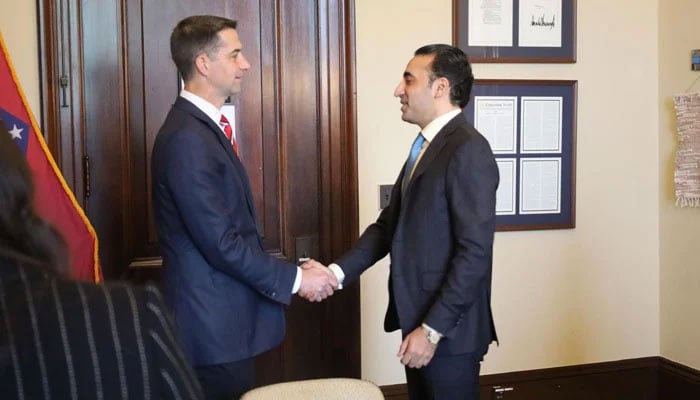
ISLAMABAD: The head of a high-level Pakistani parliamentary delegation and Chairman PPP Bilawal Bhutto Zardari has urged U.S. President Donald Trump to play a proactive role in bringing India to the negotiating table for comprehensive talks with Pakistan.
In an interview with AFP, Bilawal Bhutto Zardari said Pakistan is willing to discuss terrorism, but emphasized that Kashmir must be central to any dialogue. He warned that India is setting a dangerous precedent in South Asia by justifying war in response to terrorist incidents. He said the fate of 1.7 billion people and two great nations cannot be left to faceless, non-state actors, nor dictated by India’s new normal.
President Donald Trump has repeatedly spoken of preventing nuclear war and said the United States has offered to facilitate talks between the two sides at a neutral location.
Meanwhile, in a meeting with the US legislators, Bilawal Bhutto Zardari appreciated the crucial role played by the United States in facilitating a ceasefire between the two nuclear-armed nations, and asked the US legislators for a sustained US engagement in South Asia to help preserve stability and promote dialogue. Bilawal held the meeting with US Congressman Brian Mast, Chairman of the House Foreign Affairs Committee, Congressman Gregory Meeks, Ranking Member, Congressman Bill Huizenga, Chair of the Subcommittee on South and Central Asia, and senior lawmaker Brad Sherman.
“We’re here to appeal to you, requesting the United States to aid us in this pursuit for peace. If the United States puts its might behind peace, speak to India and explain how it’s in all our interests to resolve our issues, including the core issue of the Indian Illegally Occupied Jammu & Kashmir (IIOJK),” the PPP chairman, who is leading Pakistan’s parliamentary diplomatic mission, noted during a meeting with US legislators.
He also underscored the paramount importance of diplomacy, calling upon the US government and Congress to actively facilitate a constructive engagement between India and Pakistan. “Just as urgently as we needed the United States government’s help to achieve the ceasefire, we need your assistance today to help engage India and prevent policies that lead to regional and global insecurity,” he said.
During the meeting, the PPP chairman conveyed Pakistan’s deep concerns over India’s recent provocations, especially the unilateral suspension of the Indus Waters Treaty — a move he described as a dangerous precedent and a clear violation of international law. He also highlighted the worsening humanitarian crisis in the IIOJK and emphasized that sustainable peace cannot be achieved through coercion or threats, but only through genuine dialogue and diplomacy.
The high-level parliamentary delegation from Pakistan engaged with a bipartisan group of US legislators at a dinner reception hosted by Ambassador Rizwan Saeed Sheikh at Pakistan House. The event saw the attendance of Congress members, including Representatives Jack Bergman, Tom Suozzi, Ryan Zinke, Maxine Waters, Al Green, Jonathan Jackson, Hank Johnson, Stacey Plaskett, Henry Cuellar, Mike Turner, Riley Moore, George Latimer and Cleo Fields, among others. Addressing the US legislators, Bilawal presented a compelling case for regional peace and stability, characterizing the delegation’s visit as a “mission for peace.”
Referring to recent war rhetoric from India and the fragile nature of the current ceasefire, he highlighted the inherent risk of future escalation. “While the ceasefire is a welcome start, it is just a start. The reality is that South Asia, India, and Pakistan, and by extension, the rest of the world, are less safe today than before the start of this crisis,” he asserted. “The threshold for all-out war between India and Pakistan is the lowest it has ever been in our history. As it stands today, if there’s a terrorist attack anywhere in India, proof or no proof, it means war,” he added.
Bilawal also informed the Congresspersons about the significant threat posed by India’s actions regarding the unilateral suspension of the Indus Waters Treaty, which could precipitate future conflicts. “India’s threat to cut off Pakistan’s water supply to 240 million people is an existential threat. If they implement that threat, it will mean a declaration of war,” he declared.
The US Congress members assured their full support for regional peace and stability in South Asia, commending the delegation for their comprehensive briefing on the ongoing crisis. Ambassador of Pakistan to the United States, Rizwan Saeed Sheikh, concluded the evening by thanking the US legislators for attendance and interaction with the high-level parliamentary delegation.







-
 Eric Dane's Girlfriend Janell Shirtcliff Pays Him Emotional Tribute After ALS Death
 -
 King Charles Faces ‘stuff Of The Nightmares’ Over Jarring Issue
 -
 Sarah Ferguson Has ‘no Remorse’ Over Jeffrey Epstein Friendship
 -
 A$AP Rocky Throws Rihanna Surprise Birthday Dinner On Turning 38
 -
 Andrew Jokes In Hold As BAFTA Welcomes Prince William
 -
 Sam Levinson Donates $27K To Eric Dane Family Fund After Actor’s Death
 -
 Savannah Guthrie Mother Case: Police Block Activist Mom Group Efforts To Search For Missing Nancy Over Permission Row
 -
 Dove Cameron Calls '56 Days' Casting 'Hollywood Fever Dream'
 -
 Prince William, Kate Middleton ‘carrying Weight’ Of Reputation In Epstein Scandal
 -
 Timothée Chalamet Compares 'Dune: Part Three' With Iconic Films 'Interstellar', 'The Dark Knight' & 'Apocalypse Now'
 -
 Little Mix Star Leigh-Anne Pinnock Talks About Protecting Her Children From Social Media
 -
 Ghislaine Maxwell Is ‘fall Guy’ For Jeffrey Epstein, Claims Brother
 -
 Timothee Chalamet Rejects Fame Linked To Kardashian Reality TV World While Dating Kylie Jenner
 -
 Sarah Chalke Recalls Backlash To 'Roseanne' Casting
 -
 Pamela Anderson, David Hasselhoff's Return To Reimagined Version Of 'Baywatch' Confirmed By Star
 -
 Willie Colón, Salsa Legend, Dies At 75