
Export support
Juice manufacturers told NA committee that their exports to 26 countries could double current $15m if given tax rebates
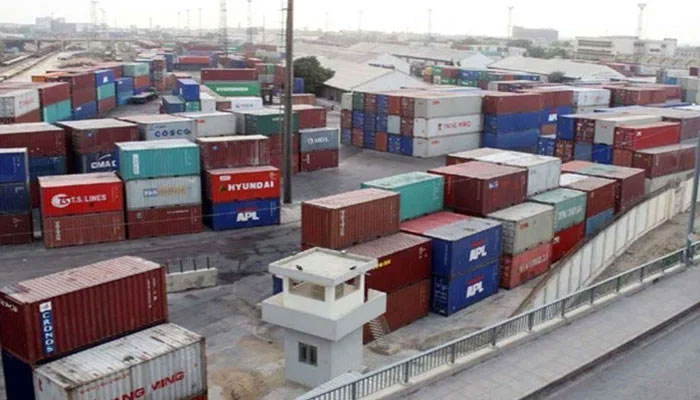
While Pakistan’s economy has broadly stabilised over the past year, some discontent among certain business community sectors with government policy seems to be growing. On Friday, the National Assembly’s trade committee faced a barrage of complaints from exporters of rice, fruit, gold and juice, who claimed that policy flip-flops and regulatory bottlenecks are choking the country’s fragile export growth. Rice exporters have complained of repeated cargo delays and damage from excessive inspections. Juice manufacturers told the NA committee that their exports to 26 countries could double the current $15 million if given tax rebates. The committee also expressed alarm over the sudden ban on gold and jewellery exports and imports, imposed by the federal government on May 5 following concerns raised by the State Bank of Pakistan. The government has said that a special committee is now reviewing the issue and has suggested digitising the trade under a single-window system, while noting that the federal cabinet would take any final decision. These complaints by exporters echo some of the concerns raised in a World Bank report released earlier this week that called for broader structural reforms to unlock export growth. The report noted that Pakistan’s export performance has remained weak, with tariffs declining to just 10 per cent of GDP in 2024, despite increased tariff protections.
While Pakistan has experienced some export growth in recent months, with exports rising by an estimated 8.42 per cent over the first eight months of the current fiscal year, the country’s trade deficit still remains a long-term problem and government policy does not seem to be helping exporters gain ground on the global stage. It also does not help that the global trade environment has become far more unstable ever since US President Donald Trump came back to power. Trump’s barrage of reciprocal tariffs has jeopardised the access of Pakistani exporters to the US, the world’s largest consumer market, as Pakistani goods face a potential tariff of 29 per cent. While the government formally started negotiations with the US on reciprocal tariffs on Friday, and Trump appears to have expressed an interest in boosting trade with South Asia after his administration helped broker an end to the recent conflict between India and Pakistan, it remains unclear how these negotiations will pan out. More importantly, the world seems to be entering a more protectionist phase where trade is increasingly viewed as a zero-sum game. This is a far-from-ideal environment for a developing country that needs export growth to secure long-term economic stability.
Given the current environment, it is important for the government to actively facilitate exporters. This does not mean that the latter should be beyond reproach or regulation, but that regulation ought to be crafted with a view of making the country’s exports more competitive while also raising global trust in Pakistani products. The tax rebates that some exporters are asking for as well as other forms of fiscal support seem like a step too far given the country’s revenue collection woes. The nation’s salaried class has been squeezed dry when it comes to taxation, and Big Business will have to do its part for fiscal consolidation. However, when it comes to issues like inspections and deciding what businesses can or cannot export, these measures need to be communicated clearly to exporters. They must also be given time to adjust to new rules. One cannot simply wake up in the morning and find out they can no longer export something or that they cannot guarantee foreign buyers will receive their goods on time due to excessive inspections.







-
 'Buffy' Star Nicholas Brendon's Death Case Takes Massive Turn
 -
 FKA Twigs Takes Legal Stand Against Ex Shia LaBeouf
 -
 ‘Progressive’ Kate Middleton Snubs Outdated Royal Etiquette
 -
 Kylie Kelce Explains Why She Avoids Raising Kids With 'silver Spoon'
 -
 Meghan Markle Is Above Royal Family ‘empty Threats,’ Says Insider
 -
 Anne Hathaway Opens Up About 'defeated' Feeling As Working Mom
 -
 Shamed Andrew Should Testify In Epstein Case As ‘act Of Service’
 -
 What Really Happened Before Nicholas Brendon Was Found Dead At Home?
 -
 Sarah Ferguson Branded ‘most Famous Missing Person’ In UK Right Now
 -
 Why King Charles Does Not Need A Driving License? Expert Reveals
 -
 Did Graham Norton Really Sign NDAs For Taylor Swift’s Wedding?
 -
 ‘Polite’ King Charles Treats Staff Better Than ‘boorish’ Andrew
 -
 Princess Beatrice's Husband Raises Eyebrows With Deleted Instagram Post
 -
 Dua Lipa 'snubs' Priyanka Chopra
 -
 Will Taylor Frankie Paul Still Get Her 'Bachelorette' Salary?
 -
 'Harry Potter' Returns: First Glimpse Of HBO's New Series