
NAQEEBULLAH MEHSUD CASE: Counsel told to argue maintainability of plea against Anwar’s acquittal
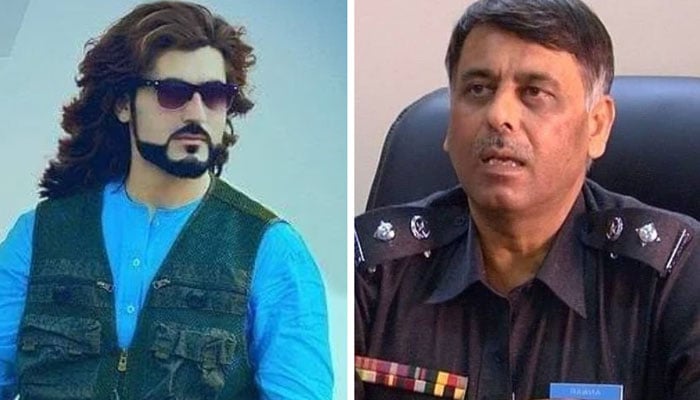
The Sindh High Court (SHC) on Monday directed counsels to argue on the maintainability of the appeal against the acquittal of former District Malir SSP and 17 others in the case of the kidnapping of Naqeebullah Mehsud and three others, and their murder during an alleged police encounter.
The direction came during the hearing of the appeal. On January 23, 2023, an anti-terrorism court (ATC) had acquitted ex-SSP Rao Anwaar and 17 other police officials of kidnapping Mehsud and three others, and murdering them in an alleged encounter in Shah Latif Town on January 13, 2018.
According to the prosecution, Anwaar and other police officials kidnapped Mehsud and two others from Sohrab Goth on January 3, 2018, then released two of them after two or three days.
The prosecution claimed that Anwaar and his police team kept Mehsud for almost 10 days, then killed him in a staged encounter, along with Mohammad Ishaque, Nazar Jan and Mohammad Sabir, who had been picked up from Punjab during the past couple of years.
Appellant Alam Sher, Mehsud’s brother, had filed an appeal against the acquittal with the ATC. Sher’s counsel Jibran Nasir said the trial court had erred by passing a consolidated judgment in three cases, rendering the impugned judgment to be a nullity in the law’s eyes.
Nasir said the trial court did not discuss the other charges against Anwaar apart from that of abduction. The prosecution’s eyewitness had seen the abduction of the deceased but the trial court misread the evidence that the witness had not seen it, he added.
He said the trial court dismissed the application for additional evidence in the case, while the requirement of the Criminal Procedure Code’s Section 367, which binds the trial court to pass judgment on each charge of the allegations and issue reasons for the decision, were not fulfilled.
He also said that the entire reasoning given by the trial court for not believing the circumstantial evidence connecting the accused/respondents to the instant crime was lack of direct evidence and the alleged unreliability of the statements of the prosecution’s witnesses regarding the factum of abduction.
However, the upshot of what had been discussed prima facie showed that the trial court had failed to correctly peruse and appreciate the ocular witness testimonies regarding Mehsud’s abduction and the prosecution’s witnesses, he added.
The counsel said the prosecution had established its case in the light of ample evidence, proving the factum of abduction, and the consequent chain of events of captivity and murder of Mehsud at the hands of the accused/respondents.
He requested the high court to set aside the trial court’s acquittal order or remand the case for retrial from the stage of the framing of the charges.
An SHC division bench headed by Justice Omar Sial said the appellant’s counsel raised sufficient arguments, although not required at this stage. The bench directed the state’s counsel and the respondent’s counsel to make their preliminary arguments on the issues raised by the appellant’s counsel on May 19.


