
‘Pakistan — bridge aligning China, ME’
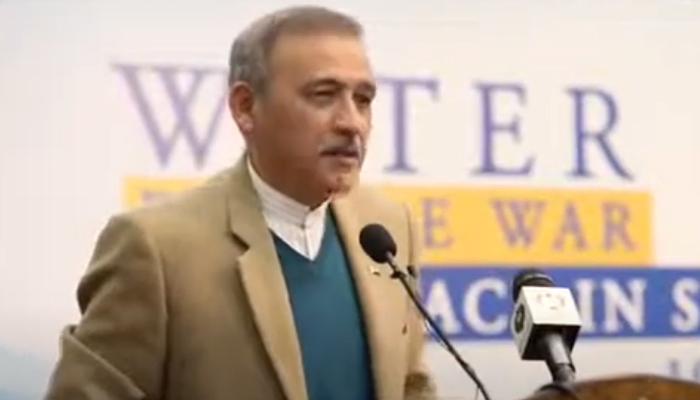
Islamabad:Prof Azhar Ahmad from Bahria University has said that China possesses technology and economic strength, while the Middle East rich in capital lacks technology these interests can be aligned through Pakistan acting as a bridge by utilising its good offices, cheap labour and deep cultural understanding of both regions.
Prof Azhar Ahmad was participating in an event on “China, Middle East and the Role of Pakistan” organised here by Institute of Regional Studies (IRS). Prof Ahmad highlighted China's role as a mediator for the Global South. He highlighted remarkable examples such as its mediation efforts for Saudi-Iran rapprochement in 2023 and recent initiative to unite 14 Palestinian factions for bringing peace and stability. He noted that China’s trade with the Middle East witnessed significant growth, surpassing that of the United States.
He proposed that Pakistan, with its strategic importance, could help elevate the China-Pakistan Economic Corridor (CPEC) into a broader regional initiative linking China with the Middle East, Africa and beyond. According to Prof Ahmad, Pakistan, with its cheap labour and understanding of both Chinese and Middle Eastern cultures, can help align these interests effectively.
Dr Munawar Hussain from Quaid-i-Azam University highlighted China’s patience in foreign policy, its history of avoiding colonialisation, adhering to a non-interventionist policy since the era of Mao Zedong and its primary foreign policy aspiration of achieving economic wellbeing. He discussed China’s foreign policy shift from socialism to neoliberalism aimed at fostering a multipolar world. He also noted China’s consistent pro-Palestinian stance and its position as the largest oil importer from the Middle East.
He stressed Pakistan’s pivotal geostrategic role in connecting Asia, the Middle East, and Africa, suggesting that Pakistan could enhance its diplomatic influence and contribute to regional stability by extending trade and infrastructure investments. However, he also acknowledged the challenges Pakistan faces, including navigating US-China rivalry, potential Indo-US ties, threats to strategic autonomy and increased risk of terrorism.
Shakeel Ahmed Ramay, CEO, Asian Institute of Eco-civilisation, Research, and Development (AIERD) emphasised the shared values and common interests between China and the Middle East, while also underscoring the importance of Pakistan defining its identity and role on the global stage independently, rather than being viewed solely in relation to other states.






-
 Queen Elizabeth II Knew Son Andrew Was The Most ‘vulnerable’ Of All Kids
 -
 Noah Wyle Achieves His '50-year' Dream In Hollywood: 'Truly Humbled'
 -
 Cardi B 'pauses' Divorce Drama After Offset Shooting Shock
 -
 Zendaya Reveals Which Disney Movie Inspired Her Past Fashion Style
 -
 Jennie Garth Reacts To Rumours About Her, Jason Priestly's Off Camera Love Affair
 -
 'Project Hail Mary' Beat Hit Space Movie At Box Office: Here's Which Film
 -
 Prince William Secretly Called Andrew Night He Lost All Titles: Expert
 -
 James Bourne's Bandmate Provides Health Update Post Life Threatening Scare
 -
 Chase Infiniti Shares What Surprised Her Most About Leonardo DiCaprio
 -
 Jackie Tohn's Hilarious Joke About Kristen Bell's Daughters Goes Viral
 -
 Queen Elizabeth II Apt Fashion Told ‘story Of A Lifetime’
 -
 Patrick Ball Recalls Challenging Times Before Landing 'The Pitt' Gig
 -
 Taylor Swift Steps Out Looking Like A Bride
 -
 Nicole Kidman 'embraces Independence' As She Navigates New Chapter Of Life Post Keith Urban Split
 -
 'Breaking Bad' Duo Aaron Paul, Bryan Cranston Drop Exciting News For Fans
 -
 BTS Kicks Off Massive World Tour