
Sindh to develop unified labour law encompassing all sectors
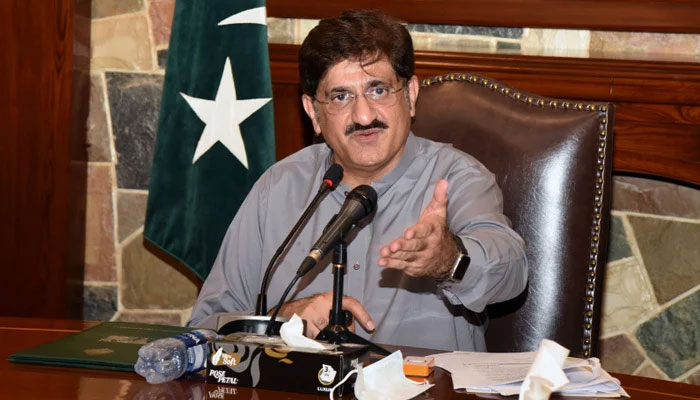
The Sindh government has decided to develop a unified labour law in the province by consolidating, simplifying and rationalising the existing labour laws after due consultations.
Sindh Chief Minister Syed Murad Ali Shah made this announcement on Friday while talking to a six-member International Labour Organisation (ILO) delegation led by its Country Director Geir Tonsto at the CM House.
The CM thanked the ILO for providing technical assistance in drafting the Labour Code of Sindh. “The draft Labour Code consolidates, simplifies and rationalises the 21 laws regulating matters such as occupational safety and health, industrial relations and working conditions for the workers,” he said.
A major advantage of the comprehensive codification of labour laws was ensuring common fundamental rights and responsibilities for the businesses and workers across all sectors, the CM said, adding that the labour laws in the past varied arbitrarily from one sector to another.
The proposed law would make it much easier for businesses, including investors, and workers to navigate relevant provisions and understand them, Shah said. He added that once the law was enacted, the regulators would be clear about their roles and powers, definitions would be consistent across processes and entitlements, obsolete industry-specific provisions would be eliminated, and contemporary problems would be dealt with.
The CM said the consolidated draft Labour Code would support the province in meeting the targets under various United Nations Sustainable Development Goals (SDGs). He stated that 19 laws were being included in the Sindh Labour Code. They included the Children (Pledging of Labour) Act, Industrial Statistical Act 1942, Employment (Record of Service) Act 1951, Maternity Benefits Ordinance 1958, Road Transport Workers Ordinance, Tea Plantations Labour Ordinance 1962, Fee Charging Employment Agencies (Regulation) Act, Sindh Industrial Relation Act 2013, Sindh Payment of Wages Act, Minimum Wages Act, Terms of Employment (Standing Orders) Act, Factories Act, Shops & Commercial Establishment Act, Companies Profit (Workers Participation) Act, Sindh Workers Compensation Act, Bonded Labour System (Abolition) Act 2015, Prohibition of Employment of Children Act 2017, Occupational Safety and Health Act 2017, Home-Based Workers Act and Sindh Women Agricultural Workers Act 2019.
The ILO country director stressed the need for starting a process to discuss and finalise the draft Labour Code through social dialogue before its submission to the legislature. He suggested the development of further regulatory framework through rules that implemented the Code.
He mentioned that it was necessary to develop mechanisms and strategies to enhance compliance in priority areas, as well as provide capacity building and training for labour officers, inspectors, judiciary and other stakeholders.







-
 King Charles’ Love For Carole Middleton Exposes Secret Cracks With Camilla: ‘Calls Her Wolf In Sheep’s Clothing’
 -
 Zendaya Reveals If She Or Tom Holland Is The Better Cook
 -
 Tori Kelly Recalls Making 'right Move' During First Pregnancy
 -
 AI Won’t Replace Jobs, It Will Evolve Them, Says Nvidia CEO
 -
 Bianca Censori Drops Jaw-dropping Insight On The 'Father' Music Video
 -
 Britney Spears' 'completely Inexcusable' DUI Arrest Becomes Blessing In Disguise?
 -
 Storm Dave: Everything You Need To Know To Stay Safe This Easter Weekend
 -
 Buckingham Palace Unveils What's Inside King Charles' Royal Gift
 -
 Hailee Steinfeld, Josh Allen Embrace Parenthood
 -
 Prince William Speaks Out Amid Major Cancer Breakthrough
 -
 Where Is Artemis II Today? Here Is Everything To Know About NASA’s Journey To The Moon
 -
 Nicole Kidman Faces Costar Alexander Skarsgard's Wrath After Stabbing Him 'in The Back'?
 -
 What To Know Before Using Weight-loss Drugs Like Ozempic
 -
 Prince Harry, King Charles Planning Something That ‘could Change Everything’ For Archie, Lilibet
 -
 Courtney Love Gives Rare Insights Into Friendship With Lana Del Rey
 -
 Brian Littrell Accused Of Using Homophobic Slur After Video Shown In Trespassing Dispute