
Big dams are at risk of collapse, warn researchers
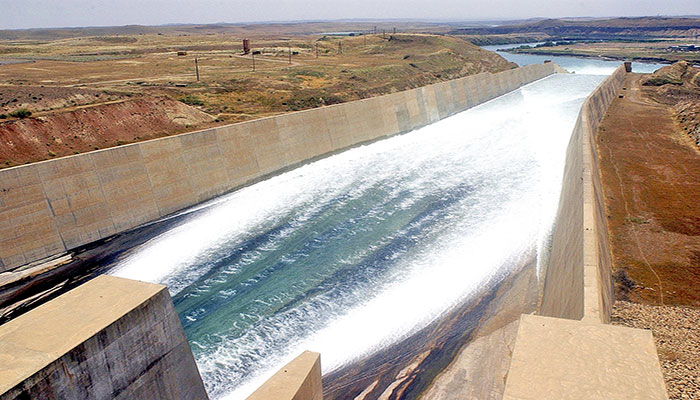
NEW YORK: From the Hoover Dam in Arizona to the Inguri Dam in Georgia, many of the world's most famous dams are risk of collapsing, a worrying new report has warned.
Most of the 58,700 largest dams worldwide were constructed between the 1930s and 1970s, making them between 50 and 90 years old, foreign media reported. However, most were only designed to last for 50 to 100 years, meaning they are now reaching the end of their lifespans. Worryingly, if these dams did collapse, they'd release up to 8,300 cubic kilometres of water - enough to fill the America’s 4,926 square-kilometer Grand Canyon Natinal Park twice over.
The researchers hope the findings will help policymakers when deciding what to do about ageing dams. In the study, researchers from the UN University Institute for Water, Environment and Health (UNU-INWEH) looked at the age and state of the largest dams around the world.
They found that most of the 58,700 large dams worldwide were constructed between 1930 and 1870, with a design life of 50 to 100 years. Beyond this point, these dams 'would probably begin to express signs of ageing', according to the researchers.
Duminda Perera, a senior researcher at UNU-INWEH, and lead author of the study, said: “This problem of ageing large dams today confronts a relatively small number of countries - 93% of all the world's large dams are located in just 25 nations.
“Large dam construction surged in the mid-20th century and peaked in the 1960s - 70s, especially in Asia, Europe and North America, while in Africa the peak occurred in the 1980s. The number of newly-constructed large dams after that continuously and progressively declined.”
Worldwide, an estimated 7,000 to 8,300 cubic kilometres of water are stored behind large dams. Worryingly, the team believes that climate change could also accelerate the dam ageing process.
Vladimir Smakhtin, Director of UNU-INWEH and co-author of the study, said: “This report aims to attract global attention to the creeping issue of ageing water storage infrastructure and stimulate international efforts to deal with this emerging, rising water risk… Decisions about decommissioning, therefore, need to be taken in the context of a changing climate.”
However, removing a dam is no mean feat. Most dams removed to date have been small, with only a few known cases of large dams being removed in the last decade.







-
 Prince William Questions Himself ‘what’s The Point’ After Saudi Trip
 -
 James Van Der Beek's Friends Helped Fund Ranch Purchase Before His Death At 48
 -
 King Charles ‘very Much’ Wants Andrew To Testify At US Congress
 -
 Rosie O’Donnell Secretly Returned To US To Test Safety
 -
 Meghan Markle, Prince Harry Spotted On Date Night On Valentine’s Day
 -
 King Charles Butler Spills Valentine’s Day Dinner Blunders
 -
 Brooklyn Beckham Hits Back At Gordon Ramsay With Subtle Move Over Remark On His Personal Life
 -
 Meghan Markle Showcases Princess Lilibet Face On Valentine’s Day
 -
 Harry Styles Opens Up About Isolation After One Direction Split
 -
 Shamed Andrew Was ‘face To Face’ With Epstein Files, Mocked For Lying
 -
 Kanye West Projected To Explode Music Charts With 'Bully' After He Apologized Over Antisemitism
 -
 Leighton Meester Reflects On How Valentine’s Day Feels Like Now
 -
 Sarah Ferguson ‘won’t Let Go Without A Fight’ After Royal Exile
 -
 Adam Sandler Makes Brutal Confession: 'I Do Not Love Comedy First'
 -
 'Harry Potter' Star Rupert Grint Shares Where He Stands Politically
 -
 Drama Outside Nancy Guthrie's Home Unfolds Described As 'circus'