
Pakistan sticks to Chinese collaboration in agriculture sector
LAHORE: Pakistan is preparing a plan to include agriculture sector projects in the Chinese-funded corridor building framework, it was learnt on Friday.
Ministry of food security initiated the preparation of the plan as part of the second phase of China-Pakistan Economic Corridor (CPEC) framework, according to an official document available with The News.
The China-Pakistan Economic Corridor Authority (CPECA) has already emphasised the need to prepare agriculture plan under the CPEC framework.
The plan should be approved by the federal cabinet and should cover technology transfer/import package of seed and agriculture mechanisation, anticipated investment from China and capacity development of agriculture scientists, Asim Saleem Bajwa, chairman of CPECA said during a meeting of Punjab Agriculture Committee in Islamabad earlier this month.
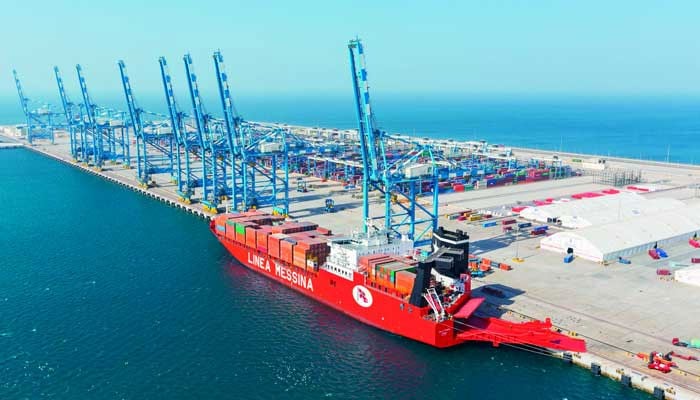
Governor Punjab, food security and provincial agriculture ministers attended the meeting. The CPEC Authority is focusing on second phase of economic cooperation between China and Pakistan after successful completion of the first phase of CPEC that contributes to the energy and infrastructure development in the country. The second phase of CPEC would focus on industrial cooperation, agriculture, science & technology, tourism, and other areas. The CPEC is said to be a $62 billion framework as part of Belt and Road Initiative of China that aims to improve connection of China in the region and with Africa and Europe through a network of highways, rail lines and sea lanes. The CPEC connects the Chinese city of Kashgar with Pakistan up to Gwadar port on the Arabian Sea.
The State Bank of Pakistan, in a report, said the CPEC long term plan envisages significant development of the agriculture sector of Pakistan – an often-overlooked area amidst the developments being made in the energy, infrastructure, and industrial sectors of the country. In the crop sector, there is a focus on increasing the use of modern machinery and synthetic fertilizers to enhance the yields, while food storage and processing zones would be constructed to reduce significant post-harvest losses.
Similarly, the building of cold storage stations and meat processing plants is also being planned to enhance productivity of livestock and fisheries sectors besides making their output more competitive in the international market. These developments hold the potential to not only boost the agriculture output of the country, but also to narrow the trade imbalance between China and Pakistan by expanding food exports to the former.
There are 10 agro-ecological zones in the country where as many as 20 types of value-added agricultural commodities can be produced, according to the Pakistan Institute of Development Economics.







-
 Lana Del Rey Announces New Single Co-written With Husband Jeremy Dufrene
 -
 Ukraine-Russia Talks Heat Up As Zelenskyy Warns Of US Pressure Before Elections
 -
 Lil Nas X Spotted Buying Used Refrigerator After Backlash Over Nude Public Meltdown
 -
 Caleb McLaughlin Shares His Resume For This Major Role
 -
 King Charles Carries With ‘dignity’ As Andrew Lets Down
 -
 Brooklyn Beckham Covers Up More Tattoos Linked To His Family Amid Rift
 -
 Shamed Andrew Agreed To ‘go Quietly’ If King Protects Daughters
 -
 Candace Cameron Bure Says She’s Supporting Lori Loughlin After Separation From Mossimo Giannulli
 -
 Princess Beatrice, Eugenie Are ‘not Innocent’ In Epstein Drama
 -
 Reese Witherspoon Goes 'boss' Mode On 'Legally Blonde' Prequel
 -
 Chris Hemsworth And Elsa Pataky Open Up About Raising Their Three Children In Australia
 -
 Record Set Straight On King Charles’ Reason For Financially Supporting Andrew And Not Harry
 -
 Michael Douglas Breaks Silence On Jack Nicholson's Constant Teasing
 -
 How Prince Edward Was ‘bullied’ By Brother Andrew Mountbatten Windsor
 -
 'Kryptonite' Singer Brad Arnold Loses Battle With Cancer
 -
 Gabourey Sidibe Gets Candid About Balancing Motherhood And Career