
What’s on the agenda?
Confusion seems to be the order of the day as the PTI government fumbles over what its approach towards the economy will be. Set to propose a mini-budget next week, it remains to be seen whether the government will be able to uphold its own policy priorities. Given that it has already reversed a number of economic decisions it had made, including the increase in gas and electricity tariffs, it seems the party’s economic policymaking is just not finding firm ground. On Wednesday, the government decided to increase the power tariff before reversing the decision swiftly. Whatever early confidence the new regime may have created has been quickly replaced by a growing uncertainty over the economic governance that is yet to become clear. The sense is that the country’s leadership is being swayed in different directions by its crew of appointed experts and public opinion. While there is justification for the PTI government to announce a mini-budget to show its ambitions for Pakistan’s economy, the feeling for now is that it is likely to be an underwhelming exercise. The mini-budget is likely to be punitive, rather than setting an agenda for any forward-looking economic agenda.
It is thought that the government may look to cut the tax exemptions offered by the last government as well as increase import duties on specific luxury items. The tax ceiling may also be brought down. This would be a meaningless exercise designed to increase the number of taxpayers on the cards, instead of improving tax collection from the rich. Overall, the government is expected to announce Rs400 billion in new taxes. The much touted ‘cheese ban,’ or ban on the import of luxury items, looks unlikely as well.
Worryingly, the government is also set to slash expenditure and revise all macroeconomic targets for the next fiscal year. Around 200-300 development schemes could be shelved, which would bring the development budget down by around 40 percent. There is also word of another tax amnesty scheme being announced for the one million individuals who face tax audits each year. While the PTI was not elected on the agenda of austerity, its adoption of the austerity agenda is no surprise. Its economic team has shown little imagination of its own. The slashing of development funds and development targets is a terrible signal to send. The mini-budget proposal seems to signal that the government could announce a full-blown economic crisis in the country. One must remind them that some prophecies can be self-fulfilling.







-
 James McAvoy Laughs Off Career Blunder
 -
 Dianna Russini Bashes Husband In Resurfaced Video
 -
 Prince Harry Hit With Defamation Case
 -
 Your Phone May Be Ageing Your Brain, Study Suggest
 -
 Hassan Campbell Compares Afrika Bambaataa To Epstein After Hip-hop Legend's Death
 -
 Timothee Chalamet Oscars Snub Was 'on Purpose'?
 -
 Jimmy Kimmel Mocks Melania Trump On Live TV Over Epstein Denial: Watch
 -
 Largest-ever Exhibition Of Queen Elizabeth's Fashion Opens At Buckingham Palace
 -
 Taylor Swift And Travis Kelce No Longer Eyeing Rhode Island For Wedding: New Venue Revealed
 -
 Jeff Baena's Brother Brad Baena Takes Privacy Action After Accusing Aubrey Plaza Of Cheating
 -
 Noah Wyle Shares Insights About Teenage Obsession Amid Latest Honour
 -
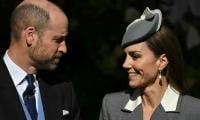 Prince William And Kate Middleton Share Personal Message As Women's Six Nations Kicks Off
 -
 Where Paris Jackson Stands On Allegations Against Michael Jackson Now
 -
 Melania Trump's Statement Sparks Reaction By White House Official: Source
 -
 26% Of CEOs See CFOs As Top Job Threat, New Survey Finds
 -
 Zendaya Drops 'chilling' Message For Sydney Sweeney At 'Euphoria' Premiere