
Dictators and democracy
Pakistan’s first dictator Ayub Khan had famously proclaimed that we were unsuited to democracy because of the warm weather, which presumably made passions run high in everyone but cold-blooded generals. Our most recent dictator, Pervez Musharraf, has now echoed these sentiments by claiming democracy is ineffective in Pakistan and the army is required to act as a check on democratic failure. Musharraf’s statement may not be as laughable as Ayub’s theorising but it is rooted in the same dangerous mindset: for most of our history quite a few men in uniform have seen themselves as the country’s indispensable rulers and our democratic system an inconvenience to be praised or trashed based on the needs of the dictator. That dictators have no use for democracy should be self-evident since their very first act in becoming dictators is to discard democracy. But they have still been forced to pay lip service to democracy, be it Ayub’s Basic Democracies scheme, Ziaul Haq’s party-less elections or Musharraf’s own constant insistence that only he was bringing ‘true’ democracy to Pakistan. For Musharraf, needless to say, the only true democracy was the kind that put him in charge. Once the people of the country had their say and Musharraf was sent packing, he no longer had any use for democracy whether ‘true’ or otherwise – as his most recent remarks show – or indeed for the country itself which he tried so hard to flee.
Dictators have tried, usually not very successfully, to hide their contempt for democracy because the people themselves do not share their ugly sentiments. It was a combination of students, workers and peasants that brought Ayub down while Zia had to face the strength of the non-violent and populist Movement for the Restoration of Democracy. Musharraf, too, faced the wrath of civil society when he attempted his second coup in 2007. But the constant undermining of democracy by military dictators has had an ally in the form of opportunistic politicians whose own base of power is small but whose influence is outsized during military rule because of their willingness to provide the illusion of democratic legitimacy to coup-makers. These are the politicians who joined the smear campaign against Fatima Jinnah in 1965, who welcomed the overthrow and hanging of a prime minister and who formed the King’s Party in Musharraf’s time. It is they who side with the dictators and also do their best to prove them right in their assertion that democratic politicians are hopelessly corrupt. In truth, more harmful has been the corruption of the dictators and their henchmen who ruthlessly divide the country and buy off politicians with schemes like the National Reconciliation Ordinance a la Musharraf. When they have fled the country they did everything to corrupt, they then have the temerity to declare us unsuited to democracy even as they sit in luxury in foreign lands and avoid democratic accountability for their actions.





-
 Sam Levinson Donates $27K To Eric Dane Family Fund After Actor’s Death
 -
 Savannah Guthrie Mother Case: Police Block Activist Mom Group Efforts To Search For Missing Nancy Over Permission Row
 -
 Dove Cameron Calls '56 Days' Casting 'Hollywood Fever Dream'
 -
 Prince William, Kate Middleton ‘carrying Weight’ Of Reputation In Epstein Scandal
 -
 Timothée Chalamet Compares 'Dune: Part Three' With Iconic Films 'Interstellar', 'The Dark Knight' & 'Apocalypse Now'
 -
 Little Mix Star Leigh-Anne Pinnock Talks About Protecting Her Children From Social Media
 -
 Ghislaine Maxwell Is ‘fall Guy’ For Jeffrey Epstein, Claims Brother
 -
 Timothee Chalamet Rejects Fame Linked To Kardashian Reality TV World While Dating Kylie Jenner
 -
 Sarah Chalke Recalls Backlash To 'Roseanne' Casting
 -
 Pamela Anderson, David Hasselhoff's Return To Reimagined Version Of 'Baywatch' Confirmed By Star
 -
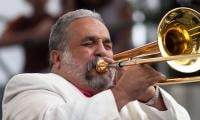 Willie Colón, Salsa Legend, Dies At 75
 -
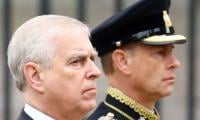 Prince Edward Praised After Andrew's Arrest: 'Scandal-free Brother'
 -
 Shawn Levy Recalls Learning Key Comedy Tactic In 'The Pink Panther'
 -
 King Charles Fears More Trouble As Monarchy Faces Growing Pressure
 -
 Inside Channing Tatum's Red Carpet Return After Shoulder Surgery
 -
 Ryan Coogler Brands 'When Harry Met Sally' His Most Favourite Rom Com While Discussing Love For Verstality