
Insurance canary
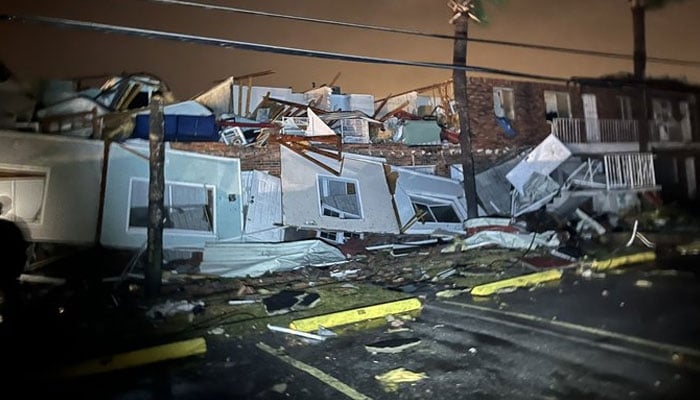
As the cost of insuring our houses escalates around the United States and the world, it appears that property insurance is acting like a canary in a coal mine.
Canaries used to be taken into coal mines because they served as an early warning system if dangerous gases were building up. Since the canaries were more sensitive to these gases than people, they protected the miners from life-threatening conditions. When the canary dropped dead, the miners could still get out
Like the canaries, the actuaries who interpret data for insurance companies are more sensitive than most individual people to changes going on in the world. Actuaries earn big salaries because the financial health of their employers depends on them.
Things have already gotten so bad that the National Academies of Sciences, Engineering, and Medicine (NASEM) recently sponsored a webinar panel discussion: “Extreme Weather Events and Insurance: Households, Homeowners, and Risk.” (This link will take you to a video of the event.)
The panelists were located in the United States (Washington, DC and Madison, Wisconsin) and England (London and Cambridge). Climate changes are not limited to the United States, nor is awareness that we need to do something about them if we can.
The panelists were not grinding particular political axes. They were discussing the measured fact that an increasing number of extreme weather events are destroying valuable property – housing, commercial buildings, streets, bridges, etc. – requiring insurance company payouts to policyholders.
These insurance payouts must be financed by the premiums charged to people who are insuring their property. As damages increase, the premiums also have to increase. Although premiums may be regulated by state regulators, if they do not allow the needed increases insurance companies will pull out of doing business in that state.
As insurance companies pull out, it may become more and more difficult – perhaps even impossible – for people to insure their houses. But if a house cannot be insured, banks won’t finance a mortgage on it, and if it cannot be financed the owner may be unable to sell it.
For many people, their home is their primary investment, and they cannot afford to live in it if they cannot insure it. If it burned down or was otherwise destroyed, they would be wiped out financially. But if they cannot sell it, then the homeowner is a real pickle.
Disrupted housing markets can produce disastrous results for a country’s economy in general, as we Americans discovered during the recession beginning around 2008.
The impact of a world that is heating up is not being felt as much in the United States as in many other countries in Europe, Africa, and Asia which are suffering from unusually long bouts of very hot weather, flooding downpours alternating with extreme droughts, forest fires, etc.
Excerpted: ‘Property Insurance Is the Canary in the Climate Coal Mine’. Courtesy: Commondreams.org


