
Pakistan reframed
Visit came at critical time when Pakistan was facing multifaceted challenges, including border tensions with India
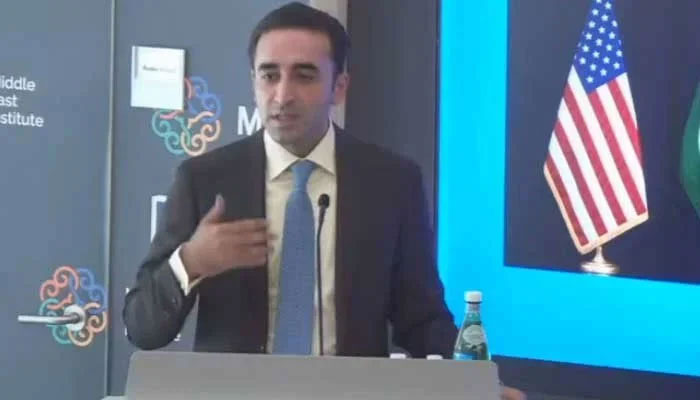
The PPP Chairman and former foreign minister Bilawal Bhutto Zardari-led high-level delegation to present Pakistan’s perspective before the international community regarding its recent conflict with India returned to Islamabad after a successful tour to the US and Europe.
The visit came at a critical time when Pakistan was facing multifaceted challenges, including border tensions with India. In such a context, the prime minister of Pakistan nominated Bilawal to present Pakistan’s version of recent events and seek support from global players.
His itinerary included high-level engagements in Washington DC, New York, London and Brussels. These meetings were with a cross-section of international stakeholders, including the UN secretary-general, US senators and Congress members, British parliamentarians, EU officials, Nato representatives, human rights organisations, media and the Pakistani diaspora.
Bilawal tried his best to reframe Pakistan’s narrative by emphasising the nation’s sacrifices in the global war on terror. On several occasions, he reiterated Pakistan’s strategic importance in regional stability. His proposal for devising a joint mechanism for counter-terrorism cooperation and intelligence sharing was met with cautious optimism internationally.
Throughout the tour, he didn’t miss any opportunity to respond to India’s aggressive statements. He made it clear to the world that India’s brutal actions in Occupied Kashmir, especially post-2019, were a gross violation of international laws. According to him, cross-border strikes and misinformation campaigns were designed to distract from internal repression.
Bilawal, on many occasions, categorically stated that Pakistan’s military restraint in recent crises showed our firm commitment to peaceful conflict resolution and maintaining stability in the region. However, he also warned that continued provocation could permanently destabilise the entire region, urging global powers to prevent war.
His interviews with several international media outlets emphasized the need for tolerance, pluralism, diversity and commitment to justice. His diplomatic message was consistent: “Pakistan seeks peace with dignity, dialogue with purpose, and partnerships built on justice".
While denouncing terrorism in all forms, Bilawal opposed its misuse as a political tool to target Pakistan. According to him, “trade must become a bridge, not a battleground. It’s time for the world to engage, not ignore.” His bold and straightforward statements also made headlines in the Indian media.
Bilawal emphasised that the Kashmir dispute had been pending on the UN agenda for many decades. He urged the UN to prioritise resolving the Kashmir issue peacefully and amicably. During the visit, he also highlighted India's illegal and unilateral suspension of the Indus Waters Treaty (IWT), which is in sheer violation of the UN Charter and international laws.
Reportedly, he also visited several think tanks, cultural and community centres and academia, highlighting the significance of bringing people together for the sake of humanity. His future-oriented approach won the hearts of many, earning praise even from those Western circles who previously viewed Pakistan’s actions with doubt.
Bilawal Bhutto Zardari led tour could be described as transformational and impactful in many aspects. For the first time in years, a Pakistani politician was able to shift international focus from allegations to aspirations; putting Kashmir back into international discourse; reviving economic and climate partnerships, and most importantly, recasting Pakistan as a responsible nuclear state open to dialogue and collaborations.
In my view, Bilawal Bhutto Zardari’s visit to the US and Europe was more than just a diplomatic tour; it was a successful initiative to rebrand our beloved country. In an era dominated by aggression, misunderstanding, disinformation and conflicts, the clear, composed and consistent voice brought hope that diplomacy can still work, and that Pakistan can reclaim its rightful place in the global arena – not as a security concern, but as a partner for peace, development and prosperity.
I further believe that Bilawal, being an emerging diplomatic star, demonstrated not only grace and maturity but also clarity, principle and a modern vision – qualities reminiscent of his great mother and legendary grandfather.
The writer is a member of the National Assembly and patron-in-chief of the Pakistan Hindu Council. He tweets/posts @RVankwani


