
SBP holds interest rate at 11% as geopolitical risks mount
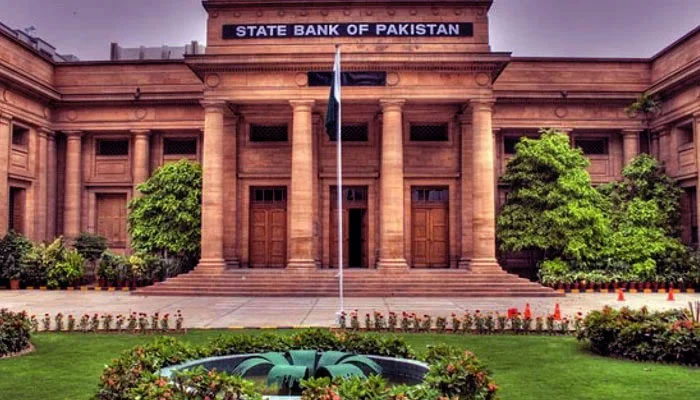
KARACHI: The State Bank of Pakistan (SBP) held its key interest rate steady on Monday, choosing caution as the conflict between Israel and Iran added risks to inflation and the external sector.
The central bank’s Monetary Policy Committee kept the policy rate unchanged at 11 per cent, which was in line with market expectations given the uncertainty surrounding Israel’s recent military strikes on Iran and their effects on international commodity markets.
In March, the central bank temporarily halted its easing cycle after lowering rates by 10 percentage points from a record high of 22 per cent in June 2024. Furthermore, it delivered another 100-basis points cut in May, which reduced the key interest rate to 11 per cent.
A Bloomberg report added that a majority of the 40 analysts surveyed by Bloomberg had predicted the move.Several economists had revised their forecasts to a hold from a cut in the days leading up to the rate decision. The shift in sentiment was driven by escalating tensions between Israel and Iran, which have raised fears of a broader conflict in the energy-rich region. For Pakistan -- an economy that imports majority of its fuel -- any sustained rise in oil prices could deliver a significant blow, the report said.
An increase of $10 in oil prices adds about $1.5 billion to the nation’s annual import bill and 1.0 per cent to inflation, said Adnan Sami Sheikh, an analyst at Pakistan Kuwait Investment Co. As Israel launched its attack on Iran, prices of Brent crude oil jumped as much as 13 per cent on Friday, before paring some gains.
The interest rate decision follows Pakistan’s annual budget, which targets a 4.2 per cent economic growth rate and projects inflation at 7.5 per cent for the fiscal year 2026. Additionally, it aims to reduce overall spending, increase defence expenditures, and tighten tax measures.
According to Bloomberg Economics, the SBP only has room to cut by another 50bps in fiscal 2026, based on “our current projections that inflation could heat up to 8.0 per cent on average in 1H26. Any more easing could bring real rates below the neutral level of 2.5 per cent in 1H26, irking the IMF, which has recommended the central bank to keep policy tight.”
The MPC’s post-meeting statement said that economic growth is gradually picking up and is projected to gain further momentum next year, supported by the ongoing effects of previous policy rate cuts.
However, the committee noted potential risks to the external sector, particularly due to the sustained widening of the trade deficit and weak financial inflows. Furthermore, some proposed budget measures for FY26 may exacerbate the trade deficit by increasing imports. The committee also highlighted the inflationary concerns associated with escalating geopolitical tensions.
Signalling potential fluctuations, the SBP expects near-term volatility in inflation before it gradually increases and stabilises within the target range of 5-7 per cent. “This outlook, however, remains subject to multiple risks emanating from potential supply-chain disruptions from regional geopolitical conflicts, volatility in oil and other commodity prices, and the timing and magnitude of domestic energy price adjustments,” the SBP said.
In May, Pakistan’s inflation surged due to a rise in food prices, reversing the previous trend of moderation observed in the last few months. Headline inflation increased to 3.5 per cent year-on-year in May from 0.3 per cent in the previous month.
“While the Iran-Israel conflict poses risks, oil prices may remain subdued due to weak demand and fiscal stability concerns in advanced economies. If geopolitical tensions ease, we expect another 100bps rate cut, with core inflation likely to trend lower toward 7.0 per cent YoY,” said an analyst at Optimus Capital Management in a note.







-
 Courtney Love Makes First Appearance Since New Report On Kurt Cobain's Death
 -
 King Charles Anxious As Uncertainty Grows Over Sarah Ferguson’s Next Move
 -
 Real Reason Kim Kardashian Is Dating Lewis Hamilton
 -
 Rihanna Leaves Elderly Woman Star-struck In Viral Grocery Store Video
 -
 TikTok US Launches Local Feed Using Precise Location Data
 -
 Jill Biden’s Former Husband Charged With Wife’s Murder
 -
 Zayn Malik Reveals Parenting Decision Gigi Hadid Criticized Him Over
 -
 Palace Releases Prince William's Photos From Final Day Of His Saudi Arabia Visit
 -
 Microsoft Warns Of AI Double Agents As Enterprise Adoption Of AI Agents Surges
 -
 Kate Middleton, Prince William Break Silence Over Tragic Shooting In Canada
 -
 'Finding Her Edge' Star Madelyn Keys Explains Adriana's Remarks About Brayden Romance
 -
 Royal Expert Raises Questions Over Sarah Ferguson's 'plotting' Stunning Comeback
 -
 Instagram Develops AI ‘Create My Likeness’ Tool To Generate Personalised Photos And Videos
 -
 Meghan Markle, Prince Harry Friends Suggest Their Marriage 'isn't All It Seems'
 -
 Andrew Handed Out 'classified' Information To Jeffrey Epstein
 -
 Margot Robbie Recalls Wild Party Days And Getting Kicked Out Of Clubs