
14,000MW generation plan: India has so far commissioned 10 projects of 3,360MW on Pakistan rivers
“Pakistan has consistently raised objections to design features of several projects," says Abbasi
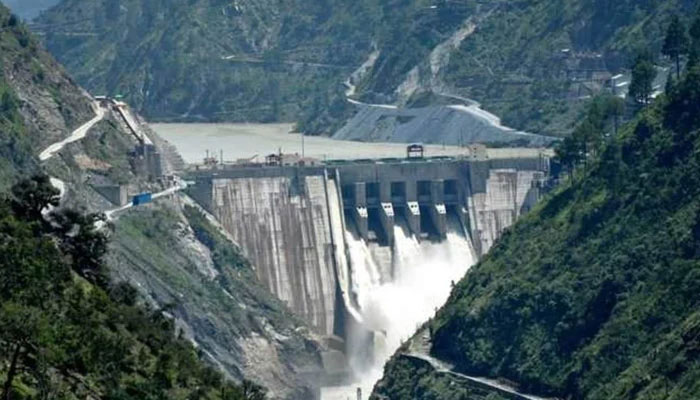
ISLAMABAD: India, under its plan to generate 14,000 MWs from Pakistan rivers – the Indus, Chenab and Jhelum -- has so far commissioned 10 hydropower projects with a combined capacity of 3,360 megawatts (MW), while an additional five large-scale projects, with a total capacity of 3,052 MW, are under construction.
This was revealed to this scribe by Arshad H Abbasi, an eminent water expert who has been a part of Track-2 water diplomacy with India. He also worked as a trans-boundary water expert with China, Bangladesh and Central Asia. “The ambitious plan of India to generate 14000 MW of hydropower in Jammu and Kashmir (J&K) appears to be the brainchild of a defence strategist focused on South Asian peace and geopolitics, rather than a true energy expert dedicated to protecting the fragile Himalayan ecosystem and serving the best interests of India’s power consumers,” he said.
“Pakistan, however, has consistently raised objections to the design features of several projects, including the Ratle (850 MW) and Kishanganga (330 MW) hydroelectric power projects, alleging violations of the treaty’s design criteria. Despite these objections, the projects have proceeded, highlighting India’s determination to exploit its hydropower potential in the contested regions of Jammu and Kashmir,” he added.
According to Abbasi, India’s journey toward hydropower development in the Himalayan region has been fraught with challenges. Studies by credible institutions, he added, including the Indian Meteorological Department, have highlighted a significant reduction in rainfall and snowfall in the watersheds of rivers forming the Indus system. “This has resulted in declining water flows in key reservoirs like Bhakra Dam, Pong Dam, and Ranjit Sagar Dam, which irrigate vast swathes of East Punjab, Haryana, and Rajasthan. Despite controlling the watershed of the Indus River system, India has paradoxically issued notices to Pakistan to revise the Indus Waters Treaty, citing climate change impacts—an argument that exposes inconsistencies in its approach to water management.
“The financial implications of reduced water flows are immense. For Pakistan, the loss of over 25 million acre-feet (MAF) of water over the years from the Indus system translates to an economic cost of approximately $37.5 billion per year, based on an estimated $1.5 billion per MAF. This water scarcity exacerbates agricultural challenges and deepens the economic strain on a nation already grappling with water insecurity.
“India’s focus on hydropower as a strategic and economic tool raises pertinent questions. Hydropower tariffs for projects like the Pakal Dul (1,000 MW), Ratle (850 MW), and Kiru (624 MW) are too high than those for solar and wind energy.”




-
 Chinese New Year Explained: All You Need To Know About The Year Of The Horse
 -
 Canadian Passport Holders Can Now Travel To China Visa-free: Here's How
 -
 Glen Powell Reveals Wild Prank That Left Sister Hunting Jail Cells
 -
 Edmonton Weather Warning: Up To 30 Cm Of Snow Possible In Parts Of Alberta
 -
 'A Knight Of The Seven Kingdoms' Episode 5: What Time It Airs And Where To Stream
 -
 Amy Schumer Drops Cryptic Message On First Valentine Amid Divorce
 -
 Savannah Guthrie Sends Desperate Plea To Mom Nancy Kidnapper
 -
 NBA All-Star 2026 Shake-up: Inside The New USA Vs World Tournament Format
 -
 Warner Bros Consider Reopening Deal Talks With Paramount, Says Reports
 -
 Andrew Mountbatten Windsor Faces Future With UK MPs, Says Expert
 -
 Eva Mendes Shared Bedroom Photos For Ryan Gosling On Valentine’s
 -
 Shamed Andrew Told 'nobody Is Above The Law' Amid Harrowing Silence
 -
 Gisele Bundchen Melts Hearts With Sweet Bike Ride Glimpse Featuring Son
 -
 Prince William Found Meghan Markle ‘quite Refreshing’ At Start
 -
 Kate Middleton Knew Should Could Not Be ‘voice Of Reason’ With Prince Harry
 -
 Rihanna Has Wardrobe Malfunction At A$AP Rocky Fashion Show