
Yen, BOJ’s rate policy may remain focus in Japan-US trade talks
WASHINGTON: Japan may have averted US pressure for a stronger yen in bilateral finance talks on Thursday, but a closer look at officials’ descriptions of the meeting suggests currencies and the Bank of Japan’s interest rate policy may remain key factors in broader trade negotiations.
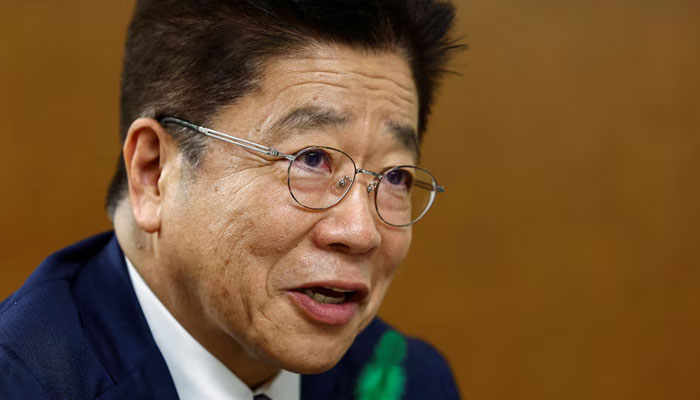
Speaking to reporters after his first face-to-face talks with US Treasury Secretary Scott Bessent on Thursday, Japanese Finance Minister Katsunobu Kato said they did not discuss exchange-rate targets or a framework to manage yen rates.
There was no accusation made by the US that Japan was intentionally weakening the yen, according to a Japanese finance ministry official who accompanied Kato.
But Kato was tight-lipped on the details of the 50-minute meeting with Bessent, which was held on the sidelines of the International Monetary Fund and World Bank spring meetings in Washington.
When asked whether the US made any specific requests to Japan, Kato said: “I can’t comment because that goes straight into actual discussions.”
Still, there were some hints.
For one, Kato said Japan and the U.S. will continue close and constructive dialogue on exchange rates “in relation to the ongoing bilateral trade negotiations” -- language some analysts saw as a sign Washington could make demands on the yen as part of broader trade talks.
The meeting preceded top Japanese trade negotiator Ryosei Akazawa’s scheduled visit to Washington next week for a second round of bilateral trade talks that may prove tortuous for the US.
President Donald Trump’s focus on addressing the US trade deficit and his past remarks accusing Japan of intentionally maintaining a weak yen, have fuelled market expectations that Tokyo will face pressure to strengthen the yen’s value against the dollar and give US manufacturers a competitive advantage.
“President Trump strongly believes that Japan and China have been intentionally depreciating their currencies. There’s little sign of him changing that view, so markets remain cautious,” said Tsuyoshi Ueno, senior economist at NLI Research Institute.
“If next week’s trade negotiations between Akazawa and Bessent do not go well, Washington’s attention could turn towards exchange rates again,” he said.
The Treasury Department said in a readout on Friday that Bessent and Kato had held productive discussions across a broad range of bilateral issues, including reciprocal trade. They “affirmed their intention to continue their ongoing close consultations regarding issues related to exchange rates,” it said.
BOJ RATE HIKES
Another key sign was Kato’s remark that he explained to Bessent Japan’s recent economic developments “including wage hikes”. He added that in doing so, he also talked about Japan’s “price developments”.
That suggests discussions may have touched upon Japan’s monetary policy, as both wages and prices are key to the timing and pace of further interest rate hikes by the BOJ.
Sources have told Reuters the slow pace at which the BOJ is raising borrowing costs from ultra-low levels could come under fire in bilateral trade talks.
Steady rises in wages and inflation were key to the BOJ’s decision to exit a massive stimulus last year and raise its short-term interest rate to 0.5 per cent in January.
With inflation exceeding its 2.0 per cent target for three consecutive years and big firms continuing to offer bumper pay hikes this year, the BOJ has signalled its readiness to keep raising rates.
But the central bank’s rate-hike path has been complicated by Trump’s tariffs, which threaten to derail Japan’s fragile economic recovery and have prodded analysts to push back the expected timing of the next rate increase.
While warning of heightening economic uncertainty, BOJ Governor Kazuo Ueda on Thursday repeated the central bank’s readiness to keep hiking rates.
“It’s notable that Kato and Bessent likely discussed Japan’s wage developments,” said Katsuhiro Oshima, chief economist at Mitsubishi UFJ Morgan Stanley Securities, adding that Ueda’s remarks suggest the BOJ remains on course to hike rates.
“Wage hikes would be a win for Japan’s economy, a win for the US from the perspective of exchange rates, a win for Japanese households which will see purchasing power increase, and a win for the BOJ by making it easier to raise rates.”






-
 Tucker Carlson Says Passport Seized, Staff Member Questioned At Israel Airport
 -
 Taylor Swift Made Sure Jodie Turner-Smith's Little Girl Had A Special Day On 'Opalite' Music Video Set
 -
 Eric Dane Says Touching Goodbye To Daughters Billie And Georgia In New Netflix Documentary
 -
 Channing Tatum Reveals What He Told Daughter After Violent Incident At School
 -
 King Charles Lands In The Line Of Fire Because Of Andrew Mountbatten-Windsor
 -
 Denise Richards Doubles Down On Abuse Claims Against Ex Husband Aaron Phypers Amid Show Return
 -
 Russia Set To Block Overseas Crypto Exchanges In Sweeping Crackdown
 -
 Gwyneth Paltrow Reveals Deep Personal Connection With Kate Hudson
 -
 Prince Harry, Meghan Markle’s Game Plan For Beatrice, Eugenie: ‘Extra Popcorn For This Disaster’
 -
 OpenAI To Rollout AI Powered Smart Speakers By 2027
 -
 Is Dakota Johnsons Dating Younger Pop Star After Breakup With Coldplay Frontman Chris Martin?
 -
 Hilary Duff Tears Up Talking About Estranged Sister Haylie Duff
 -
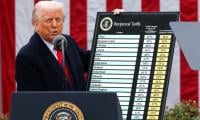 US Supreme Court Strikes Down Trump’s Global Tariffs As 'unlawful'
 -
 Kelly Clarkson Explains Decision To Quit 'The Kelly Clarkson Show'
 -
 Inside Hilary Duff's Supportive Marriage With Husband Matthew Koma Amid New Album Release
 -
 Daniel Radcliffe Admits To Being Self Conscious While Filming 'Harry Potter' In Late Teens