
Fafen report card on MNAs attendance in 14th session
Highest attendance was noted during second sitting, with 206 members present 66% of current membership
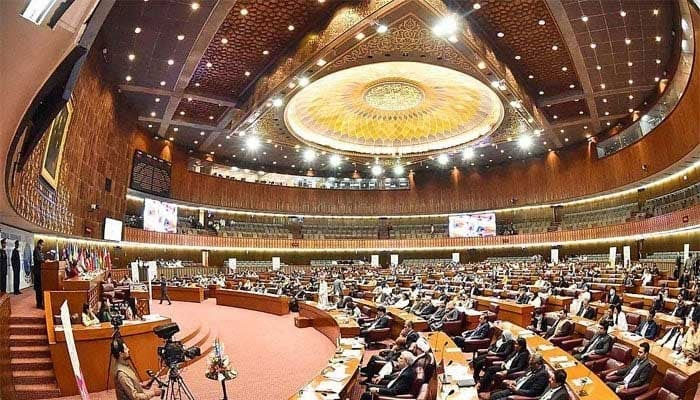
ISLAMABAD: As many as 47 (15 per cent) Members of the National Assembly (MNAs) attended all sittings, whereas 36 (12 per cent) lawmakers did not attend any sitting during the 14th session of the National Assembly that spanned over eight sittings between March 11 and 21.
According to the Free and Fair Election Network’s (Fafen) report card on National Assembly Attendance – 14th Session, female members consistently recorded higher attendance than their male counterparts during the reporting session.
The highest attendance was noted during the second sitting, with 206 members present — 66 per cent of the current membership.
Despite high attendance, the sitting did not take up most of its scheduled business. The lawmakers highlighted the issue of ministerial absence during the sitting. The sitting saw opening of debate on presidential address to the parliament by the opposition leader. The lowest attendance during the session was noted in the seventh sitting, with only 130 members (42 per cent) present. The sitting was adjourned after just 10 minutes as the deputy speaker expressed displeasure over the absence of ministers during the question hour.
According to the report card, 177 MNAs skipped sittings without advance leave request. An analysis of the attendance and the leave applications read during the proceedings shows that 264 members — 85 per cent of the current strength — missed at least one sitting during the current session. However, only 89 (28 per cent) submitted an application seeking leave from the House for their absence. Amongst these 89 MNAs, 23 (26 per cent) applied for leave in advance, while 29 (33 per cent) applied ex-post facto after returning from their leaves.
The leave applications of the remaining 35 (40 per cent) applicants were read on a day falling in the middle of their period of absence.
Only 49 members (56 per cent) sought approval for the entire duration of their absence, while the remaining 38 (44 per cent) were absent for a longer period than the number of days for which they had requested leave.
As many as 177 MNAs (57 per cent of those skipping at least one sitting) remained absent without submitting any application during the session, while four MNAs applied for leave for staying absent during the previous session(s).
A total of 18 female MNAs — 16 on reserved seats and two on general seats (34 per cent of total female membership) — attended all sittings.
As many as three female MNAs (six per cent) — two on general seats and one on a reserved seat — recorded zero attendance. Among seven minority members, six attended more than half of the sittings.
Regarding male MNAs elected on general seats, 33 (13 per cent) did not attend any sitting, 91 (36 per cent) were present at less than half, 127 (51 per cent) attended more than half of the sittings including 29 (12 per cent) who were present during all sittings. Regionally, Khyber Pakhtunkhwa (KP) and Islamabad Capital Territory (ICT) recorded the highest percentage of MNAs attending more than half of the sittings.
In total, all three (100 per cent) MNAs from ICT, 32 (68 per cent) from KP, 10 (53 per cent) from Balochistan, 83 (51 per cent) from Punjab and 40 (51 per cent) from Sindh attended more than half of the sittings. However, three lawmakers from Balochistan (16 per cent), 25 (15 per cent) from Punjab, seven (9 per cent) from Sindh, and one (two per cent) from KP did not attend any sittings.
The majority of MNAs from Sunni Ittehad Council (SIC), Jamiat Ulema-e-Islam Pakistan (JUIP), Muttahida Qaumi Movement-Pakistan (MQM-P), and Pakistan Muslim League-Nawaz (PML-N) attended more than half of the sittings.
Other parties with only one member, including the sole lawmakers from the National Party (NP) and Majlis Wahdat-e-Muslimeen Pakistan (MWMP), attended all sittings. The sole MNA of Pakhtunkhwa Milli Awami Party (PKMAP) attended more than half of the sittings.
In contrast, the sole lawmakers from Balochistan Awami Party (BAP) and Pakistan Muslim League-Zia (PML-Z) each attended less than half of the sittings.
Among the 29 federal ministers who were expected to be present during the question hour to respond to queries related to their ministries, only 11 (38 per cent) were marked present during the sittings where their presence was required. Eight ministers (28 per cent) did not attend any of these sittings. The remaining 10 (34 per cent) attended at least one sitting where they were expected to be present.
In their absence, another cabinet colleague or relevant parliamentary secretary responded to the questions on their behalf. Lawmakers expressed concern over the repeated absence of relevant ministers from multiple sittings. The deputy speaker also made an observation and expressed displeasure over the continued absence of ministers during question hour, subsequently adjourning the house proceedings after 10 minutes. The federal ministers for Parliamentary Affairs, Public Affairs Unit, and Poverty Alleviation and Social Safety attended seven sittings each. Similarly, the ministers of state for Railways, Planning Development and Initiatives, and Federal Education and Professional Training also attended seven sittings. Prime Minister did not attend any sitting, while Leader of the Opposition attended three sittings (38 per cent).



-
 Prince William Questions Himself ‘what’s The Point’ After Saudi Trip
 -
 James Van Der Beek's Friends Helped Fund Ranch Purchase Before His Death At 48
 -
 King Charles ‘very Much’ Wants Andrew To Testify At US Congress
 -
 Rosie O’Donnell Secretly Returned To US To Test Safety
 -
 Meghan Markle, Prince Harry Spotted On Date Night On Valentine’s Day
 -
 King Charles Butler Spills Valentine’s Day Dinner Blunders
 -
 Brooklyn Beckham Hits Back At Gordon Ramsay With Subtle Move Over Remark On His Personal Life
 -
 Meghan Markle Showcases Princess Lilibet Face On Valentine’s Day
 -
 Harry Styles Opens Up About Isolation After One Direction Split
 -
 Shamed Andrew Was ‘face To Face’ With Epstein Files, Mocked For Lying
 -
 Kanye West Projected To Explode Music Charts With 'Bully' After He Apologized Over Antisemitism
 -
 Leighton Meester Reflects On How Valentine’s Day Feels Like Now
 -
 Sarah Ferguson ‘won’t Let Go Without A Fight’ After Royal Exile
 -
 Adam Sandler Makes Brutal Confession: 'I Do Not Love Comedy First'
 -
 'Harry Potter' Star Rupert Grint Shares Where He Stands Politically
 -
 Drama Outside Nancy Guthrie's Home Unfolds Described As 'circus'