
Our power pricing dilemma
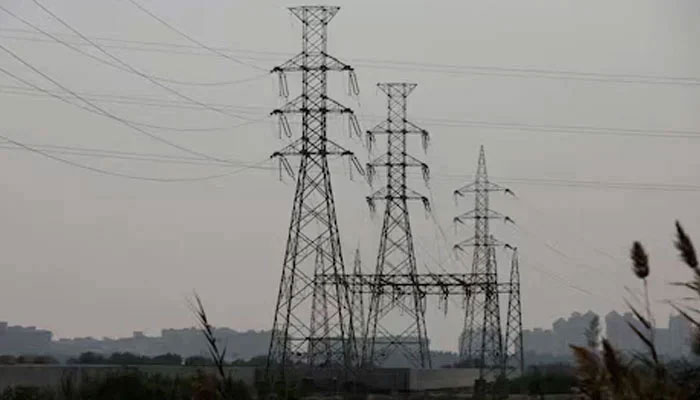
LAHORE: A highly misunderstood issue in Pakistan’s business-government dynamics is power tariffs and cost recovery. Businesses often compare the generation cost of electricity (charged by IPPs) with the final retail tariff charged to them, without factoring in other costs.
The other costs include building and maintaining a high-voltage national transmission system (NTDC in Pakistan). Then comes the distribution costs; local Discos (eg Lesco, K-Electric) operate expensive distribution infrastructure. Both these institutions need to recover the cost from consumers. Technical losses are inevitable (typically 6-15 per cent globally) due to resistance in wires.
Theft, metre tampering and unpaid bills, often involving corrupt staff, households and consumers, also burden Discos and honest consumers that are Pakistan-specific. Businesses ignore that the state does not merely buy and resell power -- it manages a highly capital-intensive delivery system.
The question is who should bear the cost of line losses and infrastructure? And whom should the government charge for the losses that occur before electricity reaches the industrial grid? In principle, all consumers should share the cost proportionally unless they have their own generation and delivery setups. Businesses cannot claim immunity from line losses just because their own in-house grids are efficient. The cost to bring power to their gates still exists. Unless they build and maintain their own transmission and distribution network, they cannot logically refuse to pay for these losses.
In India, large industrial users (especially in Special Economic Zones or major industrial parks) do set up captive power plants and sometimes fund dedicated transmission lines. However, they usually still use the public transmission grid and are subject to wheeling charges, transmission losses and cross-subsidies.
In Bangladesh, the system operates the same way as in Pakistan. Its government (via PGCB and distribution companies) maintains the grid. Large users can negotiate slightly better rates, but they do not escape loss-sharing unless completely off-grid.
In developed economies like the US and Germany, power pricing includes all unbundled components: generation, transmission, distribution and, in some cases, renewable surcharges. Industrial users often negotiate lower tariffs, but they cannot opt out of transmission and distribution costs unless they are generating their own electricity on-site (eg, gas turbines, solar farms) that are fully off-grid is rare. In many areas, ‘wheeling charges’ are applied when power is transmitted through the national grid to private buyers.
Power pricing is problematic in Pakistan as business lobbies demand cost-based tariffs based only on generation, conveniently ignoring that the transmission system is underutilised because of theft and inefficiencies which they indirectly benefit from. Maintaining a reliable grid requires huge capital investment, even if they do not directly cause all losses. Many businesses also benefit from tax exemptions, subsidised gas or underpaid labour, which means they are not paying their true economic share.
If businesses really want power at generation cost, the fair approach would be to build their own transmission lines from power plants to their premises (rare and costly). They should accept wheeling charges and line losses as part of cost-to-serve. If it is feasible, they should invest in distributed generation (solar, co-generation). Businesses must also support Disco reforms that reduce theft and improve billing rather than just asking for lower tariffs. They must help in eliminating dishonest actors from their own ranks.







-
 'Buffy' Star Nicholas Brendon's Death Case Takes Massive Turn
 -
 FKA Twigs Takes Legal Stand Against Ex Shia LaBeouf
 -
 ‘Progressive’ Kate Middleton Snubs Outdated Royal Etiquette
 -
 Kylie Kelce Explains Why She Avoids Raising Kids With 'silver Spoon'
 -
 Meghan Markle Is Above Royal Family ‘empty Threats,’ Says Insider
 -
 Anne Hathaway Opens Up About 'defeated' Feeling As Working Mom
 -
 Shamed Andrew Should Testify In Epstein Case As ‘act Of Service’
 -
 What Really Happened Before Nicholas Brendon Was Found Dead At Home?
 -
 Sarah Ferguson Branded ‘most Famous Missing Person’ In UK Right Now
 -
 Why King Charles Does Not Need A Driving License? Expert Reveals
 -
 Did Graham Norton Really Sign NDAs For Taylor Swift’s Wedding?
 -
 ‘Polite’ King Charles Treats Staff Better Than ‘boorish’ Andrew
 -
 Princess Beatrice's Husband Raises Eyebrows With Deleted Instagram Post
 -
 Dua Lipa 'snubs' Priyanka Chopra
 -
 Will Taylor Frankie Paul Still Get Her 'Bachelorette' Salary?
 -
 'Harry Potter' Returns: First Glimpse Of HBO's New Series