
Why is Elon Musk sleeping on an office floor?
This association between incessant work and entrepreneurial success is pervasive in American business culture today
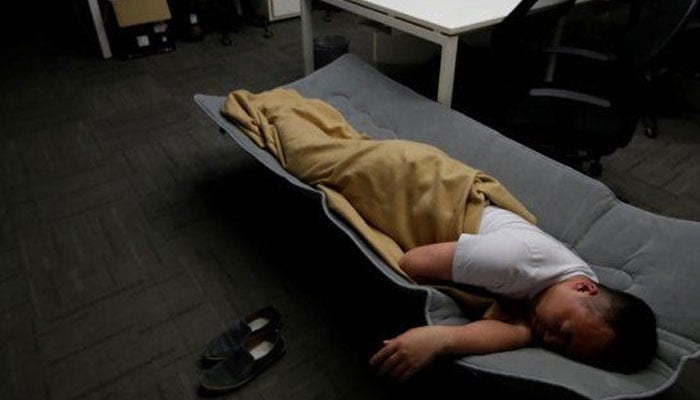
WASHINGTON: Elon Musk hates the weekend. For well over a decade, the world’s richest man has proclaimed the necessity of working at least 80 hours a week — “peaking above 100 at times,” as he said in 2018 — in order “to change the world.” Now he and his subordinates at the so-called Department of Government Efficiency are supposedly toiling up to 120 hours a week, which is why, in Mr. Musk’s view, their “bureaucratic opponents” stand no chance. “It’s like the opposing team just leaves the field for two days!” Mr Musk recently remarked. “Working the weekend is a superpower,” the NYT reported.
This association between incessant work and entrepreneurial success is pervasive in American business culture today. Jeff Bezos reports working 12 hours every day of the week in the early years of Amazon. The Apple chief executive Tim Cook is famous for sending emails at 4:30 a.m. Mr. Musk’s ostensible boss, despite his well-known fondness for TV news and social media, also insists that “no president ever worked harder than me.”
For Musk, culling the work forces of firms he acquires seems to be a way of bringing this future one step closer. After he took over Twitter, he fired half its employees and informed those who remained that he would be imposing an “extremely hard-core” management style; many of them took his offer to resign in exchange for three months of severance. Now Musk is applying the same playbook to the federal government, seeking to replace career officials with DOGE shock troops and machine learning algorithms. “Everything that can be machine-automated will be,” one official observing Musk’s blitz recently told The Washington Post. “And the technocrats will replace the bureaucrats.”
Common sense would seem to suggest obstacles to this vision. As Musk is proving before our eyes, working 120 hours a week is not the same thing as doing a good job. Musk and his DOGE henchmen are making the kinds of sloppy mistakes one might expect from people toiling around the clock, subsisting, as they reportedly are, on “a steady stream of delivery pizzas, Red Bull and Doritos” and resting only intermittently in office “sleep pods.” They put up a website attempting to document their cost savings that was riddled with glaring accounting errors. They fired hundreds of workers responsible for nuclear weapons safety, then scrambled to rehire them.
Musk knows how much an executive can get away with when he is believed to possess extraordinary productive powers. He made Twitter a worse, less valuable company, dismantling its verification and moderation systems and suppressing links to other websites, and yet he profited from turning it into a MAGA megaphone. His cars catch fire, and yet they keep coming off the assembly line at his hyper-automated factories, their appeal buoyed by his cultlike fan base. And now, it seems, if anything ever stops DOGE’s wrecking ball, it will be the courts, or perhaps the president’s jealousy, not the discovery that Musk and his team don’t know what they are doing.
As Peter Thiel once observed, “A startup is basically structured as a monarchy.” And as in a monarchy, the core purpose of many startups is to flatter the egos of their leaders rather than to make ordinary people’s lives better. If the United States feels increasingly like a country ruled by two petulant kings, perhaps it’s because the government is finally being run like a business.







-
 Chloe Bailey Makes Honest Confession About Comparisons With ‘Little Mermaid’ Star Halle
 -
 Drake Heads To Classroom But Not To Take Classes: Here’s Why
 -
 Kanye West Beats Exhaustion With Insane Work Ethic Leaves Fans Speechless
 -
 Prince Harry Still ‘craves’ Protection As UK Trip Turns Uncertain
 -
 Sadie Sink Talks About Her 'secret' Spider-Man Role
 -
 Prince William And Prince Harry‘s Relationship Is At Its Lowest, Says An Expert
 -
 Gracie Abrams' New Haircut Goes Viral As She Opens Up About Privilege
 -
 Nancy Guthrie Case Takes Dramatic Turn After FBI Issues Statement On Ransom Notes
 -
 Alibaba Agrees To $600m DOJ Settlement Over Illegal Drug Sales Probe
 -
 Prince Harry Wants Family Back: ‘Heart In Right Place’
 -
 Shopify Settles Copyright Lawsuit Against Rival Shopline
 -
 Clint Black Hospitalized, Philadelphia Show Cancelled
 -
 Elon Musk Rejects WSJ Claims Regarding SpaceX IPO
 -
 Michelle Obama Shares The Movie She Watches Again And Again
 -
 Princess Diana Was ‘misinterpreted’ During Final Days, Says Insider
 -
 Travis Kelce's Former Stylist Makes Predictions About Upcoming Wedding Look