
Egypt unveils first ancient royal tomb since Tutankhamun
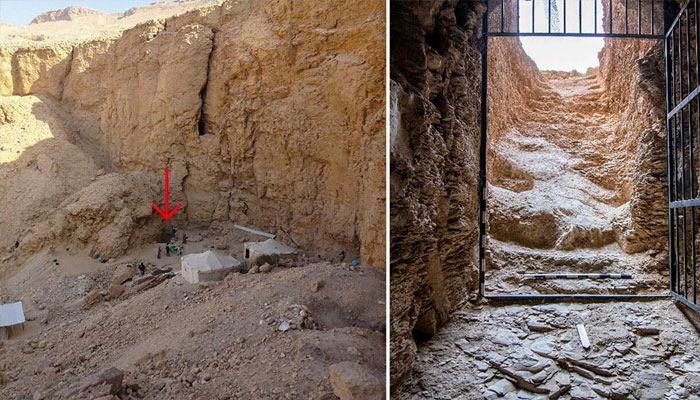
CAIRO: Egypt´s antiquities authority says it has found the ancient tomb of King Thutmose II, the first royal burial to be located since the famed discovery of Tutankhamun´s tomb in 1922.
The tomb, discovered near the Valley of the Kings in Luxor in southern Egypt, belonged to King Thutmose II of the 18th dynasty, who lived nearly 3,500 years ago. Thutmose II was an ancestor to Tutankhamun himself, and his half-sister and queen consort was Pharaoh Hatshepsut.
Her giant mortuary temple stands on the west bank of the Nile at Luxor a few kilometres from where the tomb of Thutmose II was found.
Although preliminary studies suggest its contents were moved in ancient times -- leaving the tomb without the iconic mummy or gilded splendour of the Tutankhamun find -- the antiquities ministry on Tuesday called the discovery “one of the most significant archaeological breakthroughs in recent years”.
It has been excavated by a joint Egyptian-British mission, led by the Supreme Council of Antiquities and the New Kingdom Research Foundation.
The tomb´s entrance was first located in 2022 in the Luxor mountains west of the Valley of the Kings, but was believed at the time to lead to the tomb of a royal wife.
But the team then found “fragments of alabaster jars inscribed with the name of Pharaoh Thutmose II, identified as the ´deceased king´, alongside inscriptions bearing the name of his chief royal consort, Queen Hatshepsut”, confirming whose tomb it was, the ministry said.






-
 Blake Lively Email Comes Up Ahead Of New May Trial Date In Baldoni Case
 -
 JBS Strike Ends: Why Colorado Workers Are Returning To The Plant
 -
 Royal Experts Warn King Charles, Prince William Regarding Princess Eugenie, Beatrice
 -
 Kanye West Becomes Reason For Chloe Bailey’s Online Hate
 -
 Britain Woos Anthropic After US Defence Clash
 -
 Louisiana Man Charged With Impaired Driving After Hitting Crowd Celebrating Lao New Year
 -
 Tori Spelling And Her Four Children Hospitalized Post Horrific Car Crash
 -
 Danielle Fishel Reveals One Thing She Turns To Sabrina Carpenter For
 -
 Gigi Hadid Breaks Silence On Epstein Files Mention
 -
 Sarah Ferguson Real Feelings Over New Memoir Laid Bare
 -
 Dakota Johnson And Tucker Pillsbury 'romance': When Did Their Love Story Begin?
 -
 Princess Beatrice, Princess Eugenie Drawing ‘clear Blue Water’ With Royals
 -
 Luke Combs Knew His 2016 Song Would Make Him Superstar
 -
 Prince William, Kate Middleton ‘mean Business’ As They Prepare For Kingship
 -
 Johnny Depp's Trump 'prophecy' Leaves Fans Divided
 -
 Shamed Andrew Should Go To ‘bailiffs’ Over His Blunders