
Moving troops, armaments across Europe ‘problematic’: EU auditors
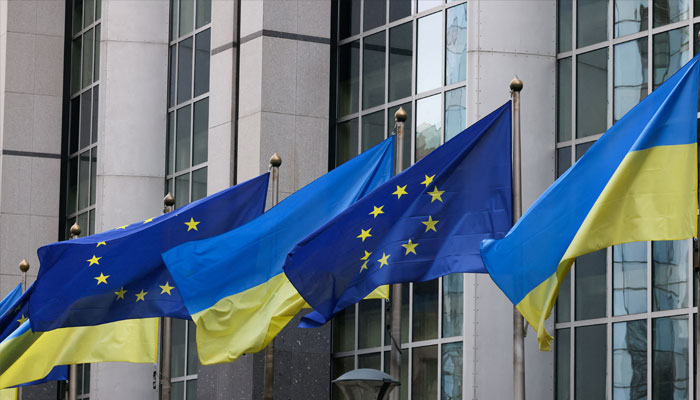
PARIS: Moving troops and armaments across Europe remains “problematic” and it is unclear “who does what” when it comes to mobility, EU auditors said on Wednesday, as the continent races to build defences in the face of Russia´s war in Ukraine.
Following its February 2022 invasion, the most devastating conflict in Europe since World War II, many observers say Russia will remain the most significant threat to the continent for years, warning that EU countries are not ready to deal with it.
The European Court of Auditors said on Wednesday the EU should improve military mobility and communication.
“Military mobility has become a crucial priority of the EU´s defence capabilities. There is clearly a real need for speed,” its president, Tony Murphy, told reporters.
“Moving troops and armaments across EU countries remains problematic.”
In a statement, the Court of Auditors added: “Governance arrangements for military mobility in the EU are complex and fragmented, without a single point of contact, which makes it difficult to know who does what.”
Tanks from one EU country cannot move through another if they are heavier than road traffic regulations allow, the Court of Auditors said.
In 2022, France encountered difficulties transporting tanks to Romania after Germany said the heavy equipment could not travel by road, forcing officials to charter trains.
The European Union has earmarked 1.7 billion euros ($1.8 billion) between 2021 and 2027 to finance the building of roads and other infrastructure and remove red tape in order to be able to quickly reinforce Europe´s eastern flank.
But this amount pales in comparison to an estimated 326 billion euros the EU spent on defence in 2024.
“Demand far exceeded supply, meaning that there was no money left in the pot by the end of 2023,” the Court of Auditors said.
“The result is a significant gap of over four years before EU funds for military mobility can be made available again, thus hampering the stability and predictability of funding.”
The auditors said that often the cost of a single major infrastructure project was greater than the total amount of funds earmarked to finance it.
The EU funded 95 projects in 21 member states.
“Projects were funded mainly in the east of the EU, but the bloc hardly funded any projects at all on the southern route towards Ukraine,” the auditors said, adding that some were selected “on a piecemeal basis, not always in the most strategic locations”.







-
 Super Bowl 2026 Live: Seahawks Lead Patriots 3-0 After Defensive First Quarter
 -
 Bad Bunny's Super Bowl Halftime Show: What Time Will He Perform Tonight?
 -
 Where Is Super Bowl 2026 Taking Place? Everything To Know About The NFL Showdown
 -
 Drake 'turns Down' Chance To Hit Back At Kendrick Lamar At Super Bowl
 -
 Sarah Ferguson Had A ‘psychosexual Network’ With Jeffrey Epstein
 -
 Czech Republic Supports Social Media Ban For Under-15
 -
 Khloe Kardashian Shares How She And Her Sisters Handle Money Between Themselves
 -
 Prince William Ready To End 'shielding' Of ‘disgraced’ Andrew Amid Epstein Scandal
 -
 Chris Hemsworth Hailed By Halle Berry For Sweet Gesture
 -
 Blac Chyna Reveals Her New Approach To Love, Healing After Recent Heartbreak
 -
 Royal Family's Approach To Deal With Andrew Finally Revealed
 -
 Super Bowl Weekend Deals Blow To 'Melania' Documentary's Box Office
 -
 Meghan Markle Shares Glitzy Clips From Fifteen Percent Pledge Gala
 -
 Melissa Jon Hart Explains Rare Reason Behind Not Revisting Old Roles
 -
 Meghan Markle Eyeing On ‘Queen’ As Ultimate Goal
 -
 Japan Elects Takaichi As First Woman Prime Minister After Sweeping Vote