
HIV crisis
As such, Pakistan is now nearing generalised HIV epidemic according to UNAIDS country director for Pakistan
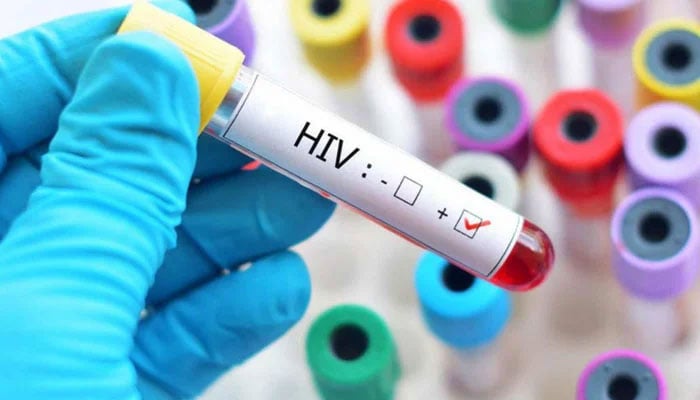
There are few countries that perform more poorly on public health than Pakistan. It is one of just two countries in the world where polio is endemic, almost a quarter of all its adults are diabetic, and it has what many experts believe to be the world’s highest hepatitis C burden. Much of this extraordinary disease burden is down to the fact that around half of the country lacks access to basic health services. Public spending on health is well below the six per cent of GDP recommended by health experts and, according to some estimates, there is just one doctor for every 1300 patients. Hence, even those lucky enough to access some kind of health services are not exactly getting the best quality of care. And the consequent disease burden only looks to be getting bigger, with the country adding as many as 1079 new HIV cases every month. An estimated 9713 people have tested positive for HIV in the first nine months of 2024, officials in the Ministry of National Health Services revealed on Friday (December 27). The total number of HIV cases for the entire year could exceed 12950 if the current monthly average persists. This is a significant increase compared to the 12,731 total cases reported in 2023 and points to a worsening HIV epidemic in Pakistan, given the consistent rise in monthly averages of reported cases.
To make the crisis even more alarming, experts have noted a significant spillover of HIV infections from high-risk populations – such as injectable drug users (IDUs) and female sex workers – to the general population due to factors such as poor Infection Prevention and Control (IPC) at healthcare facilities, unsafe sexual practices, low awareness, risky behaviours such as the use of drugs during sexual encounters and stigma. Sadly, this spike in HIV comes despite increasing government efforts to combat the problem. According to the Common Management Unit (CMU) for HIV, TB, and Malaria, 94 Anti-Retroviral Therapy (ART) centres have been established across the country to provide testing and treatment services and awareness campaigns have been launched through mass and social media, including multilingual radio messages and city-branding initiatives, to destigmatise HIV testing and treatment. And yet, stigma remains a major barrier to HIV testing and treatment. Most new infections are still concentrated among high-risk populations such as sex workers and transgender individuals, who are more hesitant to seek help due to societal discrimination. While the CMU has reported that it is expanding its harm-reduction programmes, particularly targeting IDUs, by providing clean needles and syringes, the scale of these programmes reportedly remains inadequate given the increasing number of new infections.
As such, Pakistan is now nearing a generalised HIV epidemic according to the UNAIDS country director for Pakistan. Breaking the stigma surrounding the disease might encourage more people to screen and get treatment, but there is also a dire need to boost overall health resources to make sure that treatment and testing are readily available. Overall, Pakistan’s growing HIV crisis speaks to the disasters that can unfold when public health care is neglected to the degree it has been in this country. A nation that does not spend enough on its health needs, lacks the number of physicians it requires and is unable to provide almost half its people with the most basic health services will remain a breeding ground for all kinds of epidemics. Today it is HIV, polio, diabetes and hepatitis that are running rampant. Should things stay the same, this list will only get longer.







-
 Extreme Cold Warning Issued As Blizzard Hits Southern Ontario Including Toronto
 -
 Lana Del Rey Announces New Single Co-written With Husband Jeremy Dufrene
 -
 Ukraine-Russia Talks Heat Up As Zelenskyy Warns Of US Pressure Before Elections
 -
 Lil Nas X Spotted Buying Used Refrigerator After Backlash Over Nude Public Meltdown
 -
 Caleb McLaughlin Shares His Resume For This Major Role
 -
 King Charles Carries With ‘dignity’ As Andrew Lets Down
 -
 Brooklyn Beckham Covers Up More Tattoos Linked To His Family Amid Rift
 -
 Shamed Andrew Agreed To ‘go Quietly’ If King Protects Daughters
 -
 Candace Cameron Bure Says She’s Supporting Lori Loughlin After Separation From Mossimo Giannulli
 -
 Princess Beatrice, Eugenie Are ‘not Innocent’ In Epstein Drama
 -
 Reese Witherspoon Goes 'boss' Mode On 'Legally Blonde' Prequel
 -
 Chris Hemsworth And Elsa Pataky Open Up About Raising Their Three Children In Australia
 -
 Record Set Straight On King Charles’ Reason For Financially Supporting Andrew And Not Harry
 -
 Michael Douglas Breaks Silence On Jack Nicholson's Constant Teasing
 -
 How Prince Edward Was ‘bullied’ By Brother Andrew Mountbatten Windsor
 -
 'Kryptonite' Singer Brad Arnold Loses Battle With Cancer