
Why education needs reform
PM has announced educational emergency to bring 26 million out-of-school children back to classrooms
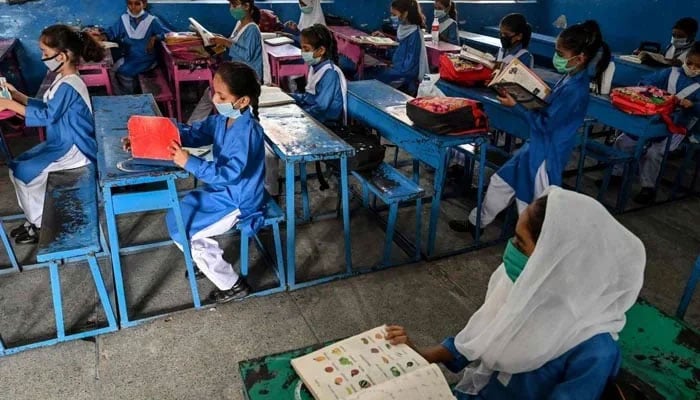
All over the world, educational institutions are well-resourced both academically and administratively, enabling them to keep pace with the advancement of society.
However, in Pakistan, a chain of unprecedented, speedy, and ever-echoing challenges has almost failed to rouse the political and bureaucratic offices to bring about radical changes in the outdated education system. This failure has been observed in all four tiers of education: primary, secondary, higher secondary, and university education.
Primary education in state schools across the country – we must be bold enough to accept – has declined to such a level that even the middle class, with scant resources, hardly opts for them for its children. This decline stems from academic, administrative, and infrastructural disasters these institutions of basic education have been facing for decades.
A significant number of state schools are being run without sufficient, qualified, and trained teachers, with extremely poor building infrastructure and inadequate financial resources to meet basic institutional needs. Consequently, most government-owned schools, particularly in urban areas, are severely under-enrolled, while overcrowded private schools educate children without any oversight by the state regarding their curriculum, especially in terms of social and moral education. In rural areas, many schools are either ghostly structures or operate with one or two teachers covering all subjects.
In this dismal scenario, the prime minister has announced an educational emergency to bring 26 million out-of-school children back to classrooms, but pragmatic steps from state organs are still awaited. Even if this goal is achieved, schools without qualified and trained teachers, operating in shabby buildings and subject to feudal mindsets in rural areas, cannot equip students with the latest education needed to grow as promising youth.
Similarly, secondary and higher secondary educational institutions are also lagging due to the same governmental neglect, indifferent ruling elites, and the lack of will to uplift them. If not on par with international standards, they should at least match private educational institutions.
According to a World Bank report published in September 2023, 40 per cent of the country’s population lives below the poverty line. In this context, 52.2 per cent of students across all levels are enrolled in state-owned institutions, while 43.8 per cent attend private institutions. This clearly reflects public perception, as only 8.4 per cent of Pakistani families above the poverty line choose state schools, colleges, and universities for their children.
his trend underscores a widespread belief that promising youth are nurtured only by private educators, while those educated in state institutions will struggle to compete with their privately educated peers in the future.
This public perception has developed even though a great number of scientists, bureaucrats, intellectuals, judges, and generals were educated in public schools, colleges, and universities in the past. This stark contrast highlights the deteriorating state of public education while growing awareness among the public strengthens their belief that only modernised education can guarantee a promising future for their children.
The consequences of this bleak picture of state education include the rapid growth of private educational institutions, which operate as profit-driven edu-industries. These institutions make it increasingly difficult for middle and lower-middle-class families to afford education, define their own social, moral, and cultural boundaries, and pay little attention to the guidelines set by religion or the state. Equally concerning is the deepening class divide in society, a concept widely rejected globally, which is being entrenched in Pakistan. Graduates from state institutions will rarely be able to compete with those from private institutions. This divide may exacerbate frustration, which is globally acknowledged as a root cause of crime and even terrorism.
There is also a growing perception that the state is gradually abdicating its responsibility for education, shifting the burden to NGOs, businessmen, and other private entities. This is a clear deviation from the constitution of the Islamic Republic of Pakistan, which states: "The state shall provide free and compulsory education to all children of the age of five to sixteen years in such manner as may be determined by law" (Article 25-A).
The current state of ‘free and compulsory education’, coupled with the neglect of ‘quality’, has plunged the nation into severe social, economic, and moral crises. In this context, the prime minister’s announcement regarding the return of 26 million children to school is no more than the first drop of long-awaited rain. However, this initiative could be derailed by political anarchy, bureaucratic red tape, and the giant of corruption.
The dilemma of state schools, colleges, and universities is further compounded by the typical mindset of teachers, students, and non-teaching staff, which reflects the general national approach of government servants. This mindset needs to be abandoned immediately to slow the deterioration of state-owned educational institutions.
The vast land and extensive building infrastructure of these institutions should also be utilised effectively, as is commonly witnessed in private organisations. This would make them financially self-sustaining while ensuring the efficient and transparent use of funds.
Finally, a complete administrative restructuring of these institutions is crucial. This includes implementing utility and quality checks on the performance of all employees, both teaching and non-teaching staff. Without these reforms, state education will continue to decline, leaving millions of Pakistani children without the tools they need to succeed in an increasingly competitive and knowledge-driven world.
The writer is an educationist. He can be reached at: prof.mashraflhr2@gmail.com







-
 Luke Grimes Reveals Hilarious Reason His Baby Can't Stop Laughing At Him
 -
 Why Kate Middleton, Prince William Opt For ‘show Stopping Style’
 -
 Here's Why Leonardo DiCaprio Will Not Attend This Year's 'Actors Award' Despite Major Nomination
 -
 Ethan Hawke Reflects On Hollywood Success As Fifth Oscar Nomination Arrives
 -
 Tom Cruise Feeling Down In The Dumps Post A Series Of Failed Romances: Report
 -
 'The Pitt' Producer Reveals Why He Was Nervous For The New Ep Of Season Two
 -
 Maggie Gyllenhaal Gets Honest About Being Jealous Of Jake Gyllenhaal
 -
 'Bridgerton' Star Luke Thompson Gets Honest About Season Five
 -
 Prince William On Verge Of Breakdown Because Of 'disgraced' Andrew
 -
 Tig Notaro Reflects On Oscar Nod For 'Come See Me In The Good Light': 'I Was Sleeping'
 -
 Kenyon Sadiq Sets 40-yard Dash Record At NFL Scouting Combine, Eyes First Round
 -
 Talk Show Host Drops Hint About Taylor Swift, Travis Kelce Wedding Date
 -
 Andrew Scandal Brings New Worries For Prince Harry, Meghan Markle
 -
 King Charles Imposes New Restrictions On Ex-Prince Andrew In Surprise Move
 -
 Chris Hemsworth Reveals How Elsa Pataky Guides His Career Moves
 -
 Was Travis Barker In A Relationship With Kim Kardashian Before Marrying Her Sister?