
Media code
Human rights organisations argue that journalists have fundamental right to report on political developments
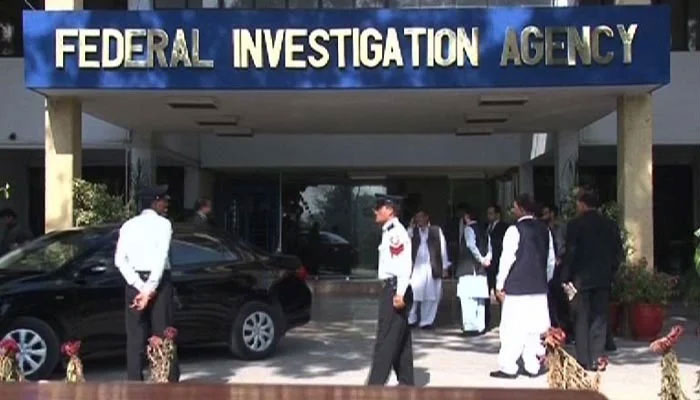
The Federal Investigation Agency’s (FIA) Cybercrime Wing has initiated legal action against several journalists and vloggers for their coverage of the PTI protest on November 24. The cases against these individuals have been registered under the Prevention of Electronic Crimes Act (PECA), with the FIA accusing them of spreading fabricated narratives against state institutions and inciting public unrest. Media bodies and human rights organisations have expressed deep concern over these actions, viewing them as a blatant attempt to stifle press freedom and rightly arguing that journalists have a fundamental right to report on political developments, including protests, without fear of retaliation. Unfortunately, the state’s reliance on controversial laws such as PECA and the Punjab Defamation Act to suppress freedom of speech and target dissenting voices has become a recurring theme under the pretext of protecting rights and countering fake news. Recent media reports suggest that the Shehbaz Sharif-led government is planning amendments to PECA to establish a new authority that can block or remove online content and prosecute fake news, among other measures. The proposed Digital Rights Protection Authority (DRPA) bears an unsettling resemblance to the Pakistan Media Development Authority (PMDA) that the PTI government had attempted to introduce. However, it never materialised, thanks to fierce resistance and pressure from media bodies and organisations. At the time, the PML-N and other opposition parties stood firmly against the PMDA, arguing that it aimed to impose state control over all segments of the media through a single, centralised authority. Ironically, now that the PML-N is in power, it appears to be pursuing similar measures to control social media. This stark contrast highlights a sad and familiar pattern: political parties advocate for freedom of expression when in opposition but shift to pro-censorship policies upon gaining power.
While fake news, misinformation, and disinformation are undeniable global challenges with serious repercussions, allowing the state to regulate the media is unlikely to provide solutions and will, instead, exacerbate problems. A state-driven approach to regulating media often becomes a tool to silence dissent and stifle independent journalism. Therefore, it is crucial for the Pakistani media itself to devise a robust code of conduct to address the issues of fake news, misinformation, and disinformation. Journalists who consistently indulge in propaganda and become serial offenders must be held accountable by their peers and media bodies first rather than by the state. Being a journalist in Pakistan is already fraught with challenges. According to the Freedom Network’s Impunity Report 2024, journalists in the country are targeted for their work, sometimes losint their lives in the process. Media practitioners face a host of issues, ranging from censorship, online trolling, and offline harassment to delayed salaries and salary cuts. These threats come from all directions, and they severely hinder the ability of journalists to perform their duties. To paint all media professionals with the same brush because of a few black sheep is unfair and counterproductive to the cause of press freedom. Of course, there are those within the media who exploit their positions to further nefarious agendas, spread lies, endanger lives, and foment unrest. But they are the exception.
To address these issues, media bodies must take meaningful action against such journalists. By holding these individuals accountable, the media can prevent the government from using their actions as an excuse to impose draconian measures. A proactive approach by media organisations could include naming and shaming offenders, imposing fines, and revoking memberships of those who bring disrepute to the profession. In doing so, the media can protect itself from undue state interference and uphold the fundamental principles of press freedom. The formation of a new code of conduct is not just a necessity but an urgent call to action for the media in Pakistan. By addressing the issues within its ranks, the media can safeguard its independence and ensure that it continues to serve as a vital pillar of democracy. At the same time, the government needs to realise that there is nothing heroic in suppressing freedom of the press. Peca was always a problematic law and each government seems bent on making it even worse.






-
 Princess Beatrice, Eugenie Are ‘not Innocent’ In Epstein Drama
 -
 Reese Witherspoon Goes 'boss' Mode On 'Legally Blonde' Prequel
 -
 Chris Hemsworth And Elsa Pataky Open Up About Raising Their Three Children In Australia
 -
 Record Set Straight On King Charles’ Reason For Financially Supporting Andrew And Not Harry
 -
 Michael Douglas Breaks Silence On Jack Nicholson's Constant Teasing
 -
 How Prince Edward Was ‘bullied’ By Brother Andrew Mountbatten Windsor
 -
 'Kryptonite' Singer Brad Arnold Loses Battle With Cancer
 -
 Gabourey Sidibe Gets Candid About Balancing Motherhood And Career
 -
 Katherine Schwarzenegger Shares Sweet Detail From Early Romance Days With Chris Pratt
 -
 Jennifer Hudson Gets Candid About Kelly Clarkson Calling It Day From Her Show
 -
 Princess Diana, Sarah Ferguson Intense Rivalry Laid Bare
 -
 Shamed Andrew Was With Jeffrey Epstein Night Of Virginia Giuffre Assault
 -
 Shamed Andrew’s Finances Predicted As King ‘will Not Leave Him Alone’
 -
 Expert Reveals Sarah Ferguson’s Tendencies After Reckless Behavior Over Eugenie ‘comes Home To Roost’
 -
 Bad Bunny Faces Major Rumour About Personal Life Ahead Of Super Bowl Performance
 -
 Sarah Ferguson’s Links To Jeffrey Epstein Get More Entangled As Expert Talks Of A Testimony Call