
DNA test confirms death of Japan’s most wanted man Satoshi Kirishima
Satoshi Kirishima made his confession in January, telling police "I want to meet my death with my real name".
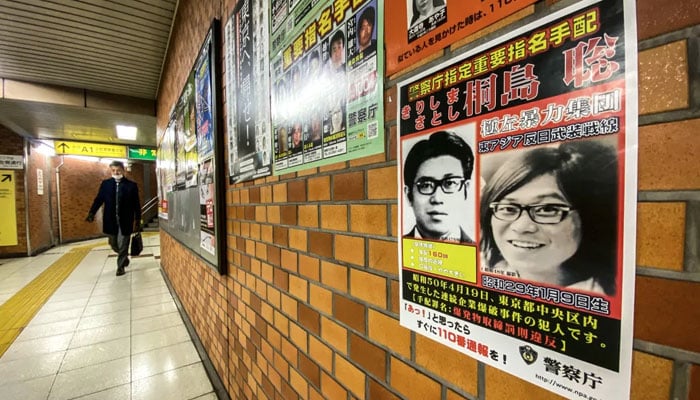
TOKYO: A DNA test has revealed a dying man who claimed to be one of Japan’s most wanted criminals was telling the truth.
Satoshi Kirishima made his confession in January, telling police “I want to meet my death with my real name”.
Officials have now confirmed the 70-year-old was indeed Kirishima, a member of a militant group behind several deadly bombings in the 1970s.
Exactly how he remained at large for so long - despite his face adorning posters across Japan - is unclear.
Kirishima is suspected of helping plant and detonate a homemade bomb that destroyed part of a building in Tokyo’s Ginza district on 18 April 1975, according to local media. There were no casualties.
At the time, he belonged to the East Asia Anti-Japan Armed Front, a radical, left-wing organisation believed to be behind several bombings against companies in Japan’s capital Tokyo in the 70s - including one targeting a Mitsubishi Heavy Industries building which left eight dead and more than 160 injured.
Kirishima is alleged to have been involved in four other attacks the group carried out. Two other members were sentenced to death for their involvement in attacks.
It is thought he is the only member of the group never caught by police, not that they ever gave up: a picture of the long-haired, bespectacled 20-something university student has been appearing on posters outside police stations across the country for decades.
Yet despite his image being widely publicised, neighbours were seemingly caught unawares when his identity was revealed last month, with one describing him to Mainichi newspaper as a “calm and serious” man - albeit with a tendency to play guitar in his room after a few drinks.
Kirishima, who had been going under the name Hiroshi Uchida, had reportedly lived in the city of Fujisawa, on the western edge of Tokyo, for almost 40 years.
He told police he had worked day labour jobs before ending up working at a construction company, Japan’s Asahi newspaper reported. Broadcaster NHK said he had been paid in cash and didn’t have a phone to help him stay under the radar.
And it seems he had neither a driver’s licence nor any health insurance when he appeared at the hospital seeking treatment for terminal cancer.
It was only at that point he revealed his real identity, with staff then alerting police.
Police say he was able to recount details about both his family and the East Asia Anti-Japan Armed Front only he would have known during interviews in the days before his death on 29 January. He also denied some of the allegations, a source told Kyodo News agency.


