
Private US lunar lander hits technical problems on way to Moon
WASHINGTON: For the first time in five decades, an American lander is bound for the Moon following a successful launch -- but the historic mission led by private industry is experiencing a technical issue that could derail it.
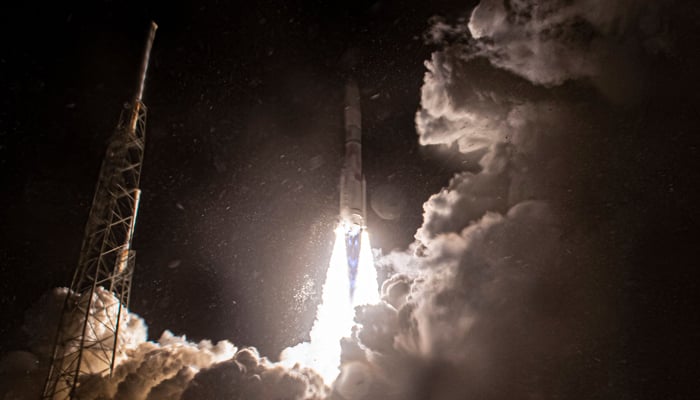
A brand new rocket, United Launch Alliance´s Vulcan Centaur, lifted off from Florida´s Cape Canaveral Space Force Station at 2:18 am (0718 GMT) for its maiden voyage, carrying Astrobotic´s Peregrine Lunar Lander.
Peregrine separated as expected, powered up its systems and made contact with ground control. But “unfortunately, an anomaly occurred which prevented Astrobotic from achieving a stable sun-pointing orientation,” Astrobotic tweeted, adding teams are working on the problem and would provide updates. While in orbit, Peregrine´s top mounted solar panel stays pointed at the Sun to enable maximum power generation.
“The solar panel is utilized to provide battery charge and maintain lander and payload operations,” the robot´s documentation says. Power is needed to run the onboard computer, as well as its communications and flight control systems. Peregrine is supposed to reach the Moon, then maintain an orbit for several weeks before touching down on a mid-latitude region of the Moon called Sinus Viscositatis, or Bay of Stickiness, on February 23.


