
Consumer woes
LAHORE: Consumers have long been left to the mercy of speculators and hoarders due to ineffective regulatory institutions, a situation that has been exacerbated by years of high inflation.
While consumers have managed to survive in the past, the recent skyhigh prices have pushed a significant portion of the population to the brink. Concerns have been raised regarding the effectiveness of regulatory bodies in safeguarding consumer interests, with allegations of incompetence and corruption among staff hindering enforcement efforts.
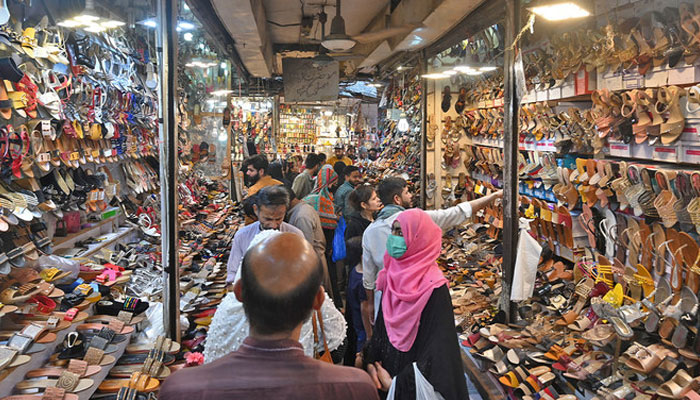
A consumer paying for one kg of an item might end up with 10-20 percent less because standard weights are not used. Adulteration in milk, grinded chilies, tomato pastes and other such items is rampant everywhere in the country.
Pakistan has the lowest saving rate of 12-13 per cent in the region that forces it to seek investment from outside. Its home market is small and relatively "inelastic." Its consumptive elite classes usually do not like what the home producers make and prefer imported stuff.
High consumption is supported to give a false impression of high growth. This growth is maintained by high interest foreign loans that trigger high inflation and cripple the low end consumers.
To curb these tendencies the government would have to devise a policy that discourages consumer credit. All successful economies promoted domestic savings by making their financial systems less ready to extend consumer credit. By doing so they forced their citizens to save.
Current economic situation is a nightmare not only for consumers but also for the manufacturers who are in panic as their sales have gone down. The large departmental chains both local and multinationals have already siphoned most high end consumers. The low end consumers are not left with consumable cash to visit normal retail shops after massive devaluation.
The inflation has gotten out of hand and is hurting the pockets of every segment of society particularly the poor and lower middle class. When the government fixes prices supposedly in the interest of the consumers’, it is actually promoting cartelization. For instance when a ministry negotiates with all the manufacturers to arrive at a reasonable commodity price; the sector provides government estimates of the cost of production, each manufacturer also gives its own cost of production.
In many cases the highest cost of production of the most inefficient manufacturers is then agreed as a reference price and the government asks all others to sell with reasonable profit on the reference price. The most efficient manufacturers mint money and the most inefficient survived as a result of this policy. Under the free or open economy principle the inefficient producers close down but in our case they survive as most efficient producers fix their prices in line with the cost of production of the inefficient producers. This is the reason that we see rates of sugar, cement and wheat flour on the higher side to accommodate highly inefficient producers.
The openness of the economy is meant to benefit the consumers and induce competitive spirit among domestic producers through improvement in technology and efficiency. With private sector credit crowded out and its cost exorbitant if available there is little chance of technology up-gradation in the country. When you are denying level playing field to the domestic sector it would be a folly to open floodgates of imports in the name of openness.
Openness should be within the regulations provided in the law. We cannot provide relief to common consumers in our country where smuggling is tolerated; and goes unpunished, under invoicing is a norm and wrong-declarations of imports are common features. And the trade is principally one sided that supports imports only.







-
 Luke Grimes Reveals Hilarious Reason His Baby Can't Stop Laughing At Him
 -
 Why Kate Middleton, Prince William Opt For ‘show Stopping Style’
 -
 Here's Why Leonardo DiCaprio Will Not Attend This Year's 'Actors Award' Despite Major Nomination
 -
 Ethan Hawke Reflects On Hollywood Success As Fifth Oscar Nomination Arrives
 -
 Tom Cruise Feeling Down In The Dumps Post A Series Of Failed Romances: Report
 -
 'The Pitt' Producer Reveals Why He Was Nervous For The New Ep Of Season Two
 -
 Maggie Gyllenhaal Gets Honest About Being Jealous Of Jake Gyllenhaal
 -
 'Bridgerton' Star Luke Thompson Gets Honest About Season Five
 -
 Prince William On Verge Of Breakdown Because Of 'disgraced' Andrew
 -
 Tig Notaro Reflects On Oscar Nod For 'Come See Me In The Good Light': 'I Was Sleeping'
 -
 Kenyon Sadiq Sets 40-yard Dash Record At NFL Scouting Combine, Eyes First Round
 -
 Talk Show Host Drops Hint About Taylor Swift, Travis Kelce Wedding Date
 -
 Andrew Scandal Brings New Worries For Prince Harry, Meghan Markle
 -
 King Charles Imposes New Restrictions On Ex-Prince Andrew In Surprise Move
 -
 Chris Hemsworth Reveals How Elsa Pataky Guides His Career Moves
 -
 Was Travis Barker In A Relationship With Kim Kardashian Before Marrying Her Sister?