
Economic agenda
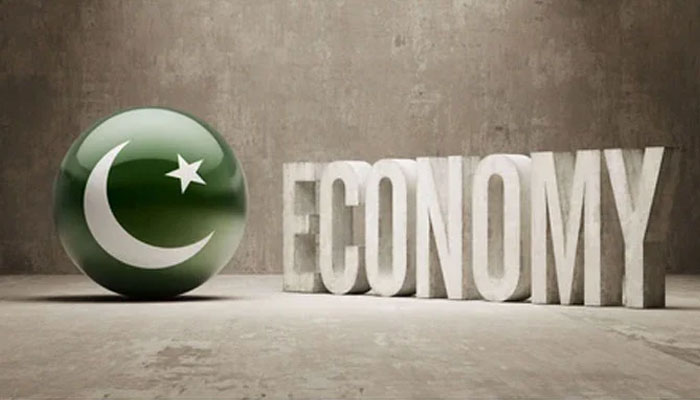
LAHORE: It will be the first time since 2008 that the government assuming power after the election will not have economic mines laid by its predecessor. However, managing Pakistan's economy will not be a bed of roses.
We are seeing some improvements in economic indicators as a result of some tough and unpopular decisions taken by the PDM government and the caretaker government. The easing of some pressures might tempt the government that assumes power after the elections to go for some public-appeasing measures. This would roll back all the positives that have been achieved. The improvement in the quality of life will take some time if the ongoing reforms are further strengthened instead of softened.
The problem with all the elected governments has been that after the first 100 days in power, they are threatened with protests, strikes, and political wheeling and dealing by the opposition. Another burning issue is that none of the governments that come into power is supported by the opposition on economic issues. In fact, the opposition parties oppose the very reforms that they tried to impose during their tenure, which were opposed by the ruling party when it was in opposition.
This game of musical chairs must go now. We have to unite on basic economic policies. These include a firm resolve to privatize state-owned companies through a fair and transparent process.
All parties must agree to a trade regime without taking political matters into account. India and China do not have good relations. India accuses China of occupying its territory, but they have bilateral trade worth over $150 billion, with China having a higher share.
The United States is trying to contain China's political influence and making trade difficult for the socialist country. Still, China is its largest trade partner.
You can restrict trade on proven accusations of child labor, unsustainability of manufacturing processes, but not on the basis of personal enmity. If we get a quality raw material or product at a lower rate than other suppliers, we should go for it, as it will lower the cost of our manufacturers and the public at large. What is the logic of buying inputs at a higher price just because we have political differences with a regime? India and the United States have put political differences aside while importing goods from China.
Besides this, our political parties must oppose all unethical trade practices in vogue in Pakistan. They must fully support documentation of the economy.
They must favor severe penalties on under-invoicing. The smuggled goods should be confiscated and items banned for import must be destroyed, and the rest auctioned transparently. The shopkeepers must be penalized for keeping or selling smuggled goods. The common political agenda must be printed on the election manifesto of all parties contesting the election. In fact, anyone contesting the election must be required to endorse this economic agenda. If there are any illegal clauses, these should be contested in courts. But there should be no ambiguity about how to prudently run the economy.
The discrepancies of all sorts on economic issues should be abolished. The ruling party should be barred from issuing special SROs. We have to be very clear about how to operate our economy. Rulers in Bangladesh and India have no second thought on economic issues, and they are supported fully by those that are in opposition.
Hasina Moen and Khalida Ziaur Rahman are certified enemies, but whoever is in power never tinkers with the economic policies of Bangladesh.






-
 Jelly Roll Finally Shares Painful 'secret' Following 2026 Grammy Win: 'Wanted To Scream'
 -
 Noah Wyle Gives Exciting Update About 'The Pitt' Season 3
 -
 Who Is Behind Princess Eugenie, Beatrice's Ban From Royal Ascot Amid Sarah, Andrew Scandal?
 -
 Kate Middleton Sunbathing Photos: New Book Sheds Light On Prince William's Reaction
 -
 Jim Curtis Shares Rare Details How His Relationship With Jennifer Aniston Started
 -
 Who Organized 'The Office' Reunion At Actors Awards 2026? Revealed
 -
 King Charles Set To Abdicate Next Year, 'official Reason' Revealed
 -
 Paris Hilton's Power Move To Make 'neurodiversity Relatable'
 -
 Michelle Williams Remembers 'friend' James Van Der Beek After His Death
 -
 Woody Harrelson Unveils The Favour ‘living Legend’ Harrison Ford Asked For Before Actor Awards
 -
 How Long Have Zendaya And Tom Holland Been Dating?
 -
 Real Reason Why 'Only Murders In The Building' Cast Didn't Attend 2026 Actor Awards
 -
 Prince William Makes Big Decision After Princess Eugenie, Beatrice Ban
 -
 GLP-1 Drugs Linked To Osteoporosis And Gout: New Study Reveals Higher Risks
 -
 Seth Rogen Unveils Catherine O’Hara's Distinguished Quality In Emotional Tribute
 -
 MWC 2026: New Smartphones, AI Gadgets And Tech Innovations Revealed