
Govt borrowing from SBP soars 119.3 percent in FY2019
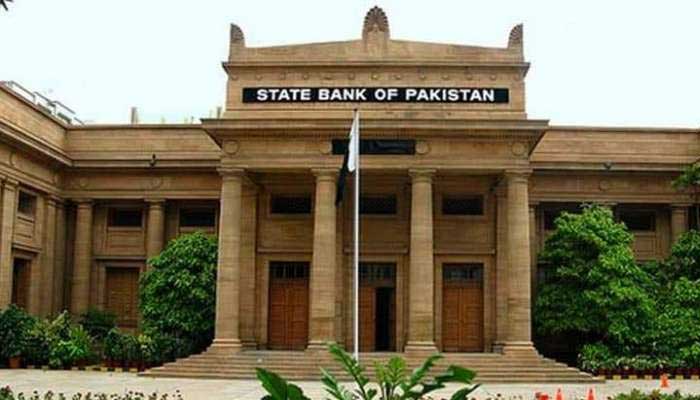
KARACHI: Government borrowing from the central bank increased more than two-fold in the fiscal year 2018/19 as a drop in tax revenue failed to offset higher spending while authorities continued to rely on the State Bank of Pakistan’s (SBP) to fill budget deficit, latest data showed on Tuesday.
The SBP data revealed that the government borrowing during July 1, 2018 to June 28, 2019 stood at Rs3.156 trillion, up 119.3 percent, from Rs1.439 trillion in the previous fiscal year.The surge in the government borrowings was mainly due to fiscal imbalances on the back of weak revenue collection, inefficient and loss-making state owned enterprises, and hefty circular debt in the energy sector. Moreover, the higher government borrowing contributed to a rise in the public sector debt.
The country ran a budget deficit of Rs1.922 trillion or 5 percent of gross domestic product (GDP) in July-March FY19. The budget deficit is likely to increase to more than 7 percent of the GDP against a target of 5.1 percent fixed by the government for the FY19 amid a revenue shortfall.
The increasing expenditures with regard to interest payments, subsidies and defense purpose also continued to drag on public finances. Banks’ reluctance to lend to the government due to demanding very short maturities also forced the government to meet a large chunk of its spending requirements through the SBP’s financing during the period under review.
However, the government has decided to cut SBP’s financing for budget deficit during the current fiscal year. International Monetary Fund (IMF) in its recently released staff report said the government was committed to refrain from any new direct financing of the budget by the SBP and to gradually reduce the SBP stock of net government budgetary borrowing.
“Moreover, the SBP and the MoF [Ministry of Finance] have agreed to reprofile the stock of mostly short-term government debt held by the SBP into short- and long-term tradable instruments of various maturities (one, three, five, and ten years) at interest rates close to market levels,” the report said.
“This operation will take place before the adoption of the amended SBP Act and will support debt sustainability, reduce the government’s interest bill, and avoid crowding out of private credit,” the IMF said in the report.
The FY2020 budget targets a primary fiscal adjustment of 1.2 percent of the GDP underpinned by high-quality permanent revenue measures of 1.7 percent of the GDP.
According to IMF report, on the expenditure side, the budget now incorporates implicit subsidies in the power sector that in the past were not budgeted and had contributed to the build-up of circular debt.







-
 ‘Narcissist’ Andrew Still Feels ‘invincible’ After Exile
 -
 Shamed Andrew ‘mental State’ Under Scrutiny Amid Difficult Time
 -
 Bad Bunny's Super Bowl Halftime Show: What Time Will He Perform Tonight?
 -
 Where Is Super Bowl 2026 Taking Place? Everything To Know About The NFL Showdown
 -
 Chris Pratt Explains Why He And Katherine Schwarzenegger Did Premarital Counseling
 -
 Drake 'turns Down' Chance To Hit Back At Kendrick Lamar At Super Bowl
 -
 Sarah Ferguson Had A ‘psychosexual Network’ With Jeffrey Epstein
 -
 Miranda Kerr Shares The One Wellness Practice She Does With Her Kids
 -
 Czech Republic Supports Social Media Ban For Under-15
 -
 Khloe Kardashian Shares How She And Her Sisters Handle Money Between Themselves
 -
 Prince William Ready To End 'shielding' Of ‘disgraced’ Andrew Amid Epstein Scandal
 -
 Chris Hemsworth Hailed By Halle Berry For Sweet Gesture
 -
 Blac Chyna Reveals Her New Approach To Love, Healing After Recent Heartbreak
 -
 Royal Family's Approach To Deal With Andrew Finally Revealed
 -
 Super Bowl Weekend Deals Blow To 'Melania' Documentary's Box Office
 -
 Meghan Markle Shares Glitzy Clips From Fifteen Percent Pledge Gala