
Australia passes law to make Google, Facebook pay for news
The Parliament on Thursday passed the final amendments to the so-called News Media Bargaining Code
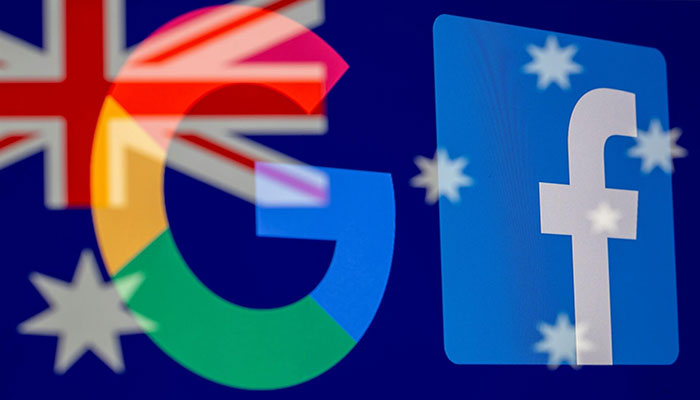
CANBERRA: Australia’s law forcing Google and Facebook to pay for news is ready to take effect, though the laws’ architect said it will take time for the digital giants to strike media deals, foreign media reported.
The Parliament on Thursday passed the final amendments to the so-called News Media Bargaining Code agreed between Treasurer Josh Frydenberg and Facebook chief executive Mark Zuckerberg on Tuesday.
In return for the changes, Facebook agreed to lift a ban on Australians accessing and sharing news. Rod Sims, the competition regulator who drafted the code, said he was happy that the amended legislation would address the market imbalance between Australian news publishers and the two gateways to the internet. “All signs are good,” Sims said.
“The purpose of the code is to address the market power that clearly Google and Facebook have. Google and Facebook need media, but they don’t need any particular media company, and that meant media companies couldn’t do commercial deals,” the Australian Competition and Consumer Commission chair added.
The rest of the law had passed in Parliament earlier, so it can now be implemented. Google has already struck deals with major Australian news businesses in recent weeks including News Corp. and Seven West Media.
Frydenberg said he was pleased to see progress by Google and more recently Facebook in reaching commercial deals with Australian news businesses. But Country Press Australia, which represents 161 regional newspapers across the country, has raised concerns that tiny publications outside large cities might miss out.
Sims said he was not surprised that the platforms would strike deals with the large city businesses first. “I don’t see any reason why anybody should doubt that all journalism will benefit,” Sims said.
“There things take time. Google and Facebook don’t have unlimited resources to go around talking to everybody. I think this has got a long way to play out,” he added. Chris Moos, a lecturer at Oxford University’s Business School, said the latest amendments amounted to a “small victory” for Zuckerberg.
Moos said the legislation would likely result in small payouts for most Australian news publishers. But Facebook could again block Australian news if negotiations broke down. The legislation was designed to curb the outsized bargaining power of Facebook and Google in their negotiations with Australian news providers. The digital giants would not be able to abuse their positions by making take-it-or-leave-it payment offers to news businesses for their journalism. Instead, in the case of a standoff, an arbitration panel would make a binding decision on a winning offer.
Frydenberg and Facebook confirmed that the two sides agreed to amendments to the proposed legislation. The changes would give digital platforms one month’s notice before they are formally designated under the code. That would give those involved more time to broker agreements before they are forced to enter binding arbitration arrangements.
Facebook Vice President of Global Affairs Nick Clegg said on Wednesday that the Australian law, without this week’s amendments, would have enabled media conglomerates to “demand a blank check.”
“Thankfully, after further discussion, the Australian government has agreed to changes that mean fair negotiations are encouraged without the looming threat of heavy-handed and unpredictable arbitration,” Clegg, a former British deputy prime minister, wrote in a Facebook post.
Facebook last week prevented Australians from sharing news, but also blocked access to pandemic, public health and emergency services.
The blockade was a response the House of Representatives passing the code last week in a form that Facebook considered “unworkable.” Clegg said Facebook had “erred on the side of over-enforcement” and “some content was blocked inadvertently.”
Both Google and Facebook are pursuing Australian media deals under their own licensing models, Google News Showcase and Facebook News.
But media executives argue such deals would not be possible without the threat of an arbitration panel making final decisions. Frydenberg said his department will review the code within a year to “ensure it is delivering outcomes that are consistent with government’s policy intent.”





-
 James Van Der Beek's Friends Helped Fund Ranch Purchase Before His Death At 48
 -
 King Charles ‘very Much’ Wants Andrew To Testify At US Congress
 -
 Rosie O’Donnell Secretly Returned To US To Test Safety
 -
 Meghan Markle, Prince Harry Spotted On Date Night On Valentine’s Day
 -
 King Charles Butler Spills Valentine’s Day Dinner Blunders
 -
 Brooklyn Beckham Hits Back At Gordon Ramsay With Subtle Move Over Remark On His Personal Life
 -
 Meghan Markle Showcases Princess Lilibet Face On Valentine’s Day
 -
 Harry Styles Opens Up About Isolation After One Direction Split
 -
 Shamed Andrew Was ‘face To Face’ With Epstein Files, Mocked For Lying
 -
 Kanye West Projected To Explode Music Charts With 'Bully' After He Apologized Over Antisemitism
 -
 Leighton Meester Reflects On How Valentine’s Day Feels Like Now
 -
 Sarah Ferguson ‘won’t Let Go Without A Fight’ After Royal Exile
 -
 Adam Sandler Makes Brutal Confession: 'I Do Not Love Comedy First'
 -
 'Harry Potter' Star Rupert Grint Shares Where He Stands Politically
 -
 Drama Outside Nancy Guthrie's Home Unfolds Described As 'circus'
 -
 Marco Rubio Sends Message Of Unity To Europe