
Arctic odyssey ends, bringing tales of ice loss
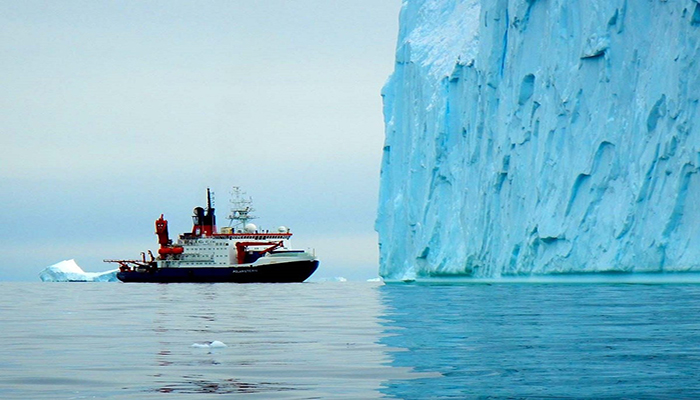
The biggest Arctic expedition in history will return to the German port of Bremerhaven on Monday after a year-long mission, bringing home observations from scientists that sea ice is melting at a "dramatic rate" in the region.
Coronavirus restrictions mean there will be no grand fanfare when the German Alfred Wegener Institute’s Polarstern ship docks. But the information gathered by researchers as the ship drifted through the ocean trapped in ice will be vital to helping scientists understand the effects of climate change.
In the summer, the researchers saw for themselves the dramatic effects of global warming on ice in the region, considered "the epicentre of climate change", according to mission leader Markus Rex. "We could see broad stretches of open water reaching nearly to the Pole, surrounded by ice that was riddled with holes produced by massive melting," Rex said.
His sobering conclusion: "The Arctic ice is disappearing at a dramatic rate." The researchers’ observations have been backed up by US satellite images showing that in 2020, sea ice in the Arctic reached its second-lowest summer minimum on record, after 2012.
The Polarstern mission, dubbed mosaic, spent 389 days collecting data on the atmosphere, ocean, sea ice and ecosystems to help assess the impact of climate change on the region and the world.
To carry out the research, four observational sites were set up on the sea ice in a radius of up to 40 kilometres around the ship. The researchers collected water samples from beneath the ice during the polar night to study plant plankton and bacteria and better understand how the marine ecosystem functions under extreme conditions.
The 140-million-euro ($165 million) expedition is also bringing back to shore more than 1,000 ice samples. With the odyssey drawing to a close, work will begin in earnest on analysing the samples and data retrieved or recorded on site. The analysis process will take up to two years, with the aim of developing models to help predict what heatwaves, heavy rains or storms could look like in 20, 50 or 100 years’ time.







-
 James Van Der Beek's Friends Helped Fund Ranch Purchase Before His Death At 48
 -
 King Charles ‘very Much’ Wants Andrew To Testify At US Congress
 -
 Rosie O’Donnell Secretly Returned To US To Test Safety
 -
 Meghan Markle, Prince Harry Spotted On Date Night On Valentine’s Day
 -
 King Charles Butler Spills Valentine’s Day Dinner Blunders
 -
 Brooklyn Beckham Hits Back At Gordon Ramsay With Subtle Move Over Remark On His Personal Life
 -
 Meghan Markle Showcases Princess Lilibet Face On Valentine’s Day
 -
 Harry Styles Opens Up About Isolation After One Direction Split
 -
 Shamed Andrew Was ‘face To Face’ With Epstein Files, Mocked For Lying
 -
 Kanye West Projected To Explode Music Charts With 'Bully' After He Apologized Over Antisemitism
 -
 Leighton Meester Reflects On How Valentine’s Day Feels Like Now
 -
 Sarah Ferguson ‘won’t Let Go Without A Fight’ After Royal Exile
 -
 Adam Sandler Makes Brutal Confession: 'I Do Not Love Comedy First'
 -
 'Harry Potter' Star Rupert Grint Shares Where He Stands Politically
 -
 Drama Outside Nancy Guthrie's Home Unfolds Described As 'circus'
 -
 Marco Rubio Sends Message Of Unity To Europe