
LHC questions legality of Musharraf case, trial court
LAHORE: The Lahore High Court was told on Friday that the offence of high treason had been created under Article 6 of the Constitution but it did not give any punishment, leaving it for the parliament to enact law for this purpose. The court was told the constitution of the Special Court was illegal and as such all steps taken by it including the conviction of Musharraf were unlawful and void ab initio.
It was told by Barrister Ali Zafar who is extending his assistance as amicus curiae to a full bench hearing a petition by Musharraf challenging multiple actions against him including conviction in a high treason case, establishment of the Special Court and filing of a complaint by the federal government. Zafar told the court the trial in absentia was abhorrent to all criminal justice system under the Pakistani law. Moreover, under the law, it was the federal government which was required to decide whether or not to file a complaint, to constitute the Special Court and also to authorize a person to file a complaint before the court.
The counsel argued that Section 9 of the Criminal Law Amendment (Special Court) Act 1976 under which the trial in absentia took place of former president Gen (retd) Pervez Musharraf is in violation of Article 10-A of the Constitution, which provides that every person is entitled to a fair trial. “If Section 9 is declared ultra vires, that will have consequences on the final outcome of the judgment passed by the Special Court,” the counsel added.
Barrister Zafar pointed out that there had been no cabinet decision to institute proceedings against Musharraf for high treason, nor for the constitution of the Special Court or authorizing a person for filing a complaint. He argued that the offence of high treason was always a joint offence as one person could not be deemed to have committed any abrogation or subversion of the Constitution.
Justice Mazahar Ali Akbar Naqvi observed the charges framed against Musharraf did not include high treason. The judge said the punishment of an accused without his statement under Section 342 of the CrPC was alien to criminal law. He said in crime of abetment, the whole army was criticized. Under this trend, the judiciary will also be under check. Was a trial against any other person conducted in absentia?
To a court query, Barrister Zafar said the trial court had no jurisdiction to direct the government for a change in the complaint to include other suspects as well. As the lawyer concluded his arguments, the bench adjourned the hearing till January 13, asking Additional Attorney General Ishtiaq A Khan to present summary about the formation of the Special Court and all other relevant record.




-
 Murder Suspect Kills Himself After Woman Found Dead In Missouri
 -
 Sarah Ferguson's Plea To Jeffrey Epstein Exposed In New Files
 -
 Prince William Prepares For War Against Prince Harry: Nothing Is Off The Table Not Legal Ways Or His Influence
 -
 'How To Get Away With Murder' Star Karla Souza Is Still Friends With THIS Costar
 -
 Pal Reveals Prince William’s ‘disorienting’ Turmoil Over Kate’s Cancer: ‘You Saw In His Eyes & The Way He Held Himself’
 -
 Poll Reveals Majority Of Americans' Views On Bad Bunny
 -
 Wiz Khalifa Thanks Aimee Aguilar For 'supporting Though Worst' After Dad's Death
 -
 Man Convicted After DNA Links Him To 20-year-old Rape Case
 -
 Royal Expert Shares Update In Kate Middleton's Relationship With Princess Eugenie, Beatrice
 -
 Andrew Mountbatten-Windsor’s Leaves King Charles With No Choice: ‘Its’ Not Business As Usual’
 -
 Dua Lipa Wishes Her 'always And Forever' Callum Turner Happy Birthday
 -
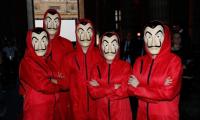 Police Dressed As Money Heist, Captain America Raid Mobile Theft At Carnival
 -
 Winter Olympics 2026: Top Contenders Poised To Win Gold In Women’s Figure Skating
 -
 Inside The Moment King Charles Put Prince William In His Place For Speaking Against Andrew
 -
 Will AI Take Your Job After Graduation? Here’s What Research Really Says
 -
 California Cop Accused Of Using Bogus 911 Calls To Reach Ex-partner