
Malaria back on track in Pakistan
Pakistan Institute of Medical Sciences, Polyclinic and the three teaching hospitals in Rawalpindi including Holy Family Hospital, Benazir Bhutto Hospital and District Headquarters Hospital receive well over three million patients every year at their outpatients departments but cases with malaria and its complications are not registered in them.
Highlights
- There is significant rise in more lethal form that is falciparum in Balochistan and Sindh
- In Sindh, as many as 1,484,821 suspected cases of malaria were reported from across the province in 2018 of which 108,262 were tested positive
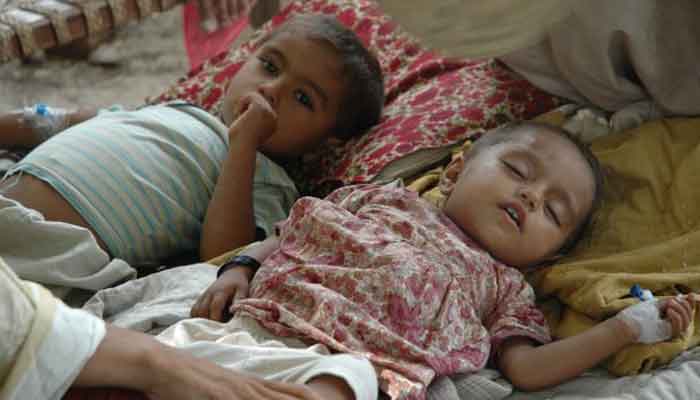
Islamabad : Malaria is back on track in Pakistan causing complications in thousands of cases every year but still its prevention, diagnosis and treatment along with recording of data has been given almost no attention both at the federal and the provincial levels.
Many health experts believe that the efforts to roll back malaria from Pakistan have not been in limelight for well over a decade particularly after appearance of dengue fever outbreaks in the country.
Malaria is a preventable and curable infection but still it claims life of a child every two minutes around the globe and thousands of deaths can be attributed to it and co-morbidities every year in Pakistan though majority of even reported cases are not screened properly and given suspected status only.
Malaria that is fatal mostly in cases of infants, children and pregnant women is the second most prevalent and devastating disease of the country as approximately 60 per cent of the population is living in areas where the disease is endemic, said District Health Officer Islamabad Dr. Muhammad Najeeb Durrani while talking to ‘The News’.
He, however, said malaria is not a threat in the federal capital. The filed activities to prevent malaria have not been witnessed for the last many years and it may be because of the surveillance activities against dengue fever, he said while responding to a query.
Studies reveal that development of irrigation network coupled with population growth and haphazard urbanization together with deteriorating sanitary conditions and environmental hazards like heavy rains, floods etc. have increased the malariogenic potential of Pakistan in both urban and rural areas.
The teams of district health departments can be witnessed carrying out activities in the field to fight dengue fever and almost the same activities are needed to avoid malaria particularly regarding vector control and mosquitoes’ elimination, said a top official serving at one of the allied hospitals in Rawalpindi.
He however said the difference is that most of the malaria suspects are not undergone confirmatory tests instead they are given anti-malarial drugs directly after suspicion.
Data collected by ‘The News’ also revealed that the tertiary care hospitals including teaching hospitals in the twin cities of Islamabad and Rawalpindi do not have compact data regarding number of malaria cases presented there.
Pakistan Institute of Medical Sciences, Polyclinic and the three teaching hospitals in Rawalpindi including Holy Family Hospital, Benazir Bhutto Hospital and District Headquarters Hospital receive well over three million patients every year at their outpatients departments but cases with malaria and its complications are not registered in them.
For early diagnosis of malaria, microscopic examination of blood slides are performed but in most of the cases the practice is not followed and patients are treated on signs and symptoms only, said the senior official pleading anonymity.
It is important to mention here that major vector species in Pakistan are Anopheles culcifacies (rural area vector) and Anopheles stephensi (urban area vector) and prevalent causative parasites are Plasmodium vivax (75% malaria cases) and Plasmodium falciparum (25% cases) which is the most deadly. There is significant rise in more lethal form that is falciparum in Balochistan and Sindh.
According to malaria control program in Sindh province, as many as 1,484,821 suspected cases of malaria were reported from across the province in 2018 of which 108,262 were tested positive.







-
 Royal Family's Approach To Deal With Andrew Finally Revealed
 -
 Super Bowl Weekend Deals Blow To 'Melania' Documentary's Box Office
 -
 Meghan Markle Shares Glitzy Clips From Fifteen Percent Pledge Gala
 -
 Melissa Jon Hart Explains Rare Reason Behind Not Revisting Old Roles
 -
 Meghan Markle Eyeing On ‘Queen’ As Ultimate Goal
 -
 Japan Elects Takaichi As First Woman Prime Minister After Sweeping Vote
 -
 Kate Middleton Insists She Would Never Undermine Queen Camilla
 -
 King Charles 'terrified' Andrew's Scandal Will End His Reign
 -
 Winter Olympics 2026: Lindsey Vonn’s Olympic Comeback Ends In Devastating Downhill Crash
 -
 Adrien Brody Opens Up About His Football Fandom Amid '2026 Super Bowl'
 -
 Barbra Streisand's Obsession With Cloning Revealed
 -
 What Did Olivia Colman Tell Her Husband About Her Gender?
 -
 'We Were Deceived': Noam Chomsky's Wife Regrets Epstein Association
 -
 Patriots' WAGs Slam Cardi B Amid Plans For Super Bowl Party: She Is 'attention-seeker'
 -
 Martha Stewart On Surviving Rigorous Times Amid Upcoming Memoir Release
 -
 Prince Harry Seen As Crucial To Monarchy’s Future Amid Andrew, Fergie Scandal