
CPEC to provide impetus to Pak-CARs relations
The CPEC route provides immense opportunities to CARs, a region that entered the world after the disintegration of the Soviet Union in 1991, to expand trade with Pakistan and also go through China for trade expansion.
In the context of geo-strategic situation in the region, CPEC offers an alternative solution to link up Kazakhstan, Kyrgyzstan, and Tajikistan, which directly border China, as well as Uzbekistan and Turkmenistan, to the route, thus ruling out reliance on the traditional perception that all roads from Pakistan into the Central Asia go through Kabul or Wakhan strip.
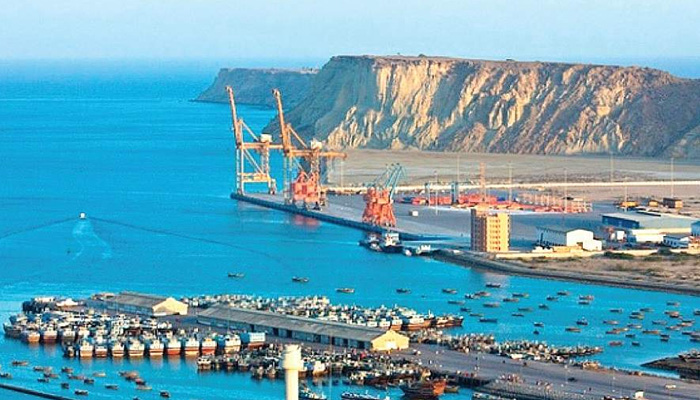
President Mamnoon Hussain is convinced that the China Pakistan Economic Corridor project would enhance contacts of Central Asian States with many countries of the world while through this project the shortest sea route would be available from the Gwadar Port to Kyrgyzstan. The Minister for Planning and Development, Ahsan Iqbal, reiterates that Pakistan and Central Asian Republics would benefit from the platform and infrastructure being constructed under China Pakistan Economic Corridor.
Addressing a seminar titled “Pakistan – A Land of Opportunities for Central Asian Republics”, the minister stated two more corridors would also be completed during the next few years based on CPEC connecting Pakistan, China and Central Asia. One corridor would link Peshawar with Kabul and Tajikistan and the other will connect Quetta with Herat and Turkmenistan. He believes that these corridors would not only provide connectivity to Central Asia but also extend it to the Russian Federation.
Almost all the CARs have shown interest in joining the CPEC. With abundance of natural resources such as oil, gas, gold, and other metals, CARs have great potentials to invest in CPEC-related projects and its industrial zones. Experts hope the recent improvement in bilateral relations with Russia would help and improve the prospects of wider regional connectivity through multilateral tracks.
As it is, all the five Central Asian States are landlocked and don’t have access to sea. Thus, they can launch trade and build energy corridor through the CPEC project. The dream of transit trade can be materialised through the Gwadar Port. Tajikistan could access the Indian Ocean by connecting the China-Pakistan railway once it is completed.
On the other hand, India calls Central Asia by referring to it as “our near abroad” and ‘extended neighbourhood’. But it thinks itself as a challenger to China in Central Asia while developing bilateral relations with the five new republics — Kazakhstan, Kyrgyzstan, Tajikistan, Turkmenistan, and Uzbekistan. New Delhi, through various efforts, is trying to consolidate its geopolitical and geo-economic presence in the region. But there has not been considerable progress on the Chabahar project, considered an important facilitator of trade to and from Central Asia through the war-torn Afghanistan. As it is, the Chahbahar Port is unlikely to be a potential game-changer for India. Given the hurdles, the new port facility would not offer the country an alternative transit route to landlocked Afghanistan and other parts of Central Asia and a counter to Chinese moves in its backyard.
India is at a disadvantage because China shares long borders and deep relations with the CARs; India does not. The Chinese continue to build deep military, economic, and defence cooperation with CARs and at a large scale while India lags behind. According to Indian economists, economic relations with CARs remain at low level while mutual investment is also negligible. Roy Chaudhry admits in India’s Economic Times: “China has made significant headway in the region, with $10 billion in grants and aid to SCO members in Central Asia and developing regional linkages between Central Asia and its western regions. Central Asia is central to China’s OBOR policy. India’s lack of direct overland access to the region due to Pakistan’s reluctance in allowing Indian goods to pass through its territory has hurt New Delhi’s trade interests in the region.”
Looking at vast transit-trade and investment opportunities and potentials, CARs, synthesizing all available sources, should take the major benefits that CPEC offers. Objectively evaluating, it seems CPEC would be the critical variable in CARs' future trade and economic linkages.


