
European powers make last-ditch appeal to save Iran N-deal
BERLIN: Britain, France and Germany made a last-ditch appeal on Monday to US President Donald Trump not to abandon the Iran nuclear deal as a key deadline approaches, warning that scrapping it would spark an "escalation".
Trump has threatened to withdraw from the 2015 pact when it comes up for renewal on May 12, and to reimpose sanctions unless European signatory states fix its "terrible flaws". German Foreign Minister Heiko Maas warned that the accord’s collapse could spark "an escalation" in the region and stressed that Washington’s key European allies remain convinced saving it "makes the world a safer place".
His French counterpart Jean-Yves Le Drian, on a Berlin visit, said that the agreement is "the right way to stop Iran from getting access to nuclear weapons" and "will save us from nuclear proliferation".
British Foreign Secretary Boris Johnson, who was visiting Washington Monday, cautioned that "at this delicate juncture, it would be a mistake to walk away from the nuclear agreement and remove the restraints that it places on Iran".
"Now that these handcuffs are in place, I see no possible advantage in casting them aside," Johnson wrote in The New York Times. He argued that "every available alternative is worse", adding that "the wisest course would be to improve the handcuffs rather than break them".
Under the landmark nuclear pact, also signed by Russia and China, Iran pledged not to build a nuclear bomb in return for relief from international sanctions. Trump has consistently complained about the agreement, reached under his predecessor Barack Obama, citing perceived flaws including "sunset" provisions lifting some nuclear restrictions from 2025.
In an attempt to salvage the deal, French President Emmanuel Macron has pushed to extend its scope to address this issue, as well as Iran’s missile capabilities and its role in the region. Israel has also pushed to have the accord ditched, arguing that intelligence documents it recently unveiled showed that Iran had had a secret atomic weapons programme which it could re-activate at any time.
Britain, France and other signatories have said those arguments only strengthened the case for the deal, which has safeguards in place designed to keep Iran from pursuing atomic weapons. Johnson was on Monday to start a two-day visit to Washington, with the nuclear deal top of the agenda, the Foreign Office said.







-
 Kennard’s Last-second 3-pointer Heroics Seal A Lakers Win On LeBron’s Historic Night
 -
 Prince Harry Once Flew Into A Rage At A Royal Correspondent
 -
 Regé-Jean Page Gets Honest About Working With Halle Bailey In 'You, Me And Tuscany'
 -
 Reese Witherspoon On Her Journey To Becoming 'powerhouse Mogul'
 -
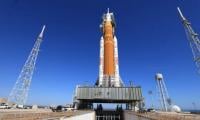 How To See NASA’s SLS Rocket Before The Artemis II Launch: Here’s Everything To Know
 -
 Amanda Peet Breaks Silence On Her Cancer Diagnosis
 -
 Ed Sheeran Talks About His Plans For Baby No. 3: ‘They’re Fun But It's Up And Down When Tantruming’
 -
 Princesses Beatrice, Eugenie Headed For Divorce From Edoardo Mapelli Mozzi, Jack Brooksbank?
 -
 Barry Keoghan Exposes 'nasty Side' Of Social Media In Heartbreaking Confession
 -
 Trump 48-hour Ultimatum To Iran: Power Plants To Be ‘obliterated’ If Strait Of Hormuz Stays Closed
 -
 Brooks Nader Drops Her Biggest 'regret': 'I Shouldn't Say This'
 -
 Inside Savannah Guthrie’s Statement For Mum Nancy
 -
 Japan Foreign Minister Speaks About Military Deployment In The Strait Of Hormuz For Minesweeping
 -
 Princess Beatrice, Eugenie Risk Royal Suicide: 'They Are Questioning Kate Middleton'
 -
 Prince Harry, Meghan To Get Covered In ‘sticky Honey’ On Australia Tour
 -
 Shamed Andrew Urges To Be Called ‘HRH’ Despite Intense Exile