
Indian aggression
India has the uncanny habit of ramping up tensions along the Line of Control whenever its relations with Pakistan take a nose dive. As with most other things, this unfortunate tendency has only become worse under the Narendra Modi government. After the militant attack of the India army camp in Kashmir, Modi launched what he called “surgical strikes” but which were just the usual round of unprovoked firing across the LoC. Now India is at it again, this time killing seven Pakistani soldiers. This is the most serious incident since 2003, when Pakistan and India signed a ceasefire aimed at controlling cross-border firing. The reason is clear to all neutral observers. Modi was elected as prime minister after castigating the Congress government for being too soft on Pakistan. He beat the drums of war and continually blasted Pakistan as a terrorist state. But the nuclear deterrent means he cannot launch a full-scale war. These regular indefensible attacks across the LoC are his way of showing his ‘toughness’, both to Pakistan and an Indian public he has whipped into a frenzy. Even a man as bloodthirsty as Modi must know that any firing across the LoC will lead to an equal amount of fire directed at Indian soldiers – and we have indeed claimed that there have been casualties on the Indian side – and that these exchanges disturb the peace without giving any side a tactical advantage. Yet he has been so boxed in by his own extremism that this seems to be the only strategy available to him.
Pakistan’s response, other than firing back, was to chair a meeting in Islamabad, urging the UN to take up the matter of India’s regular violations of the LoC. There are already mechanisms in place which are meant to prevent such incidents and the UN needs to pressure India to follow them. The DGMOs of both countries can speak to each other via the seldom-used hotline and had done so at India’s request after the Uri attack. They are also supposed to speak to each other every Tuesday but that is treated as a formality rather than an opportunity to ease tensions. Face-to-face meetings between the DGMOs is rare. The last time it took place was at Wagah in 2013 over firing across the LoC and before that as far back as right after the Kargil war. Setting up more regular meetings may be one possible way to put a halt to or at least reduce such skirmishes. The UN has always been reluctant to get involved because of its heavily pro-India bias but it may be the only organisation left that can force at least a modicum of moderation on Narendra Modi. For now Pakistan seems to be fighting its battle on its own, with some support coming in from China and other nations calling meekly for an end to atrocities in Kashmir. But the voices are too muted, and for now it seems that India is bent upon continuing with its aggression. The final goal it has in mind is yet to emerge, but the omens are not happy one.






-
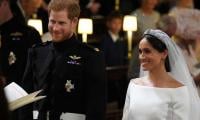 Prince Harry And Meghan's Wedding Video Used For Engagement Farming
 -
 Prince William’s Biographer Breaks Down If Harry Can Find His Way Back To The Firm Before Coronation
 -
 Noah Schnapp Covers Up Relationship Mystery With ‘April Fools’ Prank
 -
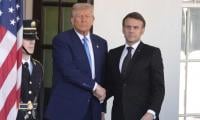 Macron Slams Trump: ‘Neither Elegant Nor Up To Standard’ Over Mockery
 -
 Kanye West Grows Frustrated Mid-performance During Comeback Show: 'Stop It, We Went Over This In Rehearsal'
 -
 Why Princess Anne's Son Had To Take Extra Step Before Remarrying?
 -
 Kylie Kelce Shuts Down 'ridiculous' Questions About Taylor Swift And Travis Kelce Wedding
 -
 Khloe Kardashian Shares Her Kids' Brutal Reaction To New Snack Line
 -
 Olivia Rodrigo Finally Announces The 'You Seem Pretty Sad For A Girl' Album
 -
 Elijah Wood Gets Candid About Hilarious Reason Why People Call Him ‘Spider-Man’
 -
 Malcolm McRae Celebrates Marriage Milestone With Anya Taylor-Joy: 'You’re Better Than Me Except In Thumb Wars'
 -
 Prince Harry Furious Over Meghan Markle's Big Move
 -
 'Harry Potter' Star Admits His Younger Self Was 'deeply Unhappy'
 -
 Becky G Opens Up About Private ‘painful Heartbreak’
 -
 US Importers Use Tariff Refund Claims To Secure Loans
 -
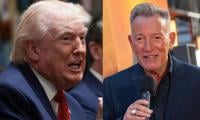 Donald Trump Fires Back At Bruce Springsteen With Personal Jabs: 'Incurable Case Of Trump Derangement Syndrome'