
Pakistan’s reform dilemma
Even when political will exists, reform frequently falters due to institutional fragmentation
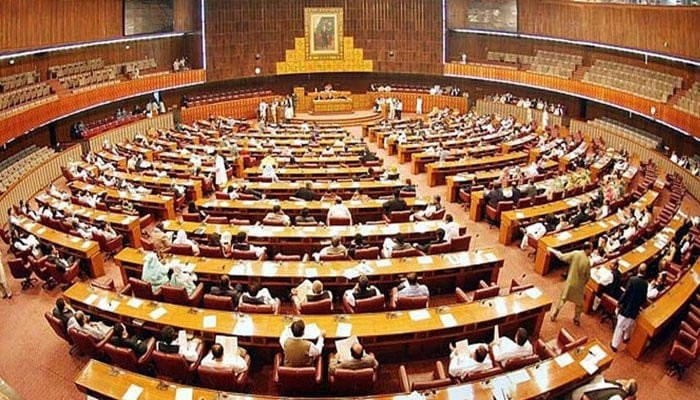
Reform in Pakistan is not a novel endeavour. It is a familiar refrain echoed through budget speeches, donor agreements, economic revival frameworks and political manifestos. Yet, despite being one of the most frequently invoked promises in the country’s public discourse, reform remains largely aspirational.
From civil service modernisation to state-owned enterprise (SOE) privatisation and energy pricing to tax restructuring, successive governments have struggled to move beyond diagnostics and declarations to meaningful delivery. The reasons are not mysterious; they are embedded in the country's political economy and institutional DNA.
At present, Pakistan finds itself at a critical juncture. The government’s ongoing initiatives to broaden the tax net, privatise loss-making SOEs, digitise service delivery, and meet IMF programme targets represent more than a policy exercise. They reflect a political and economic inflexion point. If strategically implemented, these reforms could redefine the state’s relationship with the market, restore macroeconomic credibility and reestablish citizen trust in governance. But for that to happen, Pakistan must dismantle the very system that is designed to resist change.
Three forces continue to constrain meaningful reform: bureaucratic inertia, elite capture, and institutional fragmentation. Pakistan’s bureaucracy, still shaped by colonial-era command-and-control procedures, operates more as a compliance mechanism than a policy engine. Discretion often outweighs data; caution is rewarded more than creativity. Performance incentives are weak, and decision-making is diffused. In such a structure, reform becomes a file, debated, delayed and eventually shelved. Even when bureaucrats attempt to drive change, they are often rotated out before reforms can mature.
This inertia is further reinforced by elite capture. Many of the inefficiencies in Pakistan’s economic system are not unintended; they are intentionally preserved by actors with influence. From tax exemptions and regulatory loopholes to monopolistic practices and preferential access to state resources, power is often used to secure privilege. Reforms that threaten entrenched interests, like rationalising energy subsidies, taxing agricultural land, or curbing under-invoicing, are quietly blocked, diluted or indefinitely delayed. In this context, reform is a political act.
Even when political will exists, reform frequently falters due to institutional fragmentation. The 18th Amendment, while a milestone for democratic decentralisation, did not include the necessary administrative capacity or coordination frameworks. Ministries, regulators and provincial departments function in silos with competing mandates and overlapping jurisdictions. National reform priorities, whether in education, digital transformation, gender empowerment or climate resilience, often fail to translate into actionable provincial agendas. This lack of coherence erodes effectiveness and limits scalability.
Despite these constraints, the path forward is not blocked. The solution does not lie in additional white papers or donor-backed policy models; it lies in restructuring the mechanisms that manage reform. First, reform needs to be institutionalised through dedicated delivery units. Each major ministry should establish a Reform Delivery Cell, equipped with clear KPIs, transparent progress tracking, and direct accountability to the Prime Minister’s Office. These units should be empowered to cut through bureaucratic resistance and act as catalytic hubs for inter-agency coordination. Rwanda and the UK have implemented similar models with notable success.
Second, Pakistan must move from cosmetic to comprehensive civil service reform. Senior-level appointments must be made through open competition and tied to performance contracts. Rotational instability must be reduced. Public servants need training in digital fluency, data-driven decision-making and systems thinking. If the public sector is to become a driver of reform, it must be protected from political volatility and equipped for adaptive leadership.
Third, elite capture must be confronted with radical transparency and digital accountability. Punjab and Khyber Pakhtunkhwa’s advancements in e-procurement and digitised land records are commendable and can be replicated nationwide. Introducing public procurement dashboards, open budgeting platforms and digital audit trails would limit space for manipulation. Smart use of technology, combined with civic oversight, can neutralise resistance and rebuild credibility.
Reform must also be federal in spirit but locally driven. The centre must initiate a Competitive Performance Index, ranking provinces based on key indicators such as revenue performance, ease of doing business and citizen satisfaction in service delivery. This approach would incentivise reform through peer comparison, reward innovation and institutionalise reform into the political cycle. It would also align development objectives with electoral incentives, making reform politically rewarding.
However, no reform can succeed unless it is also owned by the public. Reform must move beyond elite circles and donor consultations. It must become a national renewal project that signals fairness, opportunity and dignity. Citizens must see direct benefits, faster public services, transparent healthcare systems and functional schools. Reform communication should shift from bureaucratic jargon to human storytelling, driven by community voices, youth ambassadors and local media partnerships.
International lessons are instructive. Vietnam transformed its bureaucracy and exports through administrative discipline and a pro-growth strategy. Bangladesh’s success in garments and women’s employment came from a simple but persistent regulatory focus. Indonesia expanded its tax base by blending digital tools with community-level engagement. Pakistan can follow suit, not by copying templates, but by building a model that responds to its own political economy.
The coming financial year is crucial. With an active IMF programme, fiscal tightening underway and a growing focus on green finance and private investment, Pakistan has both the pressure and the opportunity to turn reform into reality. This will require courage, not only from politicians and public administrators but also from the private sector, civil society and the media.
Reform must no longer be about fixing a broken system. It must be about building a system designed not to break. If Pakistan is to leap forward, reform cannot remain an abstract idea. It must become a practice – daily, institutionalised and irreversible.
The writer is a public policy expert and leads the Country Partner Institute of the World Economic Forum in Pakistan. He tweets/post @amirjahangir and can be reached at: aj@mishal.com.pk


