
The Bhutto reboot
Bilawal’s lineage is iconic, but he appears determined to earn his stature, not merely inherit it
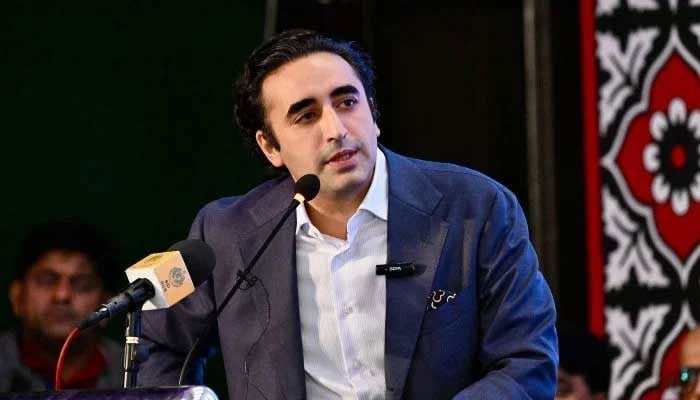
Putting a youthful face at the center of Pakistan’s diplomacy is no mere cosmetic gesture. It signals a long-overdue realisation: the country must project voices fluent in twenty-first-century concerns.
At 36, Bilawal Bhutto Zardari has become that voice. His recent appointment to head a special diplomatic commission in the wake of the May 2025 India–Pakistan border flare-up marks a turning point. For once, a millennial civilian is being trusted to articulate Pakistan’s global narrative, not just defend its borders.
Bilawal’s lineage is iconic, but he appears determined to earn his stature, not merely inherit it. As foreign minister from April 2022 to August 2023, he distinguished himself with an ease in digital diplomacy and a focus on climate-security themes. Now, racing across New York, Washington, London, Paris and Brussels, he chooses not to fixate on casualty figures from May’s clashes and instead reframes Pakistan’s position through nuclear risk reduction, water cooperation and regional connectivity.
In Washington, Bilawal emphasised a critical vulnerability: South Asia’s communication protocols are analogue in a digital age. A single missed signal between nuclear-armed neighbors, he warned, could prove disastrous. He proposed reviving a defunct hotline between India and Pakistan and expanding it to include coordination on climate-induced water stress. It was a calculated shift away from traditional war postures and towards a model of shared environmental vulnerability. On Capitol Hill, his briefings centered not on fighter jets, but on glacial melt in the Himalayas, and Pakistan’s food and water security.
Speaking at the Middle East Institute on June 5, Bilawal called India’s signals of rethinking the 1960 Indus Waters Treaty “the world’s first potential nuclear water crisis”. He noted that 80 per centof Pakistan’s agriculture and nearly a third of its hydropower depend on uninterrupted Indus River flows. Tampering with that flow, he warned, could drive millions into climate-induced migration long before sea-level rise floods Karachi. By recasting the issue as a humanitarian crisis instead of a nationalistic squabble, Bilawal drew unusually sympathetic international coverage.
The shadow of history, of course, lingers. In Washington, Bilawal quipped that “Mr Modi is a Temu version of Netanyahu... a poor copy”, drawing chuckles from the audience and causing a stir in diplomatic circles. The comment – part charisma, part calculated provocation – immediately sparked comparisons to Zulfikar Ali Bhutto’s dramatic walkout from the UN Security Council on December 15, 1971. Yet where Zulfikar roared about a “thousand-year war,” Bilawal offered a pointed olive branch, praising Indian civil society for resisting hate crimes and polarisation. His tone was more urbane than incendiary, but the echo of Bhutto’s defiance was unmistakable. History doesn’t repeat, but in Bilawal’s case, it rhymes – with a twist of wit and a pivot to climate diplomacy.
At home, his style is not without critics. Some worry his outreach could soften Pakistan’s line on Kashmir, while right-wing television pundits deride his Western demeanor and elite grooming. But tellingly, the establishment appears comfortable letting Bilawal carry the microphone while generals handle quiet diplomacy. This civilian–military balance – rarely in harmony – currently serves both camps. It allows Pakistan to project a civilian-led, less confrontational face abroad while maintaining strategic control at home.
And already, one concrete shift is quietly taking shape. Diplomatic sources suggest that Pakistan, the US and China may revive a trilateral track on Himalayan water governance, inactive since 2019. If formalised, this initiative could pioneer depoliticised environmental cooperation in a region too often dominated by military tensions. For Bilawal, this would mark not just a symbolic victory but a practical, structural one.
By elevating a millennial civilian fluent in both Keynesian economics and climate science, Islamabad is signaling a broader intent: to shed its outdated security-state image and engage with global institutions on fresher terms. Bilawal may yet falter – politics is never without landmines – but his rise suggests that Pakistan is finally learning the value of strategic storytelling, climate diplomacy, and generational renewal.
The bet on youth, for once, doesn’t seem reckless. It seems wise and necessary.
The writer is an expert on climate change and sustainable development and the founder of the Clifton Urban Forest. He tweets/posts @masoodlohar and can be reached at: mlohar@gmail.com







-
 Elon Musk’s Recent Claim About Bill Gates Sparks Fresh Online Controversy
 -
 Britain Bets On Chips To Power Its AI Ambitions
 -
 Expert Exposes Critical Flaw In Firm That Harry Didn’t Cause: ‘The Heir’s Tacit Criticism Always Follows’
 -
 ‘Self-indulgent Witch’ Meghan Markle And Her Pal Get Roasted: ‘Makes Me Sick!’
 -
 Andy Burnham Vows To Challenge Trump ‘if Right For Britain’
 -
 Prince William Gives King Charles A ‘grating’ Feeling: ‘He’s Touching On Old Sensitivities’
 -
 Tom Holland Weighs In On The Bad He’s Had To Promote: ‘In The Back Of My Mind It Played’
 -
 Meghan Markle’s Fails To Prove She Gave Birth To Archie, Lilibet: ‘Are You Are An Idiot Mentally Ill Or Lying?’
 -
 Ryan Reynolds Sends Fans Into Fits At Comic-Con: Watch
 -
 Prince William Faces His Own Trial Despite Prince Harry’s ‘unforgivable´past
 -
 Victoria Beckham’s Breakdown Explained: ‘Her Son’s Cocooned Himself With Just Nicola’
 -
 Charlize Theron Makes Surprising Confession About Christopher Nolan’s Film 'Memento'
 -
 King Charles Puts An End To ‘The Sussex Show’
 -
 Jennifer Garner Says Her Children 'paying The Price' Of Fame
 -
 'Matchbox' Star Jessica Biel Opens Up About First Movie Role In 9 Years: Trailer Out Now
 -
 Meghan Markle Relying On Wigs, Oversized Shirts After UK Return