
Pakistan’s plan to sharply increase growth faces headwinds, analysts say
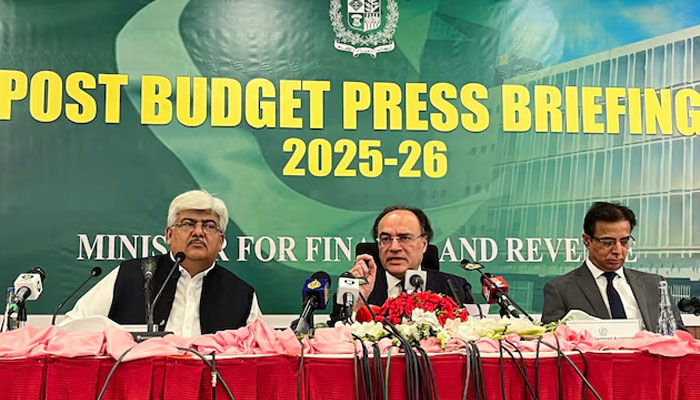
ISLAMABAD: Pakistan is aiming to sharply increase economic growth under its annual federal budget unveiled on Tuesday, but analysts are sceptical about the country’s ability to meet its ambitious goals.
The budget targets higher revenues and a steep fiscal deficit cut under International Monetary Fund (IMF) backed reforms. Yet, defence spending was hiked 20 per cent, excluding military pensions, after last month’s conflict with India.
Finance Minister Muhammad Aurangzeb said in a post-budget press conference on Wednesday that customs duties have been cut or removed on thousands of raw materials and intermediate goods.
“Industry here has to be competitive, competitive enough to export,” he said.But growth drivers remain unclear. The government is targeting 4.2 per cent GDP growth in fiscal 2026, up from 2.7 per cent this year, which was revised down from an initial 3.6 per cent as agriculture and large-scale manufacturing underperformed.
“Pakistan’s GDP growth projection of 4.2 per cent appears ambitious given recent performance, and overly optimistic assumptions may place tax targets out of reach,” said Callee Davis, senior economist at Oxford Economics.
Pakistan’s past growth spurts were consumption-led, triggering balance-of-payments crises and IMF bailouts. The government says it now wants higher-quality, investment-driven growth.
Aurangzeb said structural reforms are underway, pointing to East Asia-style pro-market transitions. “This is an East Asia moment for Pakistan,” he said.The Rs17.57 trillion ($62.24 billion) budget comes as Pakistan remains under a $7 billion IMF programme. Revenues are projected to rise over 14 per cent, driven by new taxes and broadening the tax base. The fiscal deficit is targeted at 3.9 per cent of GDP, down from this year’s 5.9 per cent.
Key reforms include taxing agriculture, real estate, and retail, and reviving stalled privatisations. But revenue shortfalls this year have raised doubts, with both agriculture income tax and retail collections missing targets. Only 1.3 per cent of the population paid income tax in 2024, government data shows.
“Pakistan’s budget keeps the IMF and investors happy, even if it comes at a near-term cost to growth,” said Hasnain Malik, head of equity strategy at Tellimer. “The political setup, with the military firmly in charge, also lowers the risk of protests.”
While overall spending will fall 7.0 per cent, defence will rise after the worst fighting between the nuclear-armed neighbours in decades. Including pensions, defence spending will total $12 billion, 19 per cent of the federal budget or 2.5 per cent of GDP, matching India’s share, per World Bank data.
The hike was enabled by a sharp drop in interest payments, as the central bank cut policy rates from 22 per cent to 11 per cent over the past year, easing domestic debt servicing costs. Aurangzeb said cuts in subsidies also helped create fiscal space.






-
 James Van Der Beek's Quiet Sacrifice Before Death Comes To Light
 -
 Suspect Kills Six Across Florida Before Taking His Own Life
 -
 AI Helps Researchers Identify 2,000-year-old Roman Board Game Stone
 -
 Inside Kate Middleton, Prince William’s Nightmare Facing Andrew Mountbatten-Windsor
 -
 Margaret Qualley Shares Heartfelt Confession About Husband Jack Antonoff: 'My Person'
 -
 Savannah Guthrie Shares Sweet Childhood Video With Missing Mom Nancy: Watch
 -
 Over $1.5 Million Raised To Support Van Der Beek's Family
 -
 Paul Anthony Kelly Opens Up On 'nervousness' Of Playing JFK Jr.
 -
 Diana Once Used Salad Dressing As A Weapon Against Charles: Inside Their Fight From A Staffers Eyes
 -
 Video Of Brad Pitt, Tom Cruise 'fighting' Over Epstein Shocks Hollywood Fans
 -
 Jelly Roll's Wife Bunnie Xo Talks About His Huge Weight Loss
 -
 Margot Robbie Reveals Why She Clicked So Fast With Jacob Elordi
 -
 Piers Morgan Praised By Ukrainian President Over 'principled Stance' On Winter Olympics Controversy
 -
 Halsey's Fiance Avan Jogia Shares Rare Update On Wedding Planning
 -
 Instagram Head Adam Mosseri Says Users Cannot Be Clinically Addicted To App
 -
 James Van Der Beek Was Working On THIS Secret Project Before Death