AI helps researchers identify 2,000-year-old roman board game stone
3D scans and artificial intelligence reveal how the ancient game may have been played
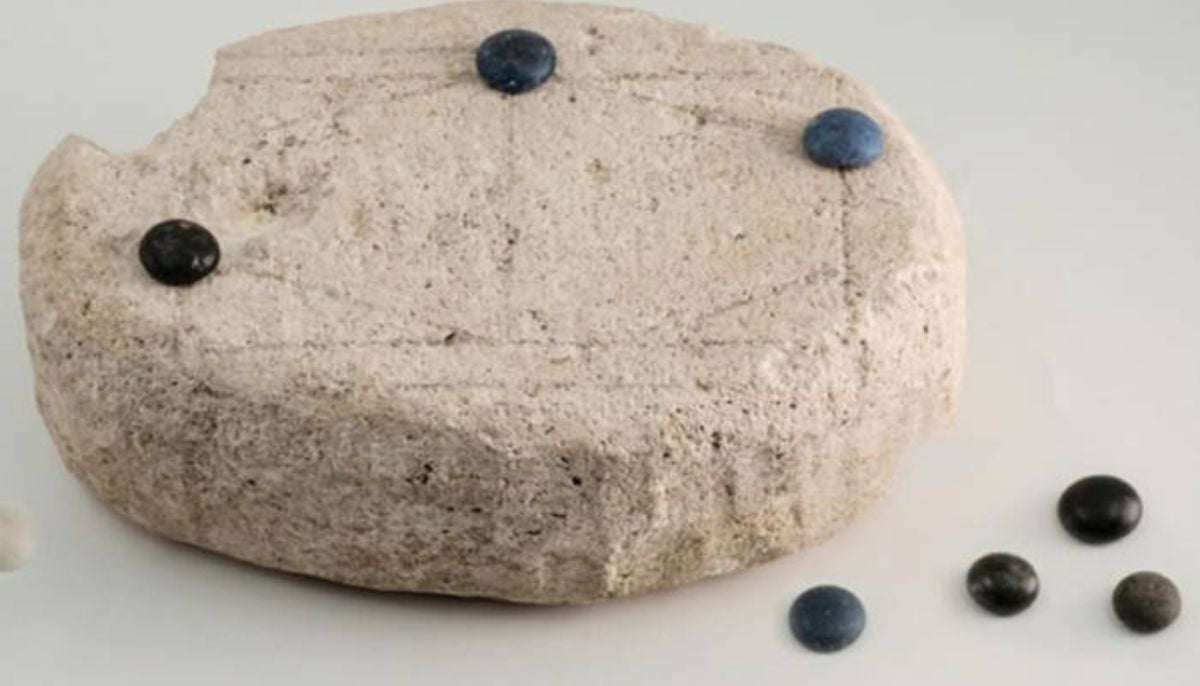
Researchers in Europe have discovered what seems to be an ancient Roman board game stone which dates back 2,000 years after they used artificial intelligence and 3D scanning technology to study its markings.
The discovery was found in Heerlen, located in the Netherlands. The findings appeared this week in the academic journal Antiquity. Experts from Maastricht University studied the etched lines and wear patterns together with the stone structure to establish its historical value and function.
The stone features deep lines carved into its surface. Restoration Studio Restaura Luk van Goor said detailed 3D scans showed some lines were deeper than others and that the edges were neatly finished, suggesting a completed object rather than unfinished work.
Leiden University Archaeologist Walter Crist explained that visible wear appears along the carved lines. He noted that the marks are consistent with pieces being repeatedly slid across the surface, strengthening the argument that the stone was used for gameplay.
After mapping the wear patterns, researchers used artificial intelligence to simulate different Roman-era board game rules. The AI models tested how pieces might move under various rule sets.
One configuration, likely involving blocking an opponent’s pieces, closely matched the wear marks found on the stone.
Karen Jeneson, curator of the Roman Museum in Heerlen, said the rules identified by researchers align with games from similar cultural periods.


-
 Russia cracks down on AI bears as real attacks spread fear: What to know
 -
 UK media watchdog warns X over illegal hate content despite moderation speed improvements
 -
 OpenAI vs. Apple: Former employee accused of taking unreleased device files
 -
 Google DeepMind, Google Cloud grant European researchers access to frontier AI models and $3M in compute
 -
 Apple and OpenAI head to court in trade secrets dispute: Key details to know
 -
 Will AI beat cancer? Palantir CTO shares researchers’ surprising bet
 -
 Google DeepMind chief warns AI hacks are just the beginning
 -
 How Google Gemini 4 Argon transforms enterprise AI