
The curious case of the missing dissents
You don’t defend law by pretending disagreement never happened. Even with our constitutional history, this is unprecedented
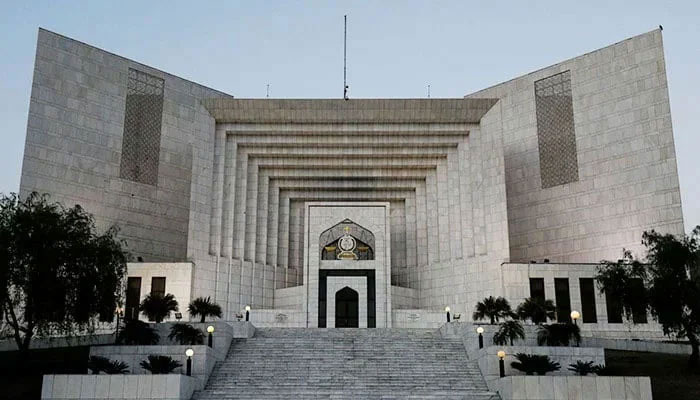
About two weeks ago, something small and technical happened at the Supreme Court – or at least, that’s how it was supposed to look. Two judges on a constitutional bench – Justice Ayesha Malik and Justice Aqeel Abbassi – dismissed review petitions in the reserved seats case.
The rest of the bench, which included eleven judges, issued notices instead. Fine. Nothing unusual about that. Dissent in decisions is routine. Judges disagree. It’s part of the job. But this time, something went off-script. The dissents didn’t show up on the Supreme Court’s website. Not that day, not the next. Despite the passage of two weeks, they are still not on the ‘Latest Judgments’ page. And no one could explain why.
In legal circles, the dissents were doing the rounds through informal WhatsApp groups. Lawyers were quoting them, referencing them, discussing their arguments. So clearly, the dissents existed. They had been written, circulated, even announced. But officially? It was as if they’d never happened – because a judgment like that must be on the court’s website, there is no way it would not then be discussed in the media and generate public debate.
Some newspapers tried to fill the vacuum, running pieces that suggested that maybe new internal rules had been introduced – some quiet reform that required all opinions to be uploaded at once with the majority judgment, to avoid confusion or media frenzy. But that balloon popped quickly. It has been clarified outright: there are no new constitutional bench rules. We’re still operating under the Supreme Court Rules of 1980.
Those rules make the process pretty clear. Order X, Rule 1 and 2 say that judgments, whether majority or dissenting, must be pronounced in open court either on the first date or thereafter, and once pronounced, they cannot be revised or held back, except for minor typos or clerical errors. The office has to prepare the judgment per the rules, which are then routinely uploaded to the court’s website.
So now we were in even murkier territory. The dissents had been drafted and signed, and available on unofficial platforms such as Whatsapp but still weren’t part of the official public record. At that point, the legal community began to ask the real question: Why? Why were these dissents being sidelined? Some suggested it was about appearances – perhaps to project unity. But avoiding dissent for the sake of appearances overlooks its purpose. Dissent isn’t about making a scene; it’s a vital part of the legal process. It documents disagreement and shows where and why justices differ. It’s not meant to be comfortable; it’s meant to be honest.
And here’s the kicker: this wasn’t about a petty disagreement over footnotes or phrasing. This was about reserved seats – an issue tied directly to parliamentary representation and the fate of political parties in Pakistan. If there was ever a moment where judicial clarity and transparency mattered, this was it. But instead of openness, we got opacity. Instead of debate, silence. This isn’t about individuals. It’s not even about this specific case. When dissent is hidden or delayed, the judicial process risks losing a key part of what keeps it honest.
The majority opinion might be the law of the land, but the dissent is what tells you how that law was made – and what might be wrong with it. Some of the most important ideas in legal history started out as dissents. Dissent is a bet on the future. It’s a marker. A way of saying we got it wrong today, but remember this, because tomorrow we might set it straight. Sometimes the dissent becomes law. Sometimes it just becomes a warning. But it always becomes part of the record. That’s the deal. That’s the integrity of the system.
For example, in the Dosso case, Justice Alvin Robert Cornelius stood alone in dissent as the rest of the Supreme Court, led by CJ Muhammad Munir, upheld the imposition of martial law through the lens of legal positivism. Cornelius, however, maintained that the constitution remained the supreme law and could not be displaced by force. His principled stance on constitutional supremacy and rule of law was eventually vindicated years later when the Supreme Court in the Asma Jilani case rejected the Dosso precedent and restored the primacy of democratic constitutionalism.
Or the Sindh High Court Bar Association case overturning the precedent set in the Zafar Ali Shah case, where the Supreme Court had validated General Musharraf's 1999 military coup under the doctrine of necessity, granting him the authority to amend the constitution.
When dissent is treated as something to hide, it signals a shift from pursuing justice to managing appearances. In a time when the 26th Amendment has already left a bitter taste, this raises serious concerns. It risks turning the court from a forum for debate into one where only select voices are heard, undermining its credibility and democratic role.
And here’s what makes the silence around this episode even more chilling: it was quiet. No official statement. No clarification. The dissents were just not uploaded. Like they never existed. That’s how norms die – not with a bang, but with a shrug. You might ask: why should the average Pakistani care about this? People have bigger problems. So why bother about two missing dissenting opinions? Because this is exactly how power warps the system – quietly, procedurally, technically. One redaction at a time. One missing upload at a time. And by the time people realise something’s wrong, the damage is baked in.
First, it’s the rulebook. Then it’s the norms. Then it’s the trust. And when people stop believing the courts are neutral, they stop using them. That’s not a future anyone should want. Judges don’t have to agree with each other. In fact, they shouldn’t. Real legal thinking thrives on difference. On argument. On pushback. That’s how better ideas emerge. That’s how a bench becomes a brain, not just a rubber stamp. And when a judge dissents, they aren’t betraying the court but strengthening it. They’re saying that the institution is bigger than one opinion. Bigger than consensus. It can handle disagreement. That’s the kind of confidence a court needs. But right now, that confidence is missing.
Maybe someone thought it was better to smooth things over, avoid headlines and keep the peace. But you don’t keep peace by hiding or delaying uploads of judicial opinions. You don’t protect dignity by erasing thought. And you don’t defend the law by pretending disagreement never happened. Even with our constitutional history, this is unprecedented.
The writer is a barrister.


